
Neuropathy is damage to the peripheral nerves — the nerves outside your brain and spinal cord. Testing for it usually starts with a clinical exam and a careful history, and a doctor can often reach a working diagnosis without any specialized equipment. Formal tests like nerve conduction studies and skin biopsies are used to confirm the diagnosis and find the cause. At home, you can check for numbness, balance problems, and loss of sensation, but home checks can only flag a concern. They cannot diagnose neuropathy.
What Is Neuropathy and Why Does Testing Matter?
Peripheral neuropathy means the nerves carrying signals between your body and your central nervous system are damaged or not working properly.
These nerves do several jobs. Sensory nerves carry touch, temperature, and pain signals. Motor nerves control muscle movement. Autonomic nerves manage automatic functions like blood pressure, sweating, and digestion. Damage can affect one type, or several at once.
The most common pattern in the US is a length-dependent sensory neuropathy, often from diabetes. Symptoms usually start in the toes and feet and move upward over time. That pattern is why so many tests focus on the feet first.
Testing matters for two reasons. First, many people with early neuropathy have no symptoms at all. Second, finding nerve damage early gives you and your doctor a chance to treat the underlying cause — poorly controlled blood sugar being the most common one — before the damage advances.
How To Test For Neuropathy: Clinic Methods
A clinical exam is the first and most important step. In most cases, a doctor can identify likely neuropathy at the bedside, before ordering any lab work or nerve studies.
Medical history and symptom review
Your doctor will ask about where symptoms started, whether they are symmetrical, and whether they involve pain, numbness, burning, or weakness. They will ask about alcohol use, medications, family history, and conditions like diabetes or thyroid disease.
This history often narrows the cause considerably. Neuropathy has many possible drivers, including diabetes, vitamin B12 deficiency, kidney disease, certain medications, and inherited conditions.
Physical and neurological exam
The doctor checks reflexes, muscle strength, and your ability to feel vibration, pinprick, light touch, and temperature. Loss of ankle reflexes and reduced vibration sense in the toes are classic early findings.
Monofilament testing
A 10-gram monofilament is a thin nylon wire pressed against the foot until it bends. If you cannot feel it at specific points, that signals lost protective sensation. This test is widely used because it predicts who is at risk of foot ulcers.
Nerve conduction studies and EMG
Nerve conduction studies measure how fast electrical signals travel along a nerve. Electromyography (EMG) measures electrical activity in muscles. Together they can confirm nerve damage, show whether it affects the myelin sheath or the nerve fiber itself, and help distinguish neuropathy from other conditions.
These tests are uncomfortable but generally well tolerated. They are most useful when the diagnosis is unclear or when the pattern is unusual.
Skin biopsy
A small punch biopsy from the lower leg or foot can measure the density of small nerve fibers in the skin. This is one of the more reliable ways to detect small-fiber neuropathy, which often does not show up on nerve conduction studies.
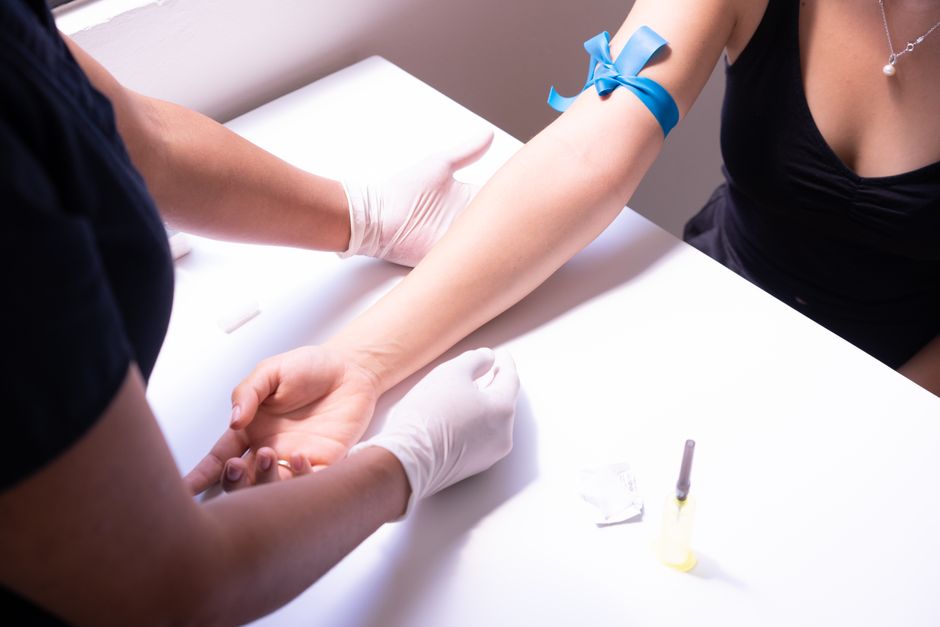
Blood tests
Blood work looks for causes. Common tests include fasting glucose, hemoglobin A1c, vitamin B12, thyroid function, and kidney function. In some cases, doctors test for specific antibodies or genetic markers.
How To Test For Neuropathy At Home
Home checks cannot diagnose neuropathy. They can help you notice changes and decide whether to see a doctor.
- Light touch: With eyes closed, have someone lightly touch different parts of each foot with a cotton ball. Compare left to right.
- Temperature: Notice whether cold or warm objects feel the same on both feet.
- Pinprick: A dull pinprick should feel sharp but not painful. Never break the skin.
- Vibration: A tuning fork placed on the big toe is a standard clinic test. At home, a vibrating phone can give a rough sense of whether vibration is felt equally.
- Balance: Stand with feet together and eyes closed for a few seconds, with someone nearby. Difficulty can suggest reduced position sense.
- Foot checks: Look for cuts, blisters, redness, or swelling you did not feel happening.
An important point: many people with early neuropathy feel nothing unusual at all. A normal home check does not rule out nerve damage.




What Symptoms Should Prompt Testing?
Certain symptoms point more strongly toward neuropathy and are worth mentioning to a doctor.
- Numbness, tingling, or burning in both feet
- A sensation like walking on pebbles or wearing socks when you are not
- Sharp, stabbing, or electric-shock-like pain
- Loss of balance or unsteadiness in the dark
- Weakness in the feet or hands
- Skin changes, slow-healing wounds, or frequent falls
One-sided symptoms, sudden onset, or symptoms that spread quickly need prompt medical attention. They can point to causes other than typical length-dependent neuropathy.
Clinic vs. Home Testing: What Each Can and Cannot Do
Home checks and clinic tests serve different purposes. Knowing the difference helps you use each appropriately.
| Method | What it can do | What it cannot do |
|---|---|---|
| Home checks | Flag possible numbness, balance problems, or sensation loss | Diagnose neuropathy or identify its cause |
| Clinical exam | Identify likely neuropathy and its pattern | Always pinpoint the exact cause |
| Nerve conduction studies / EMG | Confirm large-fiber nerve damage and rule out other conditions | Reliably detect small-fiber neuropathy |
| Skin biopsy | Detect small-fiber neuropathy | Identify the underlying cause |
| Blood tests | Find treatable causes like diabetes or B12 deficiency | Confirm neuropathy on their own |
When Home Testing Is Not Enough
Home testing has real limits, and it is important to be honest about them.
No home method can measure nerve conduction, detect small-fiber loss, or identify an underlying cause. Even a normal result at home does not mean your nerves are healthy. If you have symptoms — or risk factors like diabetes — see a clinician regardless of what a home check shows.
Timing matters. Some causes of neuropathy are treatable, and catching them early can limit further damage. That is the main reason not to rely on home checks alone.
What Happens After a Diagnosis?
If neuropathy is confirmed, the next step is finding and treating the cause. For diabetes-related neuropathy, blood sugar management is the foundation. For vitamin deficiencies, replacement may help. For medication-related neuropathy, your doctor may adjust the drug.
Symptom management is separate from cause management. Treatments for neuropathic pain exist, but response varies, and what works for one person may not work for another. Physical therapy and fall-prevention strategies are often part of the plan, especially when balance is affected.
Foot care deserves special attention. Because neuropathy can reduce sensation, small injuries can go unnoticed and become serious. Daily foot checks and well-fitting shoes are standard recommendations.
What the Evidence Does and Does Not Show
The value of clinical testing for neuropathy is well established. Nerve conduction studies and skin biopsy are validated tools. The 10-gram monofilament is widely used and predicts ulcer risk.
What is less certain is how well home checks perform compared with clinic tests. No large studies have confirmed that home screening reliably detects early neuropathy. The evidence here is limited, and home checks should be treated as a prompt to seek care, not a substitute for it.
Frequently Asked Questions
Can I test for neuropathy at home?
You can check for numbness, balance problems, and sensation loss at home, but these checks cannot diagnose neuropathy. Only a clinician can confirm the diagnosis and identify the cause.
What is the most reliable test for neuropathy?
There is no single most reliable test. The combination of clinical exam, nerve conduction studies, and sometimes skin biopsy gives the most complete picture.
What does a 10-gram monofilament test check for?
It checks whether you can feel light pressure on specific points of your foot. Loss of that sensation signals a higher risk of foot ulcers.
Should I see a doctor if my home test seems normal?
Yes, if you have symptoms or risk factors like diabetes. Early neuropathy often causes no symptoms, and home checks cannot rule it out.
