
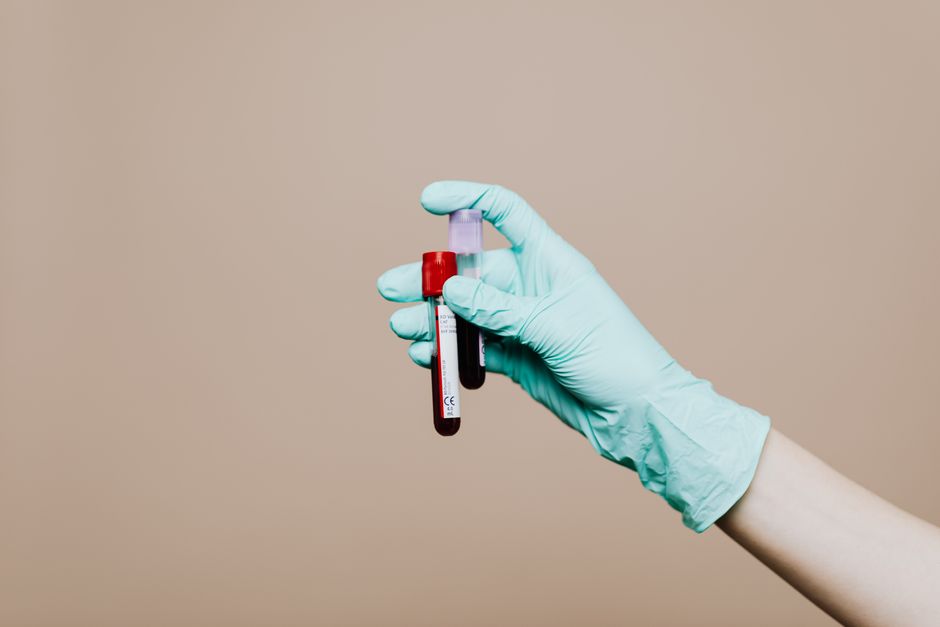
Testing for hyperthyroidism starts with a blood test, not a scan. A doctor measures thyroid-stimulating hormone (TSH) and, if TSH is low, adds free T4 and sometimes free T3 to confirm an overactive thyroid. Imaging such as a thyroid ultrasound or a radioactive iodine uptake scan comes later, usually to find the cause rather than to make the initial diagnosis.
How To Test For Hyperthyroidism Blood Tests And Scans?
There is no single test that answers every question about an overactive thyroid. Diagnosis happens in stages. Each stage answers a different question.
The first question is whether the thyroid is actually overactive. That is a blood test question. The second is why it is overactive. That is often an imaging question. Keeping these two separate helps make sense of the whole process.
Blood tests are the starting point for almost everyone. They are simple, fast, and widely available. Scans are used more selectively. They are not routine for every person with a high thyroid result.
What Does the TSH Blood Test Show?
TSH is the single most useful first test. It is a hormone made by the pituitary gland in the brain, and it tells the thyroid how much hormone to make.
The relationship works like a thermostat. When thyroid hormone levels rise, the pituitary senses it and lowers TSH. When thyroid hormone levels fall, the pituitary raises TSH. So in most cases of hyperthyroidism, TSH is low.
This is why TSH is checked first. A low TSH is the earliest and most sensitive signal that the thyroid may be overactive. In many people, TSH drops before free T4 or free T3 rise above the normal range.
The normal reference range for TSH is roughly 0.4 to 4.0 milli-international units per liter (mIU/L), though labs set their own ranges and these can vary slightly. A result below the lab’s lower limit is called a suppressed TSH.
One important exception: if the pituitary itself is not working properly, TSH may be low or normal even when the thyroid is underactive. This is uncommon, but it is why TSH is not read in isolation when the picture is unclear.
Why Free T4 and Free T3 Matter
TSH tells you the thyroid may be overactive. Free T4 and free T3 tell you how much active hormone is actually circulating.
Free T4 is the main hormone the thyroid produces. Free T3 is the more active form, and most of it is made when T4 is converted in the body’s tissues. The word “free” means the hormone is not bound to carrier proteins, so it is available to act on cells.
In overt hyperthyroidism, TSH is low and free T4 is high. In a milder form called subclinical hyperthyroidism, TSH is low but free T4 and free T3 stay within the normal range. That distinction matters because it affects how closely a doctor watches the situation and whether treatment is considered.
Free T3 is usually checked when free T4 is normal but the person still has clear symptoms, or when a specific cause called T3 toxicosis is suspected. In that condition, free T3 is high while free T4 remains normal.


What Do Thyroid Antibody Tests Add?
Antibody tests do not diagnose hyperthyroidism. They help identify the cause.
The most relevant one is the TSH receptor antibody, sometimes called TRAb. It is the marker for Graves’ disease, the most common cause of hyperthyroidism in the United States. In Graves’ disease, the immune system makes antibodies that mimic TSH and constantly stimulate the thyroid.
Other antibodies, such as thyroid peroxidase (TPO) antibodies, are more associated with autoimmune thyroid conditions in general and are commonly checked in Hashimoto’s thyroiditis, which more often causes an underactive thyroid. They can be present in Graves’ disease too, so they are not specific on their own.
Antibody testing is not needed for everyone. It is most useful when the cause is unclear, when Graves’ disease is suspected, or when a doctor is deciding between treatment options.
When Are Thyroid Scans Used?
Scans rarely make the initial diagnosis. They answer a different question: what is driving the overactivity?
The two main imaging tools are the radioactive iodine uptake scan and the thyroid ultrasound.
A radioactive iodine uptake scan measures how much iodine the thyroid takes up and where it goes. This helps separate causes that look similar on blood tests. In Graves’ disease, uptake is typically high and spread evenly across the gland. In thyroiditis, where stored hormone leaks out rather than being overproduced, uptake is low. In a toxic nodule, uptake concentrates in one spot while the rest of the gland is quiet.
That distinction is not academic. Graves’ disease and a toxic nodule are often treated with medication, radioiodine, or surgery, while thyroiditis is usually managed by watching and treating symptoms, because it often resolves on its own. Getting the cause right changes the plan.
A thyroid ultrasound uses sound waves, not radiation. It shows the size, shape, and texture of the gland and can reveal nodules. It does not measure hormone production. Ultrasound is often used to evaluate a nodule that can be felt or seen, and to guide a fine-needle biopsy if a nodule needs closer study.
Blood Tests vs. Scans: What Each One Does
| Test | What it measures | Main use |
|---|---|---|
| TSH | Pituitary signal to the thyroid | First-line screen for thyroid problems |
| Free T4 | Unbound, active T4 hormone | Confirms overt hyperthyroidism |
| Free T3 | Unbound, active T3 hormone | Detects T3 toxicosis; clarifies unclear cases |
| TSH receptor antibody | Antibodies that stimulate the thyroid | Identifies Graves’ disease |
| Radioactive iodine uptake scan | How much iodine the gland takes up | Distinguishes causes of overactivity |
| Thyroid ultrasound | Structure, size, and nodules | Evaluates nodules; guides biopsy |
What About the Physical Exam and Symptoms?
Before any lab result, a doctor usually starts with a physical exam and a symptom history. This shapes which tests get ordered.
Signs a doctor may look for include a fast or irregular heartbeat, a visibly enlarged thyroid, tremors in the hands, warm or moist skin, and eye changes. Symptoms people often report include unintended weight loss, a racing heart, anxiety, trouble sleeping, heat intolerance, and frequent bowel movements.
None of these findings confirm hyperthyroidism on their own. Many overlap with anxiety, heart conditions, and other health problems. That is why the exam guides testing rather than replacing it.
How to Prepare for Thyroid Testing
Most thyroid blood tests need no special preparation. You usually do not need to fast, and the test can be done at any time of day.
A few things can affect results and are worth mentioning to your doctor:
- Biotin, a common supplement in hair and nail products, can interfere with some thyroid immunoassays and distort results. Many labs advise stopping biotin a few days before testing. Ask your doctor what they recommend.
- Certain medications, including some heart and psychiatric drugs, can affect thyroid hormone levels or how the body uses them.
- Pregnancy changes thyroid hormone levels, so normal ranges differ. Tell your doctor if you are pregnant or could be.
- Recent imaging tests using iodine contrast dye can affect a radioactive iodine uptake scan for weeks. Mention any recent scans.
If a radioactive iodine uptake scan is planned, you will usually be asked about pregnancy and breastfeeding. This test uses a small amount of radioactive material, and it is not used during pregnancy or breastfeeding. No clinical guidelines support its use in those situations.
What Happens If Results Are Unclear?
Sometimes results do not fit neatly together. TSH may be low while free T4 and free T3 are normal, which points to subclinical hyperthyroidism. Or symptoms may be clear while labs are borderline.
In these cases, doctors often repeat testing after a few weeks. Thyroid hormone levels can shift, and a single result does not always reflect the full picture. Some people with a low TSH and normal hormone levels are simply monitored, because not everyone with this pattern goes on to develop overt disease.
If the cause remains unclear after blood tests, an uptake scan or ultrasound can help fill in the gaps. When a nodule is found, a biopsy may be recommended to rule out thyroid cancer, which is a separate question from whether the thyroid is overactive.
The path from first blood draw to a clear answer is usually short. Most people get a working diagnosis from TSH, free T4, and sometimes free T3 alone. Scans add clarity when the cause, not the diagnosis, is the open question.
Frequently Asked Questions
What is the first test for hyperthyroidism?
The first test is usually a TSH blood test. A low TSH is the earliest signal that the thyroid may be overactive, and free T4 or free T3 are added to confirm it.
Can hyperthyroidism be diagnosed without a scan?
Yes. Most cases are diagnosed with blood tests alone. Scans are used mainly to identify the cause when it is unclear or when treatment decisions depend on it.
Do you need to fast for a thyroid blood test?
No, fasting is not usually required for thyroid testing. Tell your doctor about any supplements, especially biotin, since they can interfere with some lab results.
What does a low TSH with normal T4 mean?
This pattern is called subclinical hyperthyroidism. It often leads to repeat testing and monitoring rather than immediate treatment, since not everyone with this result develops overt disease.
