
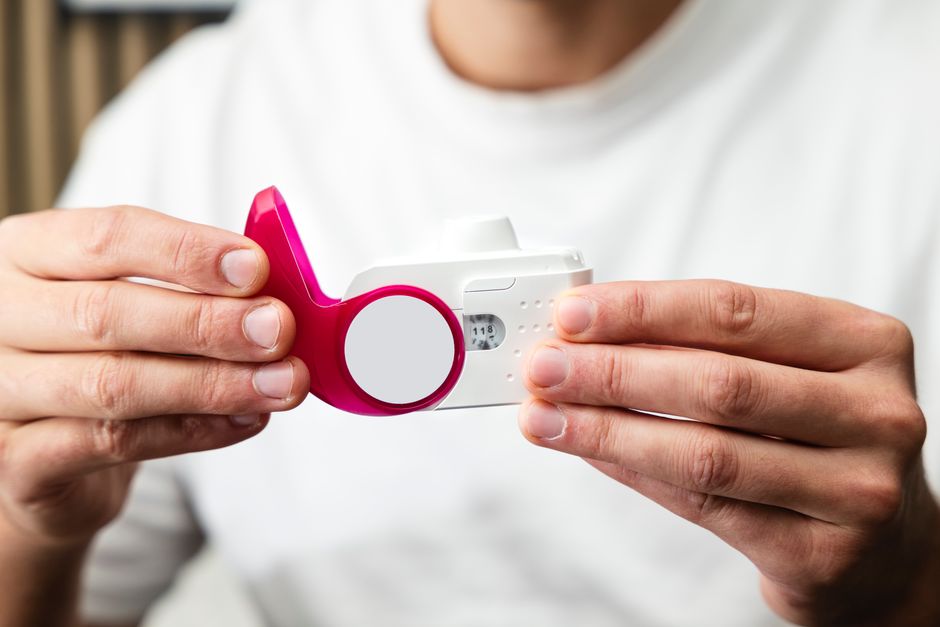
If you or someone in your home has been coughing at night or feeling short of breath after exercise, you may wonder if asthma is the cause. The short answer is that you cannot diagnose asthma at home with a test kit. You can use home tools like a peak flow meter to measure how well your lungs are working, and you can track symptoms to share with a doctor. These tools help monitor known asthma, but they cannot replace a formal diagnosis from a healthcare provider.
What Is a Peak Flow Meter and How Does It Work?
A peak flow meter is a small, handheld device that measures how fast you can blow air out of your lungs. It gives you a number called your peak expiratory flow rate, or PEFR. This number tells you how open your airways are at that moment.
To use one, stand up, take a deep breath, and seal your lips around the mouthpiece. Blow out as hard and fast as you can in one short burst. Write down the number. Do this three times and record the highest reading.
Peak flow meters are not new. They have been used in asthma care for decades. The National Heart, Lung, and Blood Institute includes peak flow monitoring as a standard part of asthma management. However, the device only shows how your lungs are doing right now. It does not tell you if you have asthma. A low reading could mean asthma, but it could also mean a cold, allergies, or even anxiety.
For someone who already has an asthma diagnosis, a peak flow meter is very useful. It can warn you before symptoms get bad. For someone trying to figure out if they have asthma, it is a starting point, not a final answer.
Can a Pulse Oximeter Help Test for Asthma at Home?
A pulse oximeter clips onto your finger and measures the oxygen level in your blood. Many people bought them during the COVID-19 pandemic. They are now common in home medicine cabinets.
For asthma, a pulse oximeter has a specific but limited role. During a serious asthma attack, your oxygen level can drop. A reading below 92 percent on room air is a sign that you need emergency medical care. But for mild or moderate asthma, your oxygen level is usually normal. A normal reading does not mean your asthma is fine.
Research published in the journal Chest found that pulse oximetry is not sensitive enough to detect mild airway narrowing. People can have significant asthma symptoms and still show normal oxygen levels. So while a pulse oximeter is good for spotting emergencies, it is not a tool for testing or monitoring everyday asthma control.
Do not rely on a pulse oximeter to tell you if your asthma is well controlled. That is not what it was designed for.
What About Spirometry at Home?
Spirometry is the gold standard test for diagnosing asthma. It measures how much air you can breathe out and how fast you can do it. A doctor or respiratory therapist usually performs it in a clinic with a large machine.
There are now home spirometry devices you can buy online. Some are handheld and connect to a smartphone app. They look like a more advanced version of a peak flow meter. The American Thoracic Society has published guidelines on how these devices should work, and some models meet those standards.
But there is a big catch. Interpreting spirometry results requires training. A normal spirometry reading does not rule out asthma because lung function can be normal between attacks. Doctors often use a test called bronchodilator reversibility, where they measure your spirometry, give you a rescue inhaler, and measure again. If your numbers improve by a certain amount, that points to asthma. You cannot do this test correctly at home without medical guidance.
Some studies suggest that home spirometry can help people monitor their asthma over time. A 2022 review in Annals of Allergy, Asthma & Immunology found that home monitoring with a spirometer may improve outcomes for people with poorly controlled asthma. But using the device to decide if you have asthma is not supported by evidence.


How To Test For Asthma At Home Tools And Methods That Actually Help
Home testing for asthma is not about a single device. It is about tracking patterns over time. The most useful tool is a symptom diary combined with a peak flow meter.
Here is what to record each day:
- Your peak flow number first thing in the morning
- Your peak flow number in the evening
- Any coughing, wheezing, or chest tightness
- What you were doing when symptoms started
- How many times you woke up at night with breathing trouble
- How many puffs of rescue inhaler you used, if you have one
After two to four weeks, you will have a clear picture. If your morning peak flow is consistently lower than your evening peak flow, that is a common asthma pattern. If symptoms happen after exercise, exposure to pets, or during allergy season, that also points toward asthma.
The Asthma and Allergy Foundation of America recommends sharing this diary with your doctor. It helps them decide whether to order a formal spirometry test or a methacholine challenge test, which can confirm asthma even when your lungs seem fine.
One thing to know: a single low peak flow reading does not mean you have asthma. If you feel fine and blow a low number, it could be a technique issue. Maybe you did not seal your lips properly, or you did not take a deep enough breath. That is why tracking trends matters more than any single number.
What Home Tests Do Not Tell You
Home tools have real limits. A peak flow meter cannot tell the difference between asthma and other lung conditions. Chronic obstructive pulmonary disease, vocal cord dysfunction, and even heart failure can cause low peak flow readings. A pulse oximeter cannot detect inflammation in your airways, which is the core problem in asthma.
There are also products marketed as home asthma tests that claim to measure inflammation. Some measure nitric oxide in your breath, which is a marker of airway inflammation. This test is called FeNO, or fractional exhaled nitric oxide. It is a legitimate test used by pulmonologists. But home versions have not been well studied. A 2021 analysis in the Journal of Allergy and Clinical Immunology found that home FeNO devices vary widely in accuracy. Some are reliable, others are not, and there is no easy way for a consumer to tell which is which.
Another problem is false reassurance. You could have asthma that only acts up during exercise or at night. If you test yourself while sitting on the couch during the day, your results might look normal. You might conclude you do not have asthma and skip seeing a doctor. That delay can lead to worse outcomes over time.
Asthma is a chronic condition that changes day to day. No single home test captures that complexity.
What to Avoid When Testing for Asthma at Home
There are several things people try that do not work and can even be dangerous.
Do not try to trigger asthma symptoms on purpose to see if you have it. Running up stairs until you are out of breath is not the same as an asthma attack. If you have undiagnosed asthma, forcing yourself into heavy breathing could cause a real attack that you are not prepared to handle.
Do not use someone elses rescue inhaler to see if it helps you breathe better. Albuterol is a bronchodilator that opens airways. It can make anyone feel like they can breathe more deeply, even people without asthma. This does not prove you have asthma. It also carries risks if you have an undiagnosed heart condition.
Do not buy online tests that claim to diagnose asthma from a blood sample or a saliva sample. As of 2026, there is no FDA approved blood test for diagnosing asthma. Some research is looking at biomarkers, but nothing is ready for home use. Any company selling such a test is making claims not backed by evidence.
Do not rely on a smartphone app that claims to measure lung function by having you blow into the microphone. A 2019 study in JAMA Internal Medicine tested several of these apps and found they were not accurate enough for clinical use. The microphone in a phone is not calibrated to measure airflow. These apps can give you numbers that look real but mean nothing.
| Tool | What It Measures | Useful for Diagnosis? | Useful for Monitoring? |
|---|---|---|---|
| Peak flow meter | Peak expiratory flow rate | No, not alone | Yes, with doctor guidance |
| Pulse oximeter | Blood oxygen level | No | Only for severe attacks |
| Spirometer | Lung volume and flow | No, needs interpretation | Limited, with training |
| FeNO device | Airway inflammation | Variable accuracy | Not yet for home use |
| Symptom diary | Patterns over time | Yes, helps doctor | Yes |
When to See a Doctor Instead of Testing at Home
Home testing should never delay medical care. If you have any of these signs, see a doctor as soon as possible, not after weeks of tracking symptoms:
- You wake up at night short of breath more than once a week
- You feel chest tightness or wheezing during normal activities
- You have a cough that will not go away after three weeks
- You have had a severe allergic reaction in the past
- You have a family history of asthma or allergies
A doctor can perform spirometry with a bronchodilator test. They can also order a methacholine challenge test, which is very sensitive for asthma. If your symptoms are exercise related, they can do an exercise challenge test. These are the proper ways to diagnose asthma.
The CDC reports that about 25 million Americans have asthma. Many more have symptoms but have never been diagnosed. Getting a correct diagnosis matters because asthma treatment is different from treatment for allergies, acid reflux, or anxiety. Using the wrong treatment can make things worse.
If you already have an asthma diagnosis, home monitoring is a proven strategy. The American Lung Association recommends using a peak flow meter as part of your asthma action plan. But if you are trying to figure out whether you have asthma in the first place, think of home tools as information gatherers, not diagnostic devices. They give you data to bring to a doctor, not answers to act on alone.
Frequently Asked Questions
Can I diagnose asthma at home with a peak flow meter?
No, a peak flow meter alone cannot diagnose asthma. It measures how fast you can blow air out, but a low reading can have many causes.
Is a pulse oximeter useful for asthma testing?
A pulse oximeter is useful for spotting emergencies when oxygen drops below 92 percent. It does not detect mild or moderate asthma.
Are home spirometry devices accurate for asthma?
Some home spirometers meet accuracy standards, but interpreting the results requires a doctor. Normal readings do not rule out asthma.
What is the best way to test for asthma at home?
The best method is tracking your peak flow numbers and symptoms in a diary for two to four weeks. Share this record with your doctor.
