
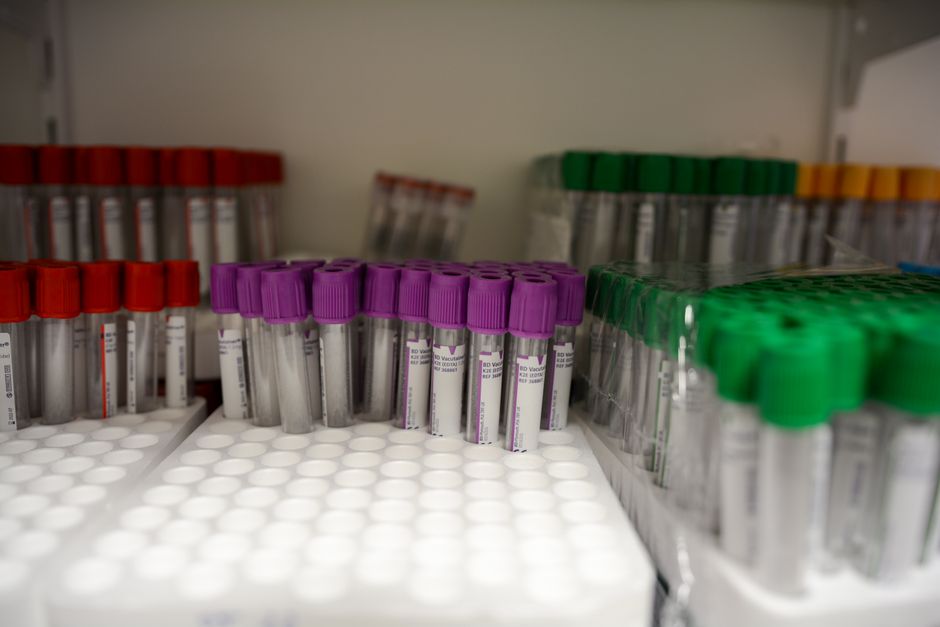
Testing air for asbestos means collecting airborne fibers on a filter and having a laboratory count them under a microscope. You cannot do this at home with a consumer device. Professional testing typically costs between $400 and $1,500 depending on the number of samples, the type of analysis, and whether the test is part of a larger inspection. The two main methods are PCM (phase contrast microscopy) and TEM (transmission electron microscopy), and they differ in both accuracy and price.
How To Test Air Quality For Asbestos Costs Methods
There are two established laboratory methods for analyzing air samples for asbestos. Each has a different purpose, a different level of precision, and a different cost.
Phase contrast microscopy (PCM) counts all fibers above a certain size, not just asbestos. It cannot distinguish asbestos from fiberglass, cellulose, or other common fibers. PCM is relatively fast and inexpensive. It is the standard method used for clearance testing after an abatement project, where the goal is to confirm that fiber levels have dropped to an acceptable range. A single PCM sample typically costs $25 to $50 per sample when submitted to a lab.
Transmission electron microscopy (TEM) identifies the specific type of asbestos fiber — chrysotile, amosite, crocidolite, and others — and can detect fibers far thinner than PCM can see. TEM is more accurate but more expensive. Per-sample costs generally run $100 to $300 or more. TEM is often required for certain clearance standards and for situations where the specific asbestos type matters.
These per-sample prices do not include the cost of a professional coming to your home to collect the samples. That is where most of the total expense comes from.
What Does Professional Asbestos Air Testing Cost?
A full professional air testing project in a home or small building usually falls between $400 and $1,500. The range depends on how many samples are taken, which lab method is used, and how far the inspector has to travel.
Here is a rough breakdown of what drives the cost:
- Site visit and sample collection: $150 to $500, sometimes more in high-cost metro areas
- Number of samples: Most projects need 3 to 10 air samples; each adds $25 to $300 depending on method
- Lab analysis method: PCM is cheaper; TEM costs significantly more per sample
- Written report: Often included, but some inspectors charge separately
- Re-testing after abatement: Adds another round of collection and lab fees
If the air testing is bundled with a full asbestos inspection — which includes checking building materials for suspect asbestos — the combined cost can range from $500 to $2,000 or more. A standalone air test without a materials inspection is usually cheaper but may miss the source of the problem.
Costs vary widely by region. Rural areas with fewer certified inspectors tend to be more expensive because of travel. Urban areas with more competition tend to be cheaper.
Can You Test For Asbestos In The Air Yourself?
No consumer device can reliably detect asbestos fibers in air. This is not a limitation of current technology that a better gadget will solve. Asbestos fibers are microscopic — some are less than 0.1 micrometers in diameter — and identifying them requires a trained analyst using a high-powered microscope.
You can buy DIY air sampling kits online that include a pump, filter cassettes, and instructions. You collect the sample yourself and mail it to a lab. These kits typically cost $100 to $300 and cover the lab analysis for a limited number of samples. The problem is that improper collection — wrong flow rate, wrong sampling location, contamination during handling — can invalidate the results. A false negative from a bad sample gives you false confidence.
DIY kits can be useful for screening. They are not a substitute for professional assessment when you have a known or suspected asbestos source.


When Should You Test Air For Asbestos?
Air testing is most useful in specific situations. It is not a routine test that every home needs.
The main reasons to test air for asbestos:
- After a disturbance: If asbestos-containing material was damaged, drilled, sanded, or torn out, fibers may have been released into the air.
- After abatement: Clearance testing confirms that fiber levels have dropped to an acceptable range before the area is reoccupied.
- During renovation: If you are renovating a building constructed before the 1980s, air testing may be part of a broader safety plan.
- Occupant health concerns: If people in the building are experiencing respiratory symptoms and asbestos exposure is a possible cause, testing can help clarify the situation.
Air testing is not a reliable way to check whether asbestos is present in building materials. For that, you need bulk sampling — taking a small physical piece of the material and having it analyzed. Air testing measures what is currently floating in the air, not what is sitting in the walls.
How Are Air Samples Collected And Analyzed?
A trained technician uses a calibrated air pump connected to a filter cassette. The pump pulls a known volume of air through a filter that catches airborne fibers. The cassette is then sealed, labeled, and sent to an accredited laboratory.
At the lab, an analyst prepares the filter and examines it under a microscope. For PCM, the analyst counts fibers that meet specific size and shape criteria. For TEM, the analyst uses a much more powerful microscope to identify individual fibers by their crystalline structure and chemical composition.
The results are reported as fibers per cubic centimeter of air (f/cm³) for PCM, or as structures per square millimeter of filter for TEM. The specific reporting units and the interpretation of results depend on the method and the regulatory context.
Laboratories that analyze asbestos samples should be accredited. In the United States, look for accreditation through organizations such as the American Industrial Hygiene Association (AIHA) or participation in the National Voluntary Laboratory Accreditation Program (NVLAP). An accredited lab is not a guarantee of perfect results, but it means the lab has met established quality standards.
What Do The Results Mean?
Interpreting asbestos air test results is not straightforward. There is no single universal number that means “safe” for every situation. Different regulatory agencies and programs use different thresholds depending on the context.
For clearance after abatement, the acceptable level depends on the standard being applied and the type of project. Some clearance standards require that no visible debris remains and that air fiber concentrations fall below a specified limit. The exact limit varies by program and jurisdiction.
A result showing fibers present does not automatically mean the air is dangerous. Background levels of asbestos fibers exist in outdoor air in many urban areas. The health risk depends on the concentration, the duration of exposure, the type of asbestos, and individual factors.
This is why interpretation should come from a qualified professional — an industrial hygienist, a certified asbestos inspector, or a physician with occupational health experience — not from an internet search.
What About Home Air Quality Monitors?
Consumer air quality monitors sold for home use do not detect asbestos. These devices typically measure particulate matter (PM2.5 and PM10), volatile organic compounds (VOCs), carbon dioxide, and sometimes radon. Asbestos fibers are far smaller than the particles these monitors are designed to count, and the monitors cannot identify fiber type.
If a monitor shows elevated particulate levels, that could be from cooking, candles, pets, outdoor pollution, or countless other sources. It tells you nothing about asbestos. Do not rely on a general air quality monitor to rule out asbestos exposure.
Frequently Asked Questions
How much does asbestos air testing cost?
Professional asbestos air testing typically costs $400 to $1,500 for a home or small building, depending on the number of samples and the lab method used. PCM analysis costs $25 to $50 per sample, while TEM analysis costs $100 to $300 or more per sample.
Can I test for asbestos in the air myself?
You can collect air samples yourself using a DIY kit and mail them to a lab, but improper collection can invalidate results. No consumer device can detect asbestos in real time, and professional testing is more reliable when you suspect a real exposure risk.
What is the difference between PCM and TEM testing?
PCM counts all fibers above a certain size but cannot tell asbestos from other fibers. TEM identifies the specific type of asbestos fiber and detects much smaller fibers, but it costs significantly more per sample.
Do home air quality monitors detect asbestos?
No. Consumer air quality monitors measure particulate matter, VOCs, and other common pollutants, but they cannot detect or identify asbestos fibers. Asbestos requires laboratory analysis with a microscope.
