

You cannot reliably diagnose a swollen liver at home. No at-home method can confirm it. What you can do is notice patterns that justify seeing a doctor. A swollen liver, called hepatomegaly, usually causes no obvious external signs until it has enlarged enough to press against surrounding structures or interfere with liver function.
That distinction matters. Many people search for home tests because they feel something vague — fullness on the right side, fatigue, a general sense that something is off. Those symptoms have dozens of possible causes. The liver sits mostly behind the lower ribs, which is one reason it cannot be seen or felt by an untrained hand the way a swollen knee or ankle can.
What Does A Swollen Liver Actually Mean?
Hepatomegaly is a physical finding, not a disease. It means the liver is larger than normal. A doctor confirms it by examination, imaging, or both. The normal liver weighs roughly 1.4 to 1.6 kilograms in an adult and sits in the upper right abdomen, tucked under the rib cage.
The liver can enlarge for many reasons. The list is long and the causes are not equivalent in seriousness:
- Fatty liver disease, which is now one of the most common causes in the United States
- Viral hepatitis, including hepatitis B and C
- Alcohol-related liver disease
- Congestive heart failure, which backs blood up into the liver
- Certain medications and toxins
- Infiltrative diseases, where abnormal substances build up in liver tissue
- Some cancers, including cancers that start elsewhere and spread to the liver
Some of these are manageable and reversible. Others are progressive. The cause determines the outcome far more than the size of the liver does.
An important point that often gets lost: liver size and liver function are not the same thing. A liver can be enlarged while blood tests remain normal. A liver can also be scarred and shrunken in advanced cirrhosis while function tests look worse than the size would suggest. This is why a physical finding alone never tells the whole story.
How To Tell If Your Liver Is Swollen At Home
You cannot. There is no home test, device, or physical maneuver that reliably confirms an enlarged liver. Anyone who tells you otherwise is overstating what is possible without imaging.
What you can do is pay attention to signals that warrant a medical evaluation. These are not diagnostic. They are reasons to get checked.
Right upper abdominal discomfort. A dull ache or feeling of fullness under the right rib cage can occur when an enlarged liver stretches its outer capsule, which is rich in nerve endings. Liver tissue itself has no pain fibers. The pain comes from the capsule being stretched.
A sense of fullness after eating small amounts. An enlarged liver can press against the stomach. This is a nonspecific symptom with many other explanations.
Unexplained fatigue. Fatigue is common in liver conditions, but it is also common in hundreds of other conditions. On its own, it means very little.
Yellowing of the eyes or skin. This is jaundice, and it reflects a problem with bilirubin processing. It is not a subtle sign. If you see it, seek medical care.
Swelling in the legs or abdomen. These can indicate fluid retention related to liver or heart problems. They are not home-diagnosable and need evaluation.
None of these findings, alone or together, confirm hepatomegaly. They are a reason to make an appointment, not a reason to conclude anything.
Can You Feel An Enlarged Liver Through Your Abdomen?
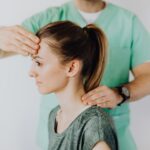
Sometimes. Doctors use a technique called palpation and percussion to estimate liver size and position during a physical exam. Even for trained clinicians, this method is imprecise. Research has consistently shown that physical examination alone is not a reliable way to estimate liver size compared with imaging.
The reason comes down to anatomy. In most adults, the lower edge of the liver sits just below the rib cage. When the liver enlarges, it can extend downward, which is why a doctor may feel its edge. But body habitus matters enormously. In people with more abdominal fat, the liver edge is much harder to feel. In people with a naturally low diaphragm or certain chest shapes, the liver may sit lower even when normal in size.
Self-palpation is even less reliable. Trying to feel your own liver by pressing on your abdomen is not a meaningful test. You are more likely to feel normal structures, muscle, or bowel than to identify an enlarged liver. And pressing hard enough to “find” something can cause discomfort or even injury.



What Actually Diagnoses An Enlarged Liver?
Imaging. That is the short answer. An ultrasound is typically the first test because it is widely available, does not use radiation, and gives a reasonable estimate of liver size and texture. A CT scan or MRI can provide more detail if needed.
Blood tests complement imaging. They measure liver enzymes, bilirubin, albumin, and other markers. These tests do not measure size. They measure function and injury. A person can have a normal-sized liver with abnormal blood tests, or an enlarged liver with normal blood tests.
Sometimes a doctor will order a liver biopsy. This involves removing a small sample of liver tissue. It is not routine. It is used when the cause remains unclear after other testing or when the degree of scarring needs to be assessed.
| Method | What It Shows | Limitation |
|---|---|---|
| Physical exam | Rough estimate of liver position and edge | Imprecise; affected by body shape |
| Ultrasound | Liver size, texture, bile ducts, blood flow | Operator-dependent; limited in obesity |
| Blood tests | Liver enzymes, bilirubin, albumin, clotting | Does not measure size |
| CT or MRI | Detailed structure and size | Cost, radiation (CT), contrast risks |
| Biopsy | Tissue-level diagnosis and scarring stage | Invasive; small sampling risk |
What Symptoms Suggest You Should See A Doctor?
Certain symptoms are more concerning than others and should prompt medical evaluation rather than home monitoring.
- Yellowing of the eyes or skin
- Dark urine or pale, clay-colored stools
- Persistent pain in the upper right abdomen
- Swelling of the abdomen or legs
- Easy bruising or bleeding that was not there before
- Confusion, difficulty concentrating, or sleep disturbances
- Unexplained weight loss
Some of these — especially confusion and significant swelling — can indicate advanced liver dysfunction and warrant prompt attention.
The threshold for seeing a doctor should be low when liver symptoms are involved. Liver disease is often silent for years. By the time symptoms appear, damage may already be significant. Early detection changes outcomes for many liver conditions, particularly when the cause is treatable or removable.
What Raises Your Risk Of An Enlarged Liver?
Risk factors depend on the underlying cause, but several are well established.
Excess body weight and metabolic syndrome. These are strongly linked to nonalcoholic fatty liver disease, which has become the most common form of chronic liver disease in the United States. The relationship between central obesity and liver fat accumulation is well documented.
Heavy alcohol use. Alcohol is metabolized in the liver, and chronic heavy use can lead to fat accumulation, inflammation, and scarring. The dose and duration needed to cause damage vary between individuals. There is no universally safe threshold for everyone.
Viral hepatitis. Hepatitis B and C are transmitted through blood and other body fluids. Many people with chronic hepatitis do not know they are infected. Screening is recommended for certain groups based on risk factors.
Certain medications and supplements. Some prescription drugs, over-the-counter medications in high doses, and certain herbal supplements can stress the liver. This is a real concern and worth discussing with a doctor, especially if you take multiple products.
Diabetes and high cholesterol. Both are associated with higher risk of fatty liver disease.
Having a risk factor does not mean you have an enlarged liver. It means the conversation with your doctor is more relevant.
What Happens If An Enlarged Liver Goes Unchecked?
That depends entirely on the cause. Some causes resolve on their own or with treatment. Others progress.
Untreated liver disease can lead to fibrosis, which is scarring of liver tissue. Over time, extensive scarring becomes cirrhosis. Cirrhosis impairs liver function and raises the risk of complications including portal hypertension, variceal bleeding, ascites, and liver cancer.
Not every enlarged liver leads to cirrhosis. Fatty liver disease, for example, may stay stable for decades in some people and progress in others. Researchers do not yet fully understand why the disease behaves differently across individuals. This is an active area of study.
The key point is that the underlying cause matters more than the enlargement itself. A person with an enlarged liver from a reversible cause has a very different outlook than someone with progressive fibrosis.
What Should You Do If You Are Concerned?
See a doctor. That is the only reliable next step. Describe what you are feeling, how long it has been going on, and any risk factors you have. Bring a list of medications and supplements.
Do not try to diagnose yourself with at-home methods. Do not rely on symptom checkers or internet searches to rule anything in or out. Liver conditions are diagnosed with imaging and blood work, not with self-examination.
If you have no symptoms and no risk factors, routine care is reasonable. If you have symptoms or risk factors, an earlier conversation is better than a later one. The liver has a notable capacity to recover when the cause of injury is removed early enough. That window is not unlimited.
Frequently Asked Questions
Can I check my liver size at home?
No. There is no reliable at-home method to measure or confirm liver size. Only imaging such as ultrasound can do that accurately.
What does a swollen liver feel like?
It may cause a dull ache or fullness under the right rib cage when the liver’s outer capsule is stretched. Many people with an enlarged liver feel nothing at all.
Is a swollen liver always serious?
No. The seriousness depends on the cause, not the size alone. Some causes are reversible, while others can progress to scarring and cirrhosis if untreated.
When should I see a doctor about possible liver swelling?
See a doctor if you have persistent right upper abdominal pain, jaundice, abdominal or leg swelling, easy bruising, or unexplained fatigue. Do not wait for symptoms to become severe.
