
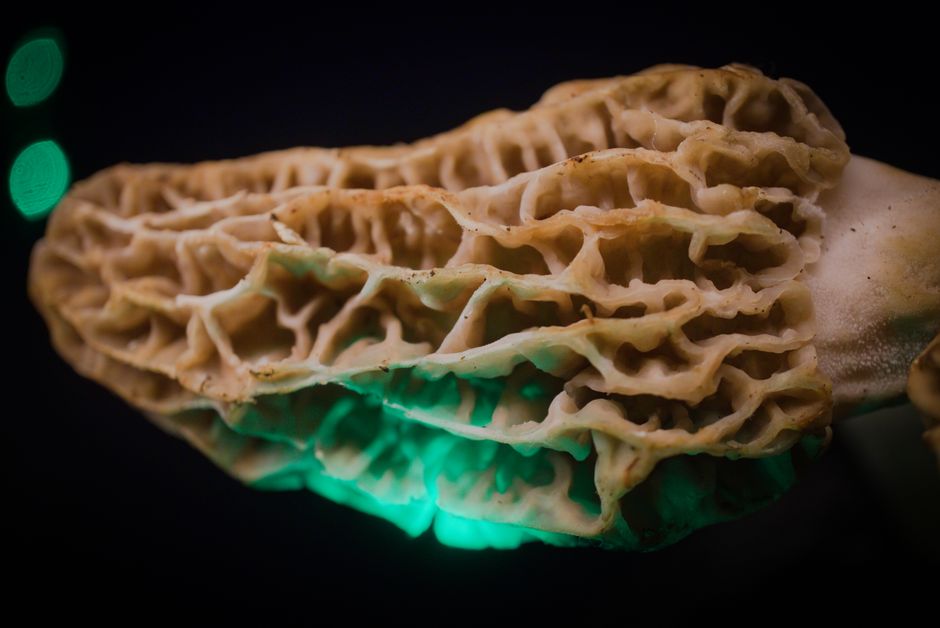
Morel mushrooms are a prized find for foragers, but telling a safe morel from a poisonous look-alike is a matter of life and death. The key is to understand that true morels are completely hollow inside, with a single chamber from the cap to the stem, and their caps are fully attached to the stem at the bottom edge. If you slice the mushroom lengthwise and it is not completely hollow, or if the cap hangs free like a skirt, you are not holding a true morel—and you should not eat it.
What Does a True Morel Look Like?
True morels have a very specific shape and structure. The cap is honeycomb-like, with a pattern of pits and ridges. The color can range from tan to dark brown or even black, depending on the species. The cap is always fully attached to the stem at its base, with no overhanging edge.
When you cut a true morel in half from top to bottom, it is hollow. The inside is one single empty chamber. The stem is also hollow, and it connects seamlessly with the hollow cap. This is the single most reliable way to identify a true morel.
What Are the Poisonous Look-Alikes?
The most dangerous morel impostor is the false morel. This group includes species in the genus Gyromitra. False morels contain a toxin called gyromitrin, which breaks down into monomethylhydrazine (MMH) in the body. MMH is the same chemical used in some rocket fuels. It can cause severe illness and has been linked to deaths.
False morels look similar at a glance, but there are clear differences. Their caps are often brain-like or wrinkled rather than honeycombed with distinct pits. More importantly, their caps are not fully attached to the stem. The cap hangs over the stem like an umbrella or a skirt, and the inside is not a single hollow chamber. False morels are often filled with cottony tissue or have multiple chambers.
Another look-alike is the “verpa” mushroom, sometimes called the early morel or thimble morel. These have a cap that attaches only at the very top of the stem, like a thimble on a finger. They are not hollow in the same way as a true morel, and some people have reported gastrointestinal illness after eating them, though the evidence is less clear than for false morels.
How To Tell If A Morel Mushroom Is Poisonous: The Slice Test
The most reliable test is simple. Take the mushroom and cut it in half lengthwise, from the top of the cap through the bottom of the stem. Look at the cross-section carefully.
A true morel will have:
- A completely hollow interior from the top of the cap to the bottom of the stem
- Thin walls, roughly the same thickness throughout
- A cap that is attached to the stem at the bottom edge, with no gap
A false morel or other impostor will show something different. You might see cottony white fibers filling the interior, multiple chambers, or a cap that is only attached at the top, leaving a space between the cap edge and the stem. If you see any of these, do not eat the mushroom.
Can Cooking Make a False Morel Safe?
Some foragers claim that boiling false morels and discarding the water makes them safe to eat. There is some tradition behind this, particularly in Europe, where certain false morel species are prepared this way. However, this is not a recommendation. The evidence on how completely cooking removes the toxin is inconsistent.
Studies have shown that gyromitrin is volatile and can be reduced by thorough cooking or drying, but the process is not guaranteed to eliminate all toxins. Individual sensitivity varies, and some people have become seriously ill even after following traditional preparation methods. There is no established safe preparation method for false morels that is backed by modern clinical evidence. The safest choice is to avoid them entirely.
What Happens If You Eat a Poisonous Morel Look-Alike?
Symptoms of false morel poisoning typically begin 6 to 12 hours after eating. The early signs are nausea, vomiting, and severe abdominal pain. In more serious cases, people develop diarrhea, dizziness, and a feeling of weakness.
In severe poisoning, the toxin can cause liver damage and affect the central nervous system. Some people experience seizures or go into a coma. Death is rare but has been documented. If you or someone you know develops symptoms after eating any wild mushroom, seek emergency medical care immediately. Do not wait to see if symptoms pass. Bring a sample of the raw mushroom with you if you have one, as this helps medical staff identify the toxin.
Are There Poisonous True Morels?
This is a question with a complicated answer. There are no true morels that are considered deadly poisonous. However, some people have adverse reactions to true morels, even when they are correctly identified and thoroughly cooked.
Some research has associated certain true morel species with a specific neurological syndrome. In recent years, there have been reports of people experiencing delayed neurological symptoms after eating large quantities of morels, particularly in restaurants. These symptoms included confusion, tremors, and unsteady gait. The exact cause is not fully understood, and this appears to be extremely rare. It is also worth noting that eating morels raw or undercooked can cause gastrointestinal upset in many people.
The general guidance is that true morels should always be cooked thoroughly before eating. Start with a small portion the first time you try a new species, even if you have eaten other morels safely before. Individual reactions vary, and no mushroom is completely risk-free for every person.
When in Doubt, Throw It Out
Mushroom identification is not a casual hobby. It requires careful attention and a willingness to be wrong. The consequences of a mistake can be severe.
If you cannot confirm with absolute certainty that a mushroom is a true morel, do not eat it. This is not an area where guessing is acceptable. Even experienced foragers occasionally make mistakes, and many seasoned mushroom hunters will not eat a specimen unless they have verified every identifying feature.
Consider joining a local mycological society or foraging group. Learning from experienced foragers in person is one of the best ways to build your identification skills. Many groups offer guided forays where you can learn to identify mushrooms in their natural habitat with expert supervision.
What About Store-Bought Morels?
Commercially sold morels are generally considered safe when properly cooked. These mushrooms are typically cultivated or harvested by professionals who have verified the species. However, the same rule applies: cook them thoroughly before eating.
There have been reports of illness linked to restaurant-served morels in recent years. The exact cause is still under investigation, but it appears to be related to large portion sizes or undercooking. This does not mean you should avoid morels entirely, but it is a reminder that even correctly identified mushrooms can cause problems when consumed in excess or when not cooked properly.
Frequently Asked Questions
What is the most reliable way to identify a true morel?
Slice the mushroom in half lengthwise. A true morel is completely hollow from the tip of the cap to the bottom of the stem, with the cap fully attached to the stem.
How can you tell a false morel from a true morel?
False morels have caps that hang free from the stem like a skirt, and the inside is not a single hollow chamber. They may contain cottony fibers or multiple chambers when sliced open.
Can you get sick from eating a true morel?
Yes, some people experience gastrointestinal upset from true morels, especially if they are undercooked or eaten in large quantities. Rare neurological symptoms have also been reported after consuming large amounts.
Are dried morels safer than fresh ones?
Drying does not change the basic identification rules. You still need to confirm the mushroom is a true morel before eating it, and you should still cook it thoroughly after rehydrating.
