
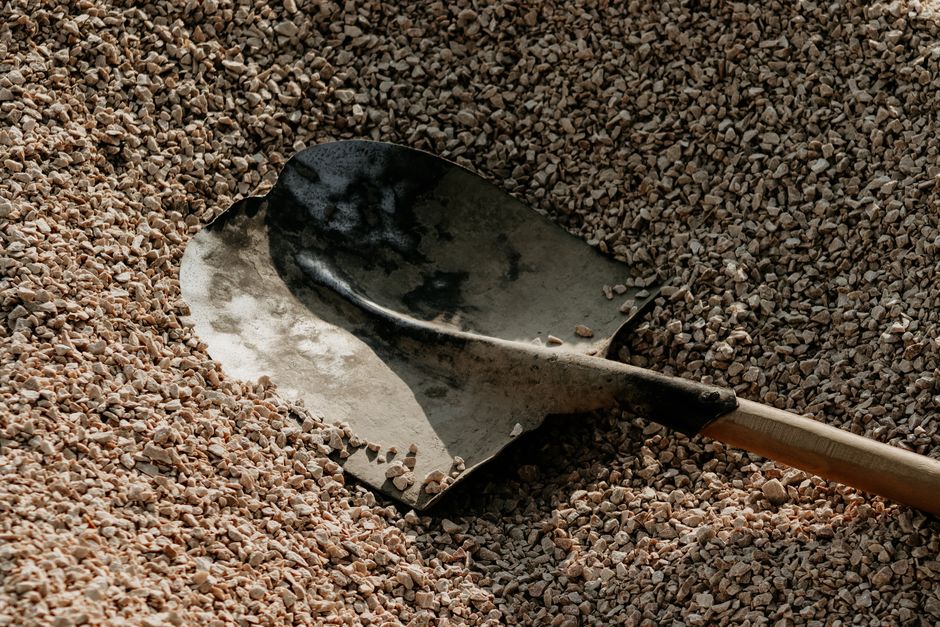
If you have loose-fill insulation that looks like small, pebbly gray-brown chunks, it may be vermiculite. Some vermiculite from a mine in Libby, Montana, was contaminated with asbestos. The only way to know for certain if your vermiculite contains asbestos is to have a sample tested by a certified laboratory. Until testing confirms it is safe, treat all vermiculite insulation as if it contains asbestos.
What Is Vermiculite and Why Does It Matter?
Vermiculite is a naturally occurring mineral that expands when heated. It looks like shiny, accordion-shaped pellets. Builders used it for decades in loose-fill attic insulation because it was lightweight, fire-resistant, and cheap.
Most vermiculite sold in the United States came from a mine near Libby, Montana, from the 1920s until 1990. That mine sat on a natural deposit of asbestos. The vermiculite from Libby became contaminated with asbestos during the mining process. This contaminated material was sold under the brand name Zonolite and installed in millions of American homes.
Asbestos is a known human carcinogen. When disturbed, asbestos fibers can become airborne. Inhaling those fibers can cause lung cancer, mesothelioma, and asbestosis decades later. This is why identifying vermiculite insulation matters for anyone living in an older home.
How To Tell If Vermiculite Contains Asbestos
You cannot tell by looking at it. Vermiculite contaminated with asbestos looks identical to vermiculite that is asbestos-free. The contamination happened at the source, so visual inspection will never give you a reliable answer.
The only reliable method is laboratory testing. A certified asbestos testing lab can analyze a sample using polarized light microscopy or transmission electron microscopy. These methods identify asbestos fibers at levels the naked eye cannot detect.
Testing typically costs between $40 and $100 per sample. You collect a small amount of the insulation, place it in a sealed plastic bag, and mail it to a lab. Most labs return results within a few days. Some states have specific procedures for collecting and shipping asbestos samples, so check your state health department website first.
If your home was built between 1930 and 1990 and has loose-fill vermiculite insulation, assume it is contaminated until testing proves otherwise. The Environmental Protection Agency has stated that vermiculite from the Libby mine should be treated as asbestos-containing material.
What Does Contaminated Vermiculite Look Like?
Vermiculite insulation has a distinctive appearance. It consists of small, lightweight, golden-brown or gray-brown granules. Each granule has a flaky, layered structure that resembles a tiny accordion or worm. The name vermiculite comes from the Latin word for worm because of this shape.
It is often found in attics, poured between floor joists. It may also be present inside wall cavities or around pipes. The insulation is loose and pours easily, unlike fiberglass batts which come in rolls or sheets.
Some people confuse vermiculite with perlite. Perlite is also a lightweight granular insulation, but it is white and rounder, more like tiny popcorn balls. Perlite does not carry the same asbestos risk because it comes from volcanic glass, not the Libby mine.
Keep in mind that even if your vermiculite looks clean and bright, that tells you nothing about asbestos content. The contamination is invisible.




Should You Remove Vermiculite Insulation?
Do not remove it yourself. Disturbing vermiculite insulation can release asbestos fibers into the air. The safest approach is to leave it undisturbed and limit access to the area where it sits.
If the insulation is in your attic and you rarely go up there, the risk is low. Asbestos only becomes dangerous when fibers become airborne. Intact, undisturbed vermiculite poses minimal immediate risk.
If you plan to renovate, install wiring, or do any work that disturbs the insulation, stop and consult a professional. A licensed asbestos abatement contractor can assess the situation and recommend next steps. Removal is not always necessary. In many cases, encapsulation — sealing the insulation under a barrier — is a safer and less expensive option.
Do not use a regular vacuum cleaner to clean up spilled vermiculite. Household vacuums blow fine particles back into the air. Do not sweep it, either. If you must handle a small amount, wear an N95 respirator and wet the material lightly to keep dust down. But even this is not a substitute for professional assessment.
How To Test Vermiculite for Asbestos Safely
Collecting a sample is straightforward if you follow a few precautions. Wear gloves and a dust mask. Wet the insulation lightly with water using a spray bottle to keep fibers from becoming airborne. Place a small handful of the material into a heavy-duty zipper bag. Seal the bag, then place it inside a second bag and seal that one too.
Label the bag with your name, address, and the date. Send it to a certified asbestos testing laboratory. Many labs offer mail-in testing kits that include instructions and prepaid shipping.
Choose a lab accredited by the National Voluntary Laboratory Accreditation Program or the American Industrial Hygiene Association. These accreditations indicate the lab follows standard testing procedures. Avoid any lab that offers a visual inspection or a home test kit that claims to detect asbestos without laboratory analysis. No such reliable test exists.
Results typically come back within 3 to 7 days. The lab report will state whether asbestos fibers were detected and at what percentage. If asbestos is present, the report usually identifies the type, such as chrysotile or amphibole asbestos.
What If Your Vermiculite Tests Positive for Asbestos?
First, do not panic. A positive test result does not mean you are in immediate danger. The risk depends on how much asbestos is present, how often it is disturbed, and how long fibers remain airborne.
If the insulation is undisturbed and you take no action, your exposure risk is low. The main goal is to prevent fibers from becoming airborne. Keep the attic access closed. Do not store items in the attic. Do not let children or pets go up there.
If you must do work in the attic, hire a professional. An asbestos abatement contractor can either remove the material or seal it in place. Encapsulation involves covering the vermiculite with a sealant or a physical barrier so fibers cannot escape. This is often the preferred approach because it avoids the risk of spreading contamination during removal.
If you are selling your home, you are legally required to disclose known asbestos in many states. Check your state’s disclosure laws. A positive test result does not make your home unsellable, but it does need to be handled transparently.
Common Myths About Vermiculite and Asbestos
Myth: Old vermiculite is always contaminated. Not true. Only vermiculite from the Libby mine carried the asbestos risk. However, because the mine supplied most of the U.S. market for decades, the safest assumption is that older vermiculite may be contaminated.
Myth: You can tell by the color or texture. False. Contaminated and uncontaminated vermiculite look the same. No visual characteristic distinguishes them.
Myth: If it has been there for 30 years and no one got sick, it is safe. Asbestos-related diseases take 20 to 50 years to develop. The absence of illness today does not predict future health outcomes.
Myth: A home inspection will catch it. Standard home inspections do not test for asbestos. An inspector may note that vermiculite is present, but they will not and cannot confirm asbestos content without laboratory testing.
Myth: Removing it yourself saves money. Improper removal can contaminate your entire home and create a much larger cleanup problem. Professional abatement costs more upfront but prevents long-term exposure and expensive decontamination.
Frequently Asked Questions
How much does vermiculite asbestos testing cost?
Testing typically costs between $40 and $100 per sample. Some labs charge more for expedited results or for identifying specific asbestos types.
Can I test vermiculite for asbestos at home?
No reliable home test exists. Asbestos identification requires laboratory analysis with specialized microscopy.
Is all vermiculite insulation contaminated with asbestos?
No, but vermiculite from the Libby, Montana mine was contaminated. Since that mine supplied most U.S. vermiculite from the 1920s to 1990, older insulation should be tested.
What should I do if my vermiculite contains asbestos?
Leave it undisturbed and limit access to the area. Hire a licensed asbestos professional if you need to work near it or plan to renovate.
