
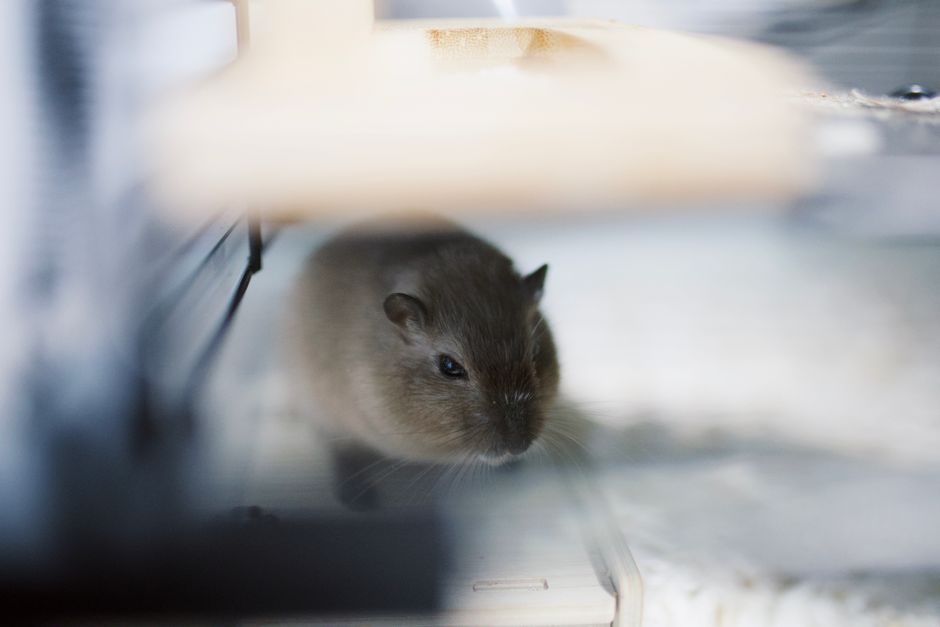
You look at your gerbil and wonder — boy or girl? It is a simple question with a straightforward answer once you know what to look for. The most reliable way to tell if your gerbil is male or female is to check the distance between the genital opening and the anus. In males, this gap is noticeably larger — about half an inch — and you will see a visible scrotal sac once they reach about four weeks old. In females, the genital opening sits very close to the anus with almost no gap at all. This method works for gerbils of any age, though it is easiest on adults.
What Is the Most Reliable Way to Check Your Gerbil’s Sex?
The distance between the two openings is your best bet. Gently hold your gerbil with one hand supporting its body. Turn it over so its belly faces you. Look at the area near the tail. You will see two openings. The one closer to the tail is the anus. The other is the genital opening.
In males, the gap between these two openings is about 5 to 8 millimeters. This is roughly the width of a pencil eraser. In females, the openings are nearly touching each other — only 1 to 2 millimeters apart. This difference is visible from birth and becomes more obvious as the gerbil grows. The American Gerbil Society recommends this method as the primary way to sex gerbils.
How Can You Tell If Your Gerbil Is Male by Looking at Its Belly?
Male gerbils develop a visible scrotal sac at about three to four weeks of age. This sac appears as a rounded bulge between the hind legs. It is often pinkish and hairless at first. By the time a male gerbil reaches six weeks, the sac is usually covered in fur and easy to spot.
You may also notice a small bump or raised area on the belly of a male gerbil. This is the penis sheath. It is not always obvious, especially in young gerbils. But in adults, you can sometimes see a tiny slit or raised spot in the middle of the belly. This is not present in females. Some owners report that male gerbils have a stronger odor from their scent gland — a yellowish patch on the belly — but this is not a reliable sex indicator on its own.
What Signs Show Your Gerbil Is Female?
Female gerbils have two rows of nipples running along their belly. You can see these as tiny pink dots on the underside. They are easiest to spot in younger females or those who have not had a litter. In males, nipples are either absent or barely visible.
The genital opening in females is shaped differently too. It is more of a slit or vertical line, while the male opening is rounder. You may also notice a small bump called the clitoral hood near the genital area. This is normal and not a sign of a male. The most reliable female indicator remains the close spacing between the genital opening and the anus — less than 2 millimeters apart.





How to Tell the Sex of Baby Gerbils
Sexing baby gerbils requires a gentle touch. Wait until they are at least one week old. Before that, their bodies are too small and undeveloped to see clear differences. At one week, use the distance method. Hold the baby in your palm with its belly up. Use a magnifying glass if you need to — the gap is tiny at this age.
By two weeks, male babies often show a small pink bump where the scrotum will develop. This is not always visible, so the distance method is more reliable. By four weeks, the scrotal sac in males is usually obvious. Never separate a baby from its mother for more than a minute or two. The mother may reject it if you disturb the nest too much. Return the baby quickly and wash your hands before handling other pups to avoid mixing scents.
The table below summarizes the key differences at different ages:
| Age | Male | Female |
|---|---|---|
| Birth to 1 week | Larger gap (5-8 mm) between openings | Small gap (1-2 mm) between openings |
| 2 to 3 weeks | Small pink bump near genitals | No bump; two rows of tiny nipples visible |
| 4 weeks and older | Visible scrotal sac; belly scent gland darker | No scrotal sac; nipples more obvious |
What Mistakes Do People Make When Sexing Gerbils?
The most common mistake is confusing the anus with the genital opening. Both look similar at a quick glance. Always identify the anus first — it is the opening closest to the tail. Then measure the distance to the other opening. Another mistake is thinking a female gerbil is male because she has a clitoral hood. This small bump near the genital opening is normal in females and can look like a tiny penis to an untrained eye.
Some people also rely on behavior to guess the sex. This is not reliable. Both males and females can be active, aggressive, or calm. Mounting behavior is common in both sexes during play or dominance displays. Do not use behavior alone to decide. The only accurate method is physical examination using the distance and scrotal sac checks.
One more mistake is trying to sex a gerbil while it is moving. Gerbils are fast. If you cannot get a clear look, place the gerbil in a clear plastic cup or small container. You can then look at its underside through the transparent bottom without holding it. This reduces stress for both of you.
What Tools or Tricks Help Make Sexing Easier?
You do not need special equipment. Good lighting helps a lot. Natural daylight or a bright desk lamp works well. A magnifying glass or jeweler’s loupe is useful for baby gerbils. Some owners use their phone camera to take a photo of the gerbil’s underside. You can then zoom in on the image to see details without stressing the animal.
Another trick is the “towel method.” Wrap the gerbil loosely in a soft cloth with its belly exposed. The towel calms most gerbils and keeps them still. Hold the gerbil close to your body so it feels secure. Speak softly while you look. If the gerbil squirms, put it down and try again later. Forcing the examination will stress the animal and make accurate sexing harder.
If you have multiple gerbils, compare them side by side. Place two gerbils in separate clear cups. Look at their undersides through the cups. You will see the size difference in the gaps more easily when you can compare directly. This is especially helpful for beginners.
How To Tell If Your Gerbil Is Male Or Female Without Handling It
Sometimes you cannot or should not handle your gerbil. A new gerbil may be scared. A pregnant female may be stressed by handling. In these cases, you can still get a good idea of the sex without touching the animal.
Watch your gerbil from above as it walks. Male gerbils often have a wider stance because of the scrotal sac. You may see a rounded bulge between the hind legs as the gerbil moves. This is not foolproof — some females have a fuller belly that looks similar. But it is a useful clue. Another visual trick is to look at the gerbil from behind while it sits on its hind legs. Males often show a clear separation between the body and the scrotal sac. Females have a smooth, continuous line from the belly to the tail.
You can also place your gerbil in a small cage with a clear floor. Look up from underneath. You will see the underside clearly without touching the animal. This method works best for adult gerbils because they are larger and their features are more developed.
Frequently Asked Questions
Can you tell a gerbil’s sex by its behavior?
No. Both males and females can be active, dominant, or aggressive. Mounting behavior is common in both sexes and is not a reliable sex indicator.
At what age can you sex a gerbil?
You can sex a gerbil at one week old using the distance between the genital opening and anus. The scrotal sac becomes visible at about four weeks.
Do male gerbils have nipples?
Male gerbils do not have visible nipples. Females have two rows of tiny pink nipples on their belly, which become more obvious as they grow.
Is it safe to hold a baby gerbil to check its sex?
Yes, but keep handling brief — under one minute. Wash your hands before handling other pups to avoid mixing scents, which can cause the mother to reject them.
