

Fertility is not a single yes-or-no switch. It is a spectrum influenced by age, health, and reproductive function. While no home test can give a woman a definitive fertility score, there are reliable signs and medical tests that provide a clear picture. The most accurate way to assess fertility involves tracking ovulation patterns and consulting a doctor for hormone testing and imaging. For most women, regular menstrual cycles are a strong signal that ovulation is occurring, which is the foundation of natural conception.
What Are the Reliable Physical Signs of Fertility?
Your body produces physical signals during each menstrual cycle, particularly around ovulation. These signs reflect hormonal changes that prepare the body for pregnancy. They are useful for timing intercourse but do not measure overall fertility potential.
The most reliable physical signs include changes in cervical mucus, basal body temperature, and cervical position. Cervical mucus becomes clear, stretchy, and slippery—similar to raw egg whites—in the days before ovulation. This consistency helps sperm travel through the cervix. After ovulation, the mucus turns thick and cloudy under the influence of progesterone.
Basal body temperature rises slightly after ovulation, typically by 0.5 to 1 degree Fahrenheit. This rise confirms that ovulation has occurred, but it does not predict it. By the time the temperature rises, the fertile window is mostly over. Tracking temperature across several cycles can help a woman learn her own pattern, but it is a retrospective sign.
Some women also notice mild pelvic pain on one side near ovulation, called mittelschmerz. This pain is not consistent enough to rely on alone. Breast tenderness, bloating, and a heightened sense of smell can also accompany ovulation in some women, but these symptoms vary widely from person to person.
What Do Menstrual Cycle Patterns Tell You About Fertility?
Menstrual cycle regularity is one of the strongest indicators that ovulation is happening. A typical cycle lasts 21 to 35 days, with most women falling between 24 and 32 days. Cycles in this range, with only minor variation from month to month, suggest that hormones are functioning properly.
Irregular cycles do not automatically mean infertility, but they do signal that ovulation may not be occurring consistently. Conditions like polycystic ovary syndrome (PCOS) often cause irregular cycles because ovulation is sporadic or absent. Very short cycles, under 21 days, or very long cycles, over 35 days, warrant a medical evaluation.
Missing periods entirely, a condition called amenorrhea, is a stronger red flag. If a woman has not had a period for three months or more and is not pregnant, she should see a doctor. The absence of menstruation almost always means ovulation is not occurring, which directly affects fertility.
Painful or heavy periods do not necessarily indicate a fertility problem. However, severe pelvic pain during menstruation can be a sign of endometriosis or uterine fibroids, both of which can affect fertility. A doctor can evaluate these conditions with imaging and physical examination.
How Do Ovulation Predictor Kits Work and Are They Accurate?
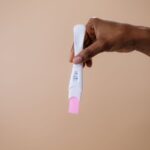
Ovulation predictor kits (OPKs) detect the surge of luteinizing hormone (LH) that occurs 24 to 36 hours before ovulation. This surge triggers the release of an egg from the ovary. A positive OPK indicates that ovulation is likely to happen within the next day or two, which is the most fertile window.
These kits are generally accurate when used correctly. They measure LH in urine, and the test line becomes as dark as or darker than the control line at the surge. For most women, testing once daily is sufficient, though some may need to test twice daily to catch a brief surge.
OPKs are not fertility tests in the broader sense. They confirm that a surge is happening in that particular cycle, but they cannot tell you whether the eggs are healthy, whether the fallopian tubes are open, or whether sperm can fertilize the egg. A woman with regular LH surges can still face fertility challenges for other reasons.
Fertility monitors that track multiple hormones, such as estrogen and LH, offer more detailed information. These devices use test strips and a digital reader to identify a wider fertile window. They are more expensive than basic OPKs but can be helpful for women with irregular cycles.




What Fertility Tests Do Doctors Actually Recommend?
When a woman or couple has been trying to conceive for a year without success—or six months if the woman is over 35—doctors recommend a formal fertility workup. This evaluation tests both partners and follows a standard sequence.
For the woman, the first step is usually a blood test to check hormone levels on day 3 of the menstrual cycle. This panel typically includes follicle-stimulating hormone (FSH), estradiol, and anti-Müllerian hormone (AMH). These values give a snapshot of ovarian reserve, which is the quantity of remaining eggs. AMH is currently considered the most reliable blood marker of ovarian reserve.
Thyroid-stimulating hormone (TSH) and prolactin are also commonly checked because thyroid disorders and elevated prolactin can disrupt ovulation. These conditions are treatable, and correcting them can restore fertility.
An ultrasound, often called a follicle scan, can visualize the ovaries and uterus. The doctor can count antral follicles, which are small fluid-filled sacs that contain immature eggs. This antral follicle count (AFC) correlates with ovarian reserve and helps predict response to fertility medications.
A hysterosalpingogram (HSG) is an X-ray test that checks whether the fallopian tubes are open. Dye is injected through the cervix, and X-rays show whether the dye passes freely through the tubes. Blocked tubes prevent fertilization and require medical intervention.
How Does Age Affect Fertility Testing and Results?
Age is the single most important factor in female fertility. A woman is born with all the eggs she will ever have, and that number declines steadily over time. Both the quantity and quality of eggs decrease with age, which affects the chance of conception and the risk of miscarriage.
Fertility peaks in the late teens and twenties. It begins to decline gradually around age 30 and more rapidly after 35. By age 40, the chance of conceiving naturally in any given month is significantly lower than at age 30. This is not a judgment or a scare tactic—it is well-established reproductive physiology.
Ovarian reserve testing, including AMH and antral follicle count, becomes more important for women over 35. These tests help estimate how much time may remain for natural conception. However, these tests measure quantity, not quality. A normal AMH level does not guarantee that the eggs are genetically normal.
Because age affects fertility so strongly, doctors recommend that women over 35 seek evaluation after six months of trying rather than a full year. This earlier evaluation allows more time for treatment if problems are found.
Can Any Test Tell You If You Are Infertile?
No single test can diagnose infertility. Infertility is defined as the inability to conceive after 12 months of regular, unprotected intercourse. It is a clinical definition based on time and outcome, not on any single biomarker.
Fertility tests identify risk factors and potential problems. They can show that ovulation is irregular, that tubes are blocked, or that ovarian reserve is low. But these findings do not guarantee that pregnancy is impossible. Conversely, normal test results do not guarantee that pregnancy will happen quickly.
About 15 percent of couples who try to conceive will experience infertility. Of those, a cause is identified in roughly 80 to 90 percent of cases. The remaining cases are labeled unexplained infertility, meaning all standard tests came back normal but pregnancy has not occurred.
This reality is important to understand because fertility testing creates expectations. A woman can have perfect hormone levels, open tubes, and regular ovulation, yet still face challenges. The reproductive system involves many steps, and tests can only evaluate some of them.
What Lifestyle Factors Influence Fertility Signs?
Body weight affects ovulation and hormone production. Both underweight and overweight women are more likely to have irregular cycles and ovulatory problems. Fat tissue produces estrogen, so excess body fat can disrupt the hormonal feedback loop that controls ovulation. Very low body fat, common in endurance athletes, can suppress ovulation entirely.
Smoking accelerates egg loss and can bring on menopause earlier. The toxins in cigarette smoke damage the DNA in eggs and can interfere with implantation. Quitting smoking improves fertility outcomes, and the effect is seen relatively quickly after cessation.
Alcohol consumption has a dose-dependent effect on fertility. Heavy drinking disrupts menstrual cycles and hormone levels. Moderate drinking shows mixed results in research, so the safest approach for women trying to conceive is to limit or avoid alcohol entirely.
Caffeine intake above 300 milligrams per day, roughly three cups of coffee, has been associated with reduced fertility in some studies. The evidence is not conclusive, but reducing caffeine to moderate levels is a reasonable step for women planning pregnancy.
Frequently Asked Questions
What is the most accurate way to tell if a woman is fertile?
The most accurate way is a medical fertility workup that includes hormone blood tests, an ultrasound to count antral follicles, and an HSG to check the fallopian tubes. These tests provide a comprehensive assessment that home methods cannot match.
Can ovulation predictor kits tell you if you are fertile?
No, ovulation predictor kits only detect the LH surge that precedes ovulation in a given cycle. They confirm that ovulation is likely happening but cannot assess egg quality, tubal health, or overall fertility potential.
Are irregular periods a sign of infertility?
Irregular periods suggest that ovulation may be inconsistent, which can reduce fertility. However, many women with irregular cycles still conceive, and a doctor can identify and treat the underlying cause, such as PCOS or thyroid dysfunction.
At what age should a woman see a doctor about fertility?
Women under 35 should seek evaluation after one year of trying to conceive. Women over 35 should seek evaluation after six months because fertility declines more rapidly after that age.
