
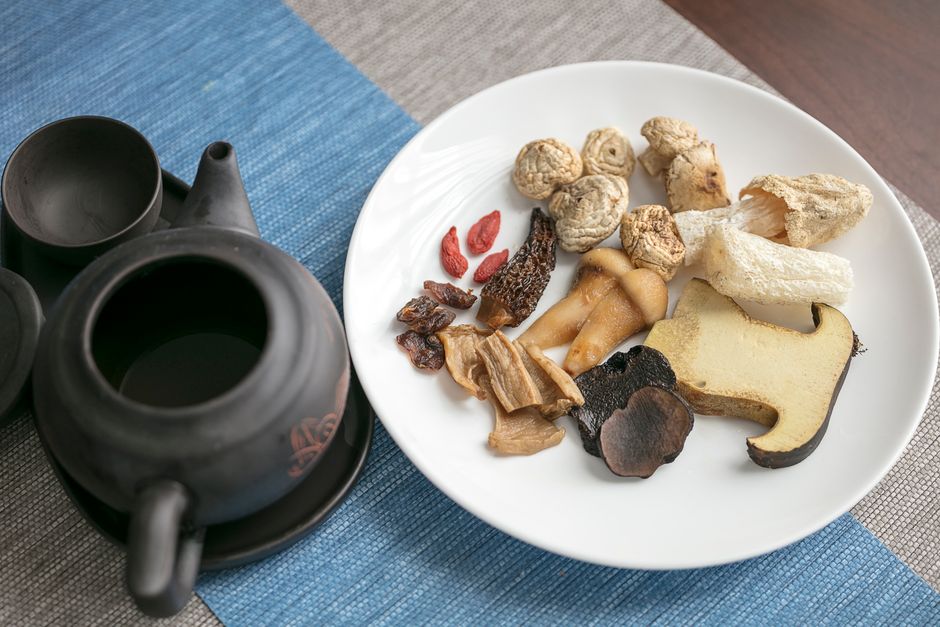
Truffles are a type of fungus, but they are not mushrooms in the common sense of the word. Both belong to the same biological kingdom, but truffles grow entirely underground while mushrooms grow above ground. This difference in habitat and biology sets them apart in ways that matter for foraging, cooking, and even their price.
What Exactly Is a Truffle?
A truffle is the fruiting body of a fungus from the Tuber genus. These fungi form a partnership with the roots of certain trees, like oaks and hazelnuts. This relationship is called mycorrhizal, meaning the fungus helps the tree absorb water and nutrients from the soil. In return, the tree provides the fungus with sugars it makes through photosynthesis.
The truffle itself is the part of the fungus that produces spores, similar to how a mushroom cap produces spores. But truffles develop completely underground. They never break through the soil surface. Because they are hidden, they rely on animals to find and eat them, which spreads their spores through animal droppings.
Their strong, distinctive aroma is actually a survival strategy. That scent is designed to attract animals like pigs and rodents that will dig them up and eat them.
How Are Truffles Different From Mushrooms?
The most obvious difference is location. Mushrooms grow above ground on soil, wood, or other organic material. Truffles grow entirely below ground. You will never see a truffle poking out of the dirt.
There are also structural differences. A typical mushroom has a stem and a cap with gills or pores on the underside. These structures release spores into the air. Truffles have no stem or cap. They are irregular, lumpy spheres with a solid interior. Their spores are contained inside the flesh of the truffle, not released into the wind.
Another key difference is how they obtain food. Many common mushrooms are saprophytes, meaning they feed on dead or decaying organic matter. Truffles are mycorrhizal, meaning they live in a mutually beneficial relationship with living tree roots. You cannot simply plant truffle spores in soil and expect them to grow. They require a living host tree.
In biological classification, both truffles and mushrooms are fungi. But the word “mushroom” typically refers to the above-ground fruiting bodies of fungi in the order Agaricales. Truffles belong to a different group called Ascomycetes, while most familiar mushrooms belong to Basidiomycetes. This is a fundamental split in the fungal family tree.
Are Truffles Related to Mushrooms?
Truffles and mushrooms share a distant evolutionary ancestor, but they are not close relatives. Think of them like cousins many times removed. Both are fungi, but they diverged into separate lineages hundreds of millions of years ago.
Morel mushrooms are actually closer relatives to truffles than button mushrooms are. Morels belong to the same group, Ascomycetes, as truffles. This is why morels have a honeycomb-like texture that somewhat resembles the inside of a truffle when cut open.
Despite this distant relationship, truffles and mushrooms share some basic fungal traits. Both grow from thread-like structures called hyphae. Both reproduce through spores. Both require moisture to thrive. But their life cycles and physical forms are dramatically different.





Why Do Truffles Cost So Much?
Truffles are expensive for several reasons, and scarcity is the biggest one. They cannot be cultivated like button mushrooms or oyster mushrooms. A farmer cannot buy truffle spawn, inoculate a bed, and harvest in a few weeks. Growing truffles requires planting trees inoculated with truffle spores and waiting years for the fungus to establish. Even then, harvests are unpredictable.
Climate and soil conditions must be exactly right. Truffles need specific soil pH, drainage, and a host tree that is healthy. A drought or a wet season can ruin a crop. Some years produce almost nothing.
Harvesting is also labor-intensive. Truffles grow underground, so they cannot be seen. Foragers use trained dogs to sniff them out. Pigs were traditionally used, but dogs are preferred because they do not try to eat the truffles. A single trained truffle dog can take years to train.
Finally, truffles have a very short shelf life. They lose their aroma quickly after harvest, sometimes within days. This means they must be rushed to markets and used quickly, adding to the cost of logistics and waste.
What Do Truffles Taste Like?
Truffles do not taste like mushrooms. Their flavor is earthy, musky, and complex. Some people describe notes of garlic, soil, wood, or even chocolate. The aroma is so powerful that a little goes a long way.
The flavor of a truffle is largely tied to its aroma. In fact, much of what people perceive as “taste” is actually smell. When truffles are cooked, their delicate aroma compounds evaporate quickly. This is why truffles are usually shaved raw over finished dishes rather than cooked into them.
There are many species of truffle, and they vary in flavor intensity. The most prized is the Périgord black truffle from France, known for its deep, earthy aroma. White truffles from Italy are even more potent and are typically served raw, shaved over pasta or risotto. Cheaper truffle species exist, but they have milder aromas and less complex flavors.
It is worth noting that many commercial “truffle” products, like truffle oil or truffle salt, contain little to no actual truffle. Most truffle oil is made with a synthetic compound called 2,4-dithiapentane, which mimics the aroma of truffles. This compound is responsible for the intense smell in most truffle-flavored products, not the truffle itself.
Can You Eat Truffles Raw?
Yes, truffles can be eaten raw, and for some varieties, raw is the preferred way to serve them. White truffles are almost always eaten raw because their aroma is delicate and destroyed by heat. Black truffles can be cooked lightly, but they are also commonly shaved raw over dishes.
Truffles are not toxic. They are safe to eat in their natural state. However, they should be cleaned thoroughly to remove soil and grit before eating. Because they grow underground, they can carry dirt and debris that needs to be brushed off gently.
If you have a truffle allergy, which is rare but possible, you should avoid eating them raw or cooked. As with any food, if you have never eaten truffles before, try a small amount first to see how your body reacts.
Are There Poisonous Truffles?
True truffles from the Tuber genus are generally safe to eat. No species of true truffle is known to be toxic to humans. However, there are look-alikes that grow underground and resemble truffles. Some of these false truffles are not edible and can cause illness.
False truffles belong to different fungal genera. Some are harmless but tasteless. Others can cause gastrointestinal distress. The risk is that an inexperienced forager might confuse a false truffle with a real one.
This is why foraging for truffles without expert guidance is not recommended. A trained dog, an experienced guide, or a reliable supplier is essential. If you are buying truffles, purchase them from a reputable source. If you are foraging, go with someone who knows exactly what they are looking for.
Can You Grow Truffles at Home?
Growing truffles at home is possible but difficult and slow. It is not like growing vegetables in a garden. You need specific soil conditions, the right host trees, and a lot of patience.
The process starts with buying tree seedlings that have been inoculated with truffle spores. These seedlings are usually oaks or hazelnuts. You plant them in soil with the correct pH, usually between 7.5 and 8.3, and good drainage. The trees must be kept healthy for years while the fungus establishes itself around their roots.
It typically takes 5 to 10 years before a truffle orchard produces its first harvest. Even then, success is not guaranteed. Many factors, including weather, soil microbes, and competition from other fungi, can prevent truffle production. Some orchards never produce truffles at all.
For most people, buying truffles from a specialty grocer or online supplier is more practical than trying to grow them. The cost is high, but the effort and risk of home cultivation are higher.
Are Truffles a Mushroom? The Bottom Line
Truffles are fungi, but they are not mushrooms. They grow underground, have no stem or cap, and form symbiotic relationships with tree roots. Mushrooms grow above ground, have recognizable caps and stems, and mostly feed on decaying matter.
Both are edible and prized in cooking, but they are biologically distinct. Calling a truffle a mushroom is like calling a peach an apple. They share a broader category but differ in fundamental ways.
If you are cooking with truffles, treat them as their own ingredient. They need different handling than mushrooms. They are best used sparingly, shaved raw, and added at the end of cooking to preserve their aroma. That is the approach professional chefs use, and it is the best way to experience what truffles actually offer.
Frequently Asked Questions
Are truffles considered a type of mushroom?
No, truffles are not considered mushrooms. Both are fungi, but truffles grow underground and belong to a different biological group than typical mushrooms.
Why are truffles so expensive?
Truffles are expensive because they are difficult to grow, require specific soil and climate conditions, and must be harvested by trained dogs. They also spoil quickly after harvest, which limits their availability.
Can you eat truffles raw?
Yes, truffles can be eaten raw, and white truffles are almost always served raw. Their aroma is delicate and easily destroyed by heat, so they are typically shaved over finished dishes.
Are all truffles safe to eat?
True truffles from the Tuber genus are safe to eat, but false truffles that look similar can cause illness. Only forage for truffles with expert guidance or buy from a reputable source.
