
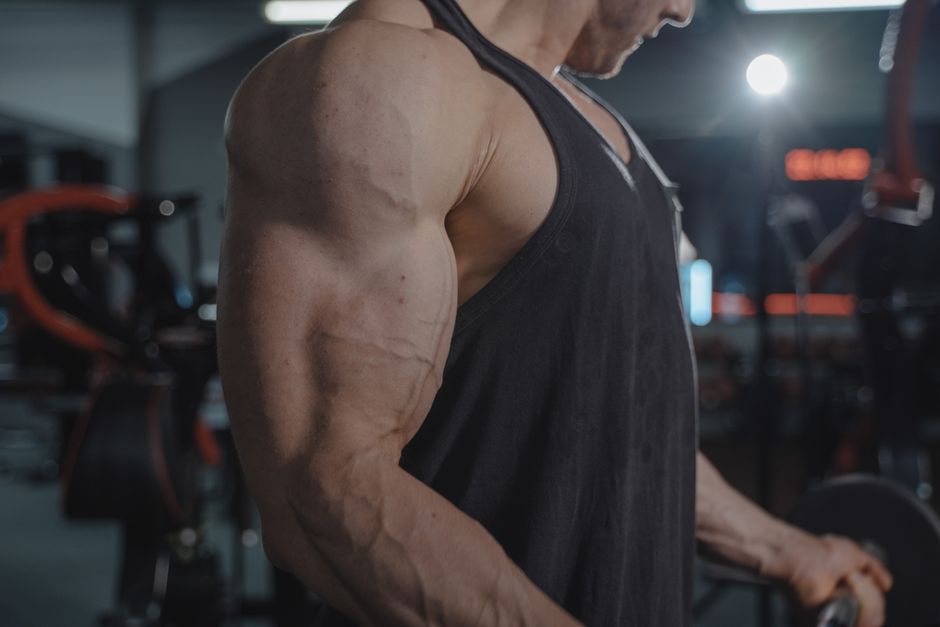
The outer tricep is the part of the muscle you see from the side, and it gives your arm that defined horseshoe shape. To target it best, you need exercises that emphasize elbow extension with the arms overhead or with the upper arms locked in place. The most effective choices are overhead extensions, close-grip presses, and pushdowns performed with strict form and a full range of motion.
What Exactly Is the Outer Tricep?
The triceps brachii has three heads: the long head, the lateral head, and the medial head. The “outer” tricep is primarily the lateral head. It sits on the outside of the upper arm and is the muscle that creates the horseshoe look when your arm is extended.
The long head runs down the back of the arm and crosses the shoulder joint. The medial head sits underneath the other two and is mostly hidden. The lateral head is the one you can see from the side, and it is the main focus when people talk about targeting the outer tricep.
All three heads work together to straighten the elbow. You cannot completely isolate one head, but you can shift the emphasis. The lateral head responds best to exercises where the upper arm stays close to your body and the elbow does most of the work.
Why Overhead Movements Hit the Outer Head Hard
When you raise your arms overhead, the long head of the tricep stretches fully. This stretched position puts more tension on the muscle fibers, and research consistently shows that muscles worked in a lengthened position grow more effectively. The lateral head also activates strongly during overhead extension because it assists the long head through the full range of motion.
Overhead cable extensions are a top choice. The cable keeps constant tension on the muscle, even at the top of the movement where other exercises lose resistance. Start with the cable set low, grab the rope or bar with both hands, and press your hands forward until your arms are fully straight.
Dumbbell overhead extensions work well too. You can do them seated or standing, with one arm or two. The single-arm version lets you focus on each side equally and often allows a deeper stretch. Keep your elbow pointed forward and your upper arm close to your head throughout the movement.
Do not let your elbows flare out to the sides. That shifts the work to your shoulders and reduces tricep activation. The movement should feel like you are pressing the weight straight up from behind your head, not pushing it out in front of you.
The Role of Close-Grip Presses
Close-grip bench presses and close-grip pushups are compound movements that allow you to load the tricep with heavy weight. They are not isolation exercises, but they build overall tricep mass, and the lateral head gets significant stimulation from them.
For the close-grip bench press, grip the bar slightly narrower than shoulder-width. Lower the bar to your lower chest or sternum, keeping your elbows tucked against your sides. Press back up until your arms are fully locked out. The lockout position is where the lateral head works hardest.
Close-grip pushups are a bodyweight alternative that works the same way. Place your hands directly under your shoulders, slightly closer than usual. Keep your elbows close to your body as you lower your chest toward the floor. Push through the floor until your arms are straight.
These exercises do not isolate the outer head as cleanly as overhead extensions, but they allow heavier loads. Heavier loads mean more total tension on the muscle, which is a key driver of growth. Most effective tricep routines include at least one compound pressing movement and one isolation movement.

Pushdowns: Are They Worth Doing?
Pushdowns are the most common tricep exercise in most gyms, but they are not the best choice for targeting the outer head. The problem is the starting position. With your elbows at your sides and your hands in front of you, the tricep is not in a stretched position. The lateral head still activates, but the overall tension is lower than in overhead movements.
That said, pushdowns still have value. They are excellent for adding volume at the end of a workout when you are fatigued. They are easy on the joints, and you can adjust the attachment to change the feel. A rope attachment allows you to split your hands apart at the bottom of the movement, which adds an extra squeeze to the lateral head.
If you include pushdowns, use them as a finishing movement rather than your main exercise. Do them after overhead extensions and close-grip presses. Keep your upper arms pinned to your sides and avoid swinging your body to move the weight. The movement should come only from your elbows.
How Many Sets and Reps Should You Do?
For muscle growth, the research points to a moderate rep range. Most people respond well to 8 to 12 repetitions per set for isolation exercises. For compound movements like close-grip presses, you can go heavier with 6 to 10 reps per set.
Total weekly volume matters more than any single workout. Studies suggest that 10 to 20 hard sets per muscle group per week is a reasonable target for most lifters. For the triceps specifically, you can split that across two or three workouts. A single workout with 8 to 12 total sets is a good starting point.
Rest between sets should be 60 to 90 seconds for isolation exercises and 2 to 3 minutes for heavy compound lifts. Shorter rest keeps the muscle under tension longer, but longer rest allows you to lift heavier on the next set. Both approaches work, and you can alternate based on how you feel.
No single rep range is magical. The key is taking each set close to failure and progressing the weight over time. If you can do 12 clean reps with a weight, it is time to increase the load.
Common Form Mistakes That Kill Outer Tricep Activation
The most common mistake is letting the elbows drift forward or out to the sides. This turns the exercise into a shoulder movement and takes tension off the tricep. Keep your elbows pointed in the same direction throughout the entire set.
Another mistake is using momentum. Swinging the weight or bouncing at the bottom of a movement reduces muscle tension. The tricep works hardest when the movement is slow and controlled, especially on the lowering phase.
Partial reps are also a problem. Stopping short of full elbow extension means the lateral head never reaches its peak contraction. Always lock out your elbow at the top of each rep, even if it means using a lighter weight.
Finally, do not ignore the stretch. The lateral head grows best when it is worked through a full range of motion. If you are doing overhead extensions, lower the weight far enough that you feel a deep stretch in the back of your arm before pressing back up.
Putting It Together: A Sample Outer Tricep Workout
Here is a simple routine that targets the outer head effectively. Warm up with a light set of pushdowns or overhead extensions before you start.
- Overhead cable extension: 3 sets of 10 to 12 reps
- Close-grip bench press: 3 sets of 6 to 10 reps
- Single-arm dumbbell overhead extension: 3 sets of 10 to 12 reps per arm
- Rope pushdown: 2 sets of 12 to 15 reps
Do this workout once or twice per week. If you train triceps twice weekly, adjust the volume so your total weekly sets stay in the 10 to 20 range. Focus on form over weight, and aim to add a small amount of weight or an extra rep each week.
This routine covers the key angles: stretched overhead work, heavy compound pressing, and high-rep finishing work. It hits the lateral head from multiple directions and gives you the best chance of building that defined outer tricep.
How To Target The Outer Tricep Best Exercises: Key Facts
The lateral head is the visible outer portion of the tricep, and it responds best to exercises that involve full elbow extension with the arms overhead or locked close to the body. Overhead cable extensions and dumbbell extensions place the muscle in a stretched position, which research links to greater growth. Close-grip presses allow heavier loads that build overall tricep mass. Pushdowns are useful for volume but are not the most effective outer-head builder. Consistent training with progressive overload and strict form is what actually changes the muscle.
Frequently Asked Questions
Can you isolate the outer tricep completely?
No, all three heads of the tricep work together to straighten the elbow. You can shift emphasis to the lateral head with overhead movements, but you cannot completely isolate it.
Are pushdowns good for the outer tricep?
Pushdowns activate the lateral head but not as strongly as overhead extensions. They are best used as a finishing exercise after heavier and more stretched movements.
How often should I train my triceps?
Most lifters do well training triceps two times per week. Keep total weekly sets between 10 and 20 for optimal growth without overtraining.
Do I need heavy weights to build outer tricep size?
Heavy compound lifts help build overall mass, but strict form and full range of motion matter more than the weight on the bar. Moderate weights taken close to failure work well for the lateral head.
