
Your shoulder blades, or scapulae, are the foundation for nearly every arm movement you make. When they are weak or positioned poorly, your neck, shoulders, and upper back often pay the price. The four most effective exercises to strengthen your scapula are the wall slide, the prone Y-T-W raise, the scapular push-up, and the banded face pull. These moves target the muscles that stabilize your shoulder blades, helping you build a stronger, more resilient upper body.
Why Scapular Strength Matters More Than You Think
Your scapula is not directly attached to your rib cage like most bones. It floats on a bed of muscle and only connects to your body through the collarbone at the front. This design gives your arm incredible range of motion, but it also means your scapula relies entirely on muscle to stay in the right position.
When those muscles are weak, your shoulder blades drift forward and upward. This position, often called “rounded shoulders,” puts extra stress on your rotator cuff and the front of your shoulder. Over time, this can lead to pinching, pain, and weakness when you lift your arm overhead.
Strengthening the muscles that control your scapula is not just about posture. It is about giving your shoulder joint a stable base to work from. Every push-up, pull-up, and overhead press depends on your scapula staying steady while your arm moves.
How To Strengthen Your Scapula 4 Key Exercises
These four exercises target the main muscle groups that control your shoulder blades. Perform them two to three times per week on non-consecutive days. Start with two sets of ten repetitions each and add a third set as you get stronger.
Focus on quality over quantity. Slow, controlled movements with light resistance build more strength in these small stabilizer muscles than heavy weights with poor form.
1. Wall Slides
Wall slides train your scapula to move correctly as your arm raises overhead. This movement pattern is essential for anyone who does overhead work, lifts weights, or plays sports that involve throwing.
Stand with your back flat against a wall. Your heels, buttocks, upper back, and head should all touch the wall. Place your forearms against the wall with your elbows bent at 90 degrees and your hands at shoulder height. Slowly slide your arms up the wall as high as you can without your lower back arching or your head pulling forward. Pause for two seconds at the top, then slide back down.
If your arms do not reach full overhead, that is normal. Go only as high as you can while keeping your back and head against the wall. The range will improve with practice.
2. Prone Y-T-W Raises
This exercise works the muscles between your shoulder blades and the ones that control downward rotation. It is one of the most complete scapular exercises because it targets three different movement patterns in one sequence.
Lie face down on a mat or bench. Keep your arms straight and thumbs pointing up. Raise your arms into a Y position, forming a straight line with your body. Lower them, then raise them into a T position with your arms out to the sides. Lower again, then bend your elbows to form a W shape with your arms pulled toward your ribs. Squeeze your shoulder blades together at the top of each position.
Start without weights. Once you can perform the full sequence with good form, hold a light dumbbell or water bottle in each hand. Never let your neck strain or your lower back overarch to lift your arms higher.
3. Scapular Push-Ups
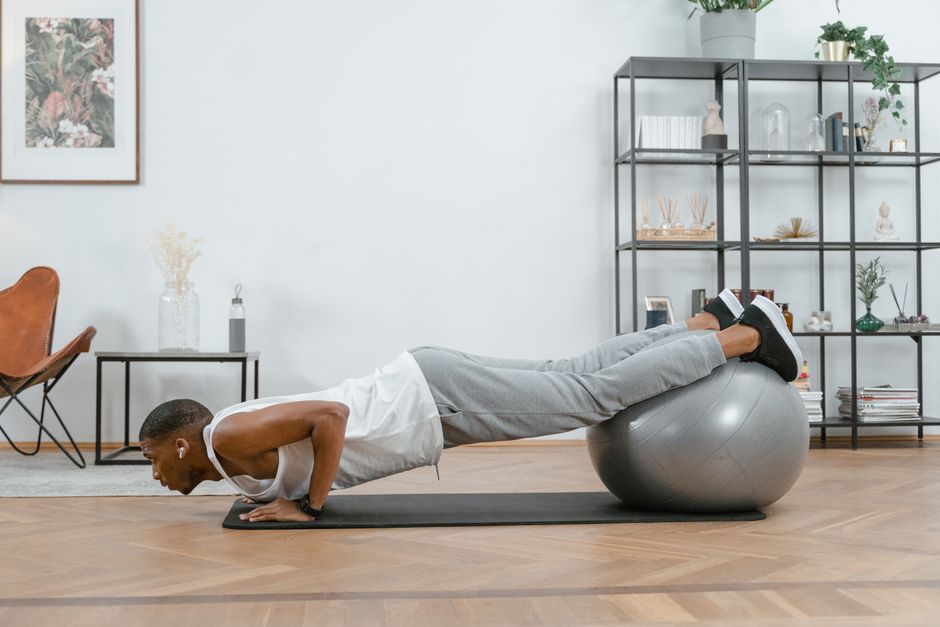
Scapular push-ups isolate the movement of your shoulder blades without bending your elbows. They build strength in the serratus anterior, a muscle that wraps around your ribs and holds your scapula flat against your chest wall.
Start in a standard push-up position with your hands under your shoulders and your body in a straight line. Keep your elbows completely straight. Let your shoulder blades pinch together in the middle of your back, allowing your chest to lower slightly toward the floor. Then push your shoulder blades apart, rounding your upper back slightly as your chest rises. This is a small movement, but it targets exactly the muscles that keep your scapula stable.
If a full push-up position is too difficult, do this exercise on your knees or with your hands on a wall. The movement stays the same regardless of your starting position.
4. Banded Face Pulls
Face pulls strengthen the muscles in your upper back and the back of your shoulders. They are particularly effective for counteracting the forward pull of your chest muscles, which are often overactive from desk work and phone use.
Attach a resistance band to a sturdy anchor at chest height. Hold one end in each hand with your palms facing down. Step back until the band has tension. Pull the band toward your face, separating your hands so they end up near your ears with your elbows pointing out to the sides. Squeeze your shoulder blades together at the end of the movement, then slowly return to the start.
Keep your shoulders down away from your ears throughout the exercise. If you feel the work in your neck instead of your upper back, lower the resistance and focus on pulling with your shoulder blades, not your arms.
What the Research Says About Scapular Exercises
Research consistently shows that scapular strengthening exercises improve shoulder function in people with and without existing shoulder pain. Studies have found that these exercises increase the activity of the lower trapezius and serratus anterior muscles, both of which are critical for proper scapular control.
Some research suggests that scapular exercises are especially helpful for people recovering from shoulder injuries or surgery. The evidence is strongest for using these exercises as part of a broader rehabilitation program rather than as a standalone treatment.
What the research does not support is the idea that scapular exercises alone can fix all shoulder problems. If you have persistent shoulder pain, a healthcare professional should evaluate you before you start an exercise program. Weak scapular muscles may be part of the problem, but they are rarely the whole story.





Common Mistakes That Sabotage Your Progress
The most common mistake people make with scapular exercises is using too much weight or resistance. These muscles are small and fatigue quickly. Heavy resistance forces your larger muscles to take over, which defeats the purpose of the exercise.
Another frequent error is shrugging your shoulders toward your ears. This activates your upper trapezius muscles, which are often already overactive. Keep your shoulders relaxed and down throughout every exercise.
Finally, many people rush through the movements. Scapular control requires time under tension. Each repetition should take about three to four seconds in each direction. If you cannot maintain control for that long, reduce the resistance or the range of motion.
How Quickly Will You See Results?
Most people notice improved control and less shoulder discomfort within four to six weeks of consistent training. Visible changes in posture typically take longer, often two to three months, because muscle growth and habit change happen slowly.
Consistency matters more than intensity. Doing these exercises twice per week for six months will produce better results than doing them every day for two weeks and then stopping. Your muscles adapt to the load you give them over time, not to occasional bursts of effort.
If you experience sharp pain, numbness, or tingling during any of these exercises, stop immediately. Mild muscle fatigue is expected. Sharp pain is not. Consult a healthcare provider before continuing.
When To Progress to Harder Variations
Once you can perform three sets of fifteen repetitions of each exercise with perfect form, you are ready to progress. For wall slides and Y-T-W raises, add light dumbbells. For banded face pulls, use a thicker band or move farther from the anchor point.
For scapular push-ups, progress from wall to knees to full push-up position. You can also slow down the tempo, taking five seconds for each direction, which increases the time your muscles spend under tension.
Another progression option is to combine these exercises into a circuit. Perform one set of each exercise back to back, rest for two minutes, then repeat the circuit two more times. This increases the total training volume while keeping each individual exercise at an appropriate intensity.
Frequently Asked Questions
How often should I do scapular strengthening exercises?
Two to three times per week on non-consecutive days is ideal. Your muscles need recovery time to get stronger, so daily training is not necessary and may slow your progress.
Can scapular exercises fix rounded shoulders?
They can help significantly, but they work best when combined with stretching tight chest muscles and reducing prolonged sitting. Scapular strengthening addresses the weakness side of the problem, while stretching and movement habits address the tightness side.
Do I need weights to strengthen my scapula?
No. Bodyweight and resistance band exercises are sufficient for most people. These muscles respond well to lighter resistance with higher repetitions, especially when you are just starting out.
Will these exercises help with shoulder pain?
They can help with pain related to poor scapular control, but they are not a cure-all. If your pain persists after several weeks of consistent exercise, see a healthcare professional for a proper evaluation.
