
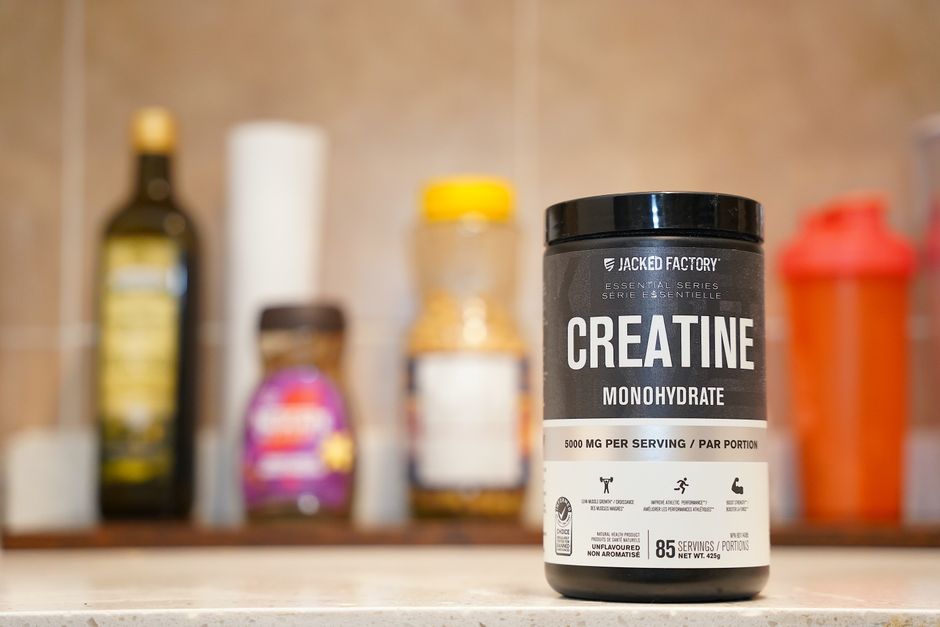
Creatine is one of the most studied supplements in existence, but almost all of that research has focused on muscle. The brain story is newer, smaller, and messier. Here is the honest answer: creatine does reach the brain and does affect brain energy metabolism, but the evidence that it improves thinking in healthy adults is genuinely mixed. The strongest findings involve sleep deprivation, not everyday cognitive enhancement.
How Does Creatine Actually Work in the Brain?
Creatine is not a stimulant. It does not act on neurotransmitters the way caffeine does. Instead, it works as part of a energy buffer system inside cells.
Your brain consumes a disproportionate share of your body’s energy. It makes up roughly 2 percent of body weight but uses about 20 percent of the body’s energy at rest. Neurons fire constantly, and that firing costs ATP — the basic energy currency of every cell.
Creatine, once inside a cell, gets converted into phosphocreatine. Phosphocreatine can rapidly regenerate ATP when demand spikes. Think of it as a small, fast-access battery that sits next to the machinery that needs power.
The brain has its own creatine system. It can make some creatine internally and also pull it from the bloodstream, though the blood-brain barrier limits how much gets through. This is the key limitation for anyone hoping to load the brain the way bodybuilders load muscle.
Muscle tissue takes up creatine readily. Brain tissue does so more slowly and to a smaller degree. That difference matters for everything that follows.
Does Creatine Cross the Blood-Brain Barrier?
Yes, but not efficiently. This is the single most important fact for understanding why brain results differ from muscle results.
Creatine gets into the brain through a specific transporter protein. That transporter is saturable, meaning it can only move so much creatine at a time. Once it is working at capacity, taking more creatine does not push more into the brain.
Studies using brain imaging have found that oral creatine supplementation can raise brain creatine levels, but the increase is modest compared to what happens in muscle. Some research suggests the brain’s creatine content rises by a small percentage, while muscle stores can increase substantially more.
There is also a practical wrinkle. The brain appears to hold onto its creatine tightly and may already be closer to its ceiling than muscle is. If your brain creatine is already near the top of its range, adding more may not do much.
This helps explain a pattern you will see repeatedly in the research: people who start with lower brain creatine — from poor sleep, stress, or certain health conditions — sometimes show effects, while well-rested, healthy people often show little change.
What Does the Research Actually Show for Brain Health?
The evidence splits into two very different categories. One is reasonably encouraging. The other is weak.
Sleep deprivation is the strongest signal. Several small studies have found that creatine supplementation can reduce some of the cognitive decline caused by sleep loss. When people are kept awake and their thinking gets worse, creatine appears to blunt some of that drop. This makes biological sense — a fatigued brain is an energy-stressed brain, and creatine supports energy buffering.
Healthy, well-rested adults show inconsistent results. When researchers give creatine to people who are not sleep-deprived and test memory, reaction time, or reasoning, the findings vary. Some studies show small benefits. Others show nothing. The overall picture does not support creatine as a general cognitive enhancer for people who are already functioning normally.
There is also interest in creatine for specific conditions involving brain energy problems, and for older adults. This research is ongoing. Some findings are suggestive, but the studies are often small and the results have not been consistent enough to call this established.
One honest summary: creatine is not a nootropic in the way most people mean it. It does not reliably make a healthy brain sharper. It may help a brain that is running low on energy.





How to Take Creatine for Brain Health
If you are going to try it, here is what the research and standard practice suggest. None of this is a prescription — it is a description of what studies have typically used.
Form. Creatine monohydrate is the form used in nearly all the research, including brain studies. Other forms are sold with claims of better absorption, but there is no strong evidence they work better for the brain. Monohydrate is also the cheapest.
Typical dose. Brain studies have generally used doses in the range of 5 to 20 grams per day. The common maintenance dose of 5 grams per day is the same one used for muscle. Higher doses have been used in some brain studies, but higher is not automatically better, and the transporter limitation means more may not mean more.
Timing. There is no established best time of day for brain effects. Muscle research suggests consistency matters more than timing. Taking it with a meal may reduce stomach upset.
Loading. Some protocols use a loading phase of about 20 grams per day split into smaller doses for several days, followed by a lower maintenance dose. Loading raises tissue levels faster. It is not required, and it is more likely to cause digestive discomfort.
How long to notice anything. Brain creatine rises gradually. If there is any cognitive effect, it would not be immediate. Give it weeks, not days, before judging — and accept that you may notice nothing at all.
Is Creatine Safe to Take Daily?
For most healthy adults, creatine monohydrate has a good safety record in the research. Studies lasting months to a few years have not found serious harm in healthy people at typical doses.
The most common side effect is digestive discomfort — bloating, cramping, or loose stools — especially with large single doses. Splitting the dose and taking it with food usually helps.
Creatine can raise creatinine levels on a blood test. This is a laboratory artifact, not kidney damage, but it can confuse results. If you have a kidney test, tell your doctor you take creatine.
People with pre-existing kidney disease, liver disease, or those taking medications that affect the kidneys should talk to a doctor before using creatine. The safety data in these groups is not strong enough to assume it is fine.
There is no established guidance for creatine use in pregnancy or breastfeeding, and no clinical guidelines currently exist for those populations. Treat that as a genuine unknown, not a green light.
Does Creatine Help Memory and Focus?
For healthy adults who sleep well, the honest answer is: probably not much, and the studies disagree.
Where effects show up most reliably is under stress — sleep loss, sleep restriction, or conditions where brain energy is compromised. In those situations, some studies find creatine helps preserve performance.
This distinction is the whole story. Creatine is not making a normal brain better. It may be keeping a stressed brain from getting worse.
If you are chronically short on sleep, the more reliable fix is sleep, not a supplement. Creatine might soften the edge, but it does not replace rest.
Should You Take Creatine for Brain Health?
That depends on what you are expecting.
If you want a sharper mind for everyday life, the evidence does not support that. If you are dealing with sleep loss or a specific condition affecting brain energy, there is a more reasonable case, though it is still not proven for most uses.
Creatine is inexpensive, well studied in muscle, and generally well tolerated in healthy adults. The main risk is not danger — it is spending money on something that may do nothing for your brain.
A fair way to think about it: creatine is a proven muscle supplement with a promising but unproven brain story. The brain research is real, but it is early. Anyone who tells you it is a sure thing for cognition is ahead of the evidence.
Frequently Asked Questions
How much creatine should I take for brain health?
Brain studies have typically used 5 to 20 grams per day, with 5 grams being the standard maintenance dose. Higher doses are not clearly better, and no official brain-specific dose guideline exists.
Does creatine improve memory in healthy adults?
The evidence is mixed, and most studies in well-rested healthy adults show little or no benefit. Effects appear more likely under sleep deprivation or energy stress.
How long does creatine take to work for the brain?
Brain creatine rises gradually over weeks, not days. There is no established timeline for cognitive effects, and many people notice none.
Is creatine safe to take every day?
For most healthy adults, daily creatine monohydrate has a good safety record in research. People with kidney or liver disease should check with a doctor first.
