
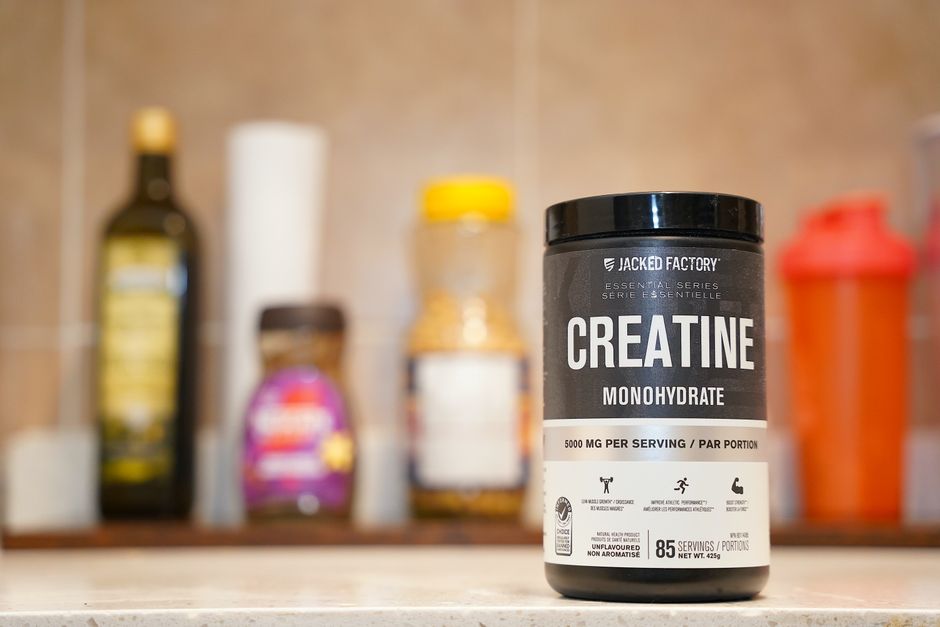
Creatine is one of the most discussed supplements on Reddit fitness boards, and the conversations often swing between hype and dismissal. The short answer: creatine increases the energy available to muscles during short, intense efforts, and it is one of the most studied sports supplements in existence. Reddit’s enthusiasm is mostly justified, though some of the claims you see in threads go well beyond what the evidence supports.
What Does Creatine Actually Do in the Body?
Creatine is a compound your body makes and stores, mostly in skeletal muscle. It combines with phosphate to form phosphocreatine, which your muscles use to rapidly regenerate ATP — the molecule cells burn for energy.
That matters most during the first few seconds of hard effort. Sprinting, heavy lifting, jumping, and other brief maximal activities rely heavily on this ATP-phosphocreatine system. When you supplement with creatine, you increase the amount of phosphocreatine stored in muscle, which can extend how long you can sustain high-intensity work before fatigue sets in.
This is not a stimulant effect. Creatine does not make you feel wired or energized in the way caffeine does. It works at the level of muscle chemistry, and the benefits show up in performance, not in how you feel during a workout.
Reddit threads sometimes describe creatine as if it works like a pre-workout. It does not. The effects build up over days to weeks as muscle stores saturate, which is why timing around your workout matters far less than consistency.
What Does Creatine Do Reddit Users Report Most Often?
The most common reports on Reddit involve improved strength and the ability to complete more reps at a given weight. This lines up with what controlled research has found.
Beyond performance, users frequently mention:
- Faster recovery between sets and between sessions
- Increased body weight, often a few pounds within the first couple of weeks
- Fuller-looking muscles, partly from water drawn into muscle tissue
- Modest improvements in repeated sprint or explosive efforts
The weight gain point deserves a closer look. Creatine pulls water into muscle cells, so the scale can move up without any increase in body fat. Reddit users often panic about this, assuming they are getting “puffy.” The water is intracellular — inside the muscle — not under the skin. For most people this reads as fuller muscles, not bloating.
What Reddit reports less reliably are the dramatic transformations some posts imply. Creatine supports training. It does not replace it. Someone who takes creatine and does not train hard will not see meaningful muscle or strength changes.
Is Creatine Safe, and What Does the Evidence Show?
Creatine monohydrate has one of the strongest safety records of any sports supplement. Research spanning decades in healthy adults has not found consistent evidence of harm to the kidneys or liver at typical doses.
The kidney concern is one of the most persistent myths on Reddit and elsewhere. Creatine does raise creatinine levels on blood tests, because creatinine is a breakdown product of creatine. This can make kidney function look worse on a standard panel even when the kidneys are working normally. That is a real issue for anyone being monitored for kidney disease, and it is worth telling your doctor you take creatine before bloodwork.
For people with existing kidney disease, the situation is different. Creatine supplementation in that group should be discussed with a physician rather than decided by a forum thread.
Common side effects reported are minor — stomach discomfort if taken on an empty stomach, and the well-known digestive upset from very large single doses. Splitting the dose across the day tends to reduce this.

Does Creatine Only Help With Lifting?
No, and this is where Reddit threads are often more accurate than general assumptions. Because the mechanism involves short bursts of energy, creatine has been studied in a range of activities beyond bodybuilding.
Evidence indicates possible benefits for:
- Sprint and interval-based sports
- Team sports involving repeated explosive efforts
- Resistance training in older adults, sometimes alongside muscle-preserving benefits
- Certain cognitive tasks under stress or sleep deprivation, though this research is earlier and less settled
The cognitive angle is where you should be most cautious. Some studies suggest creatine may support memory or reasoning under demanding conditions, but results vary and the field is still developing. It is not established as a general brain-boosting supplement for healthy, well-rested adults.
Endurance athletes see less benefit. Long-distance running and cycling depend more on oxygen delivery than on phosphocreatine, so the performance edge tends to be smaller or absent.
Why Do Reddit Threads Disagree So Much About Creatine?
Most of the disagreement comes down to a few recurring points of confusion.
Form matters. Creatine monohydrate is the form with the most research behind it. Other forms — HCL, ethyl ester, buffered, nitrate — are marketed as superior, but the evidence does not clearly show they outperform monohydrate. Reddit users who have tried several often land on the same conclusion: monohydrate works and costs less.
Loading is optional. A loading phase saturates muscles faster, while a smaller daily dose reaches the same saturation over a longer period. Both approaches work. The choice is about speed versus convenience, not effectiveness.
Non-responders exist. Some people already have high muscle creatine stores from diet or genetics and see little change. This is a real phenomenon, not a sign that the product is fake.
Diet plays a role. People who eat a lot of meat and fish already take in creatine from food. Vegetarians and vegans typically have lower baseline stores and often notice a larger response.
| Claim Seen on Reddit | What Evidence Supports |
|---|---|
| Builds muscle on its own | Supports training; does not build muscle without it |
| Damages kidneys | No consistent evidence in healthy adults; raises creatinine on tests |
| Must cycle on and off | No established need to cycle |
| Only works for bodybuilders | Benefits extend to other short-burst activities |
| Fancy forms work better | Monohydrate has the strongest evidence base |
What Should You Take Away From the Reddit Consensus?
The Reddit consensus, stripped of exaggeration, is fairly close to the scientific one. Creatine monohydrate is effective for short, intense efforts, well tolerated in healthy adults, and inexpensive. It is not a shortcut and it is not a drug.
What Reddit gets wrong most often is scope. Creatine is not a fat burner, not a hormone booster, and not a replacement for sleep, protein, or a structured training plan. It is a tool that helps you do more work, and the results follow from that work.
If you have a medical condition, take prescription medications, are pregnant or breastfeeding, or are under 18, the evidence base is limited or absent for your situation. No clinical guidelines currently exist for creatine use in pregnancy or breastfeeding, and the research in children and adolescents is not sufficient to make firm recommendations. Talk to a clinician rather than a subreddit.
Frequently Asked Questions
What does creatine do to your body?
It increases phosphocreatine stores in muscle, which helps regenerate ATP during short, intense efforts like sprinting or heavy lifting. This can improve performance and support training gains over time.
Does creatine make you gain weight?
It often adds a few pounds early on because it draws water into muscle cells, not because it adds fat. This is intracellular water and typically looks like fuller muscles rather than bloating.
Is creatine bad for your kidneys?
Research in healthy adults has not found consistent evidence of kidney harm at typical doses. It does raise creatinine on blood tests, so tell your doctor you take it before any kidney-related testing.
Do you need to cycle creatine?
No established evidence supports cycling on and off. Consistent daily use keeps muscle stores saturated, and stopping simply lets those stores return to baseline over time.
