
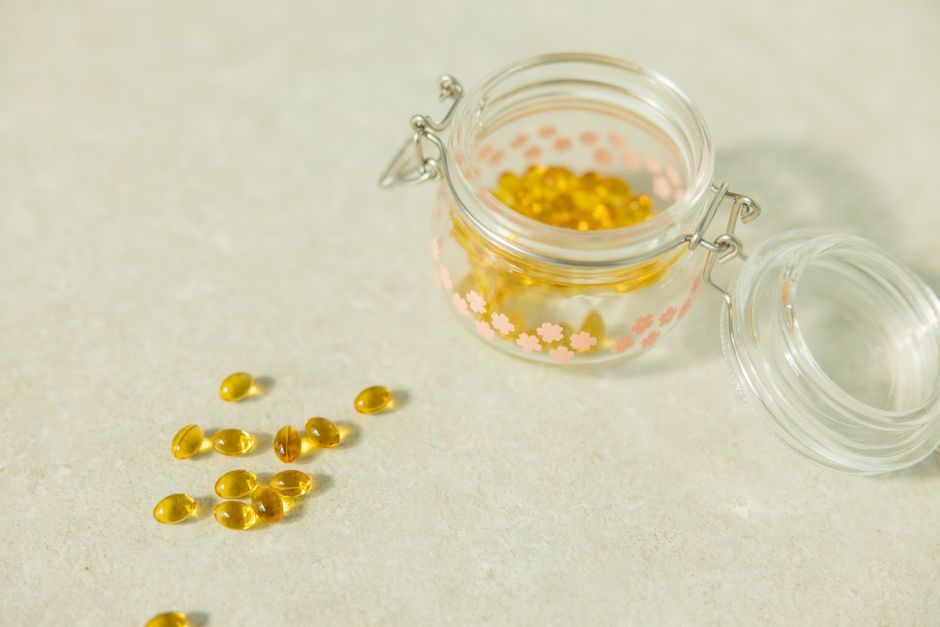
Swallowing a soft gel pill is mostly a matter of technique, not willpower. The capsule is designed to be slippery and flexible, and it floats. That last detail matters more than most people realize. If you tilt your head back to swallow it, the pill drifts toward the front of your mouth and can feel stuck. Tipping your chin slightly down while you swallow lets the capsule float to the back of your throat and go down more easily. A few other habits, from using enough water to relaxing your throat, make the process smoother.
How To Swallow Soft Gel Pills Easily Every Time
The single most useful trick is the head position. Most people swallow tablets by tilting their head back, and that works for hard pills because they sink. Soft gels float. Tilting your head forward, chin toward your chest, uses that buoyancy to move the capsule toward your throat instead of letting it bob around at the front of your mouth.
Pair that with a full glass of water. Water does two things. It lubricates the throat, and it creates a small current that helps carry the pill down. Taking a sip first to moisten your mouth, then placing the pill on your tongue, then drinking again is a sequence many people find reliable.
Here is a practical sequence that works for most adults:
- Take a sip of water first to wet your mouth and throat.
- Place the soft gel on your tongue, toward the middle or slightly back.
- Take a larger sip of water and hold it in your mouth with the pill.
- Tilt your chin slightly toward your chest, not back.
- Swallow the water and pill together in one motion.
- Take another sip afterward to make sure nothing is left behind.
If the pill still feels stuck, resist the urge to swallow again and again with a dry throat. That tightens the muscles and makes things worse. Take a breath, relax your shoulders, and try again with more water.
Why Do Soft Gel Pills Feel Stuck in Your Throat?
Most of the time the pill is not actually stuck. It has already passed into your esophagus, and what you feel is the sensation of it moving down or a bit of local irritation. The throat is lined with sensitive tissue, and a large capsule brushing past it can leave a lingering feeling even after it is gone.
The real problem is usually a mismatch between pill size and swallowing mechanics. Soft gels can be large, and the gelatin shell is flexible, which some people find harder to manage than a rigid tablet. Anxiety makes this worse. When you are worried about choking, the muscles at the back of your throat tense up, the swallow becomes less coordinated, and the pill genuinely does become harder to get down.
Dry swallowing is another common culprit. A capsule without enough water can drag against the esophageal lining. This is why taking soft gels with a full glass of water, not just a sip, makes a real difference.
One point worth knowing: the esophagus is a muscular tube, not a straight pipe, and it moves food and pills down through coordinated waves called peristalsis. Gravity helps, but it is not the main force. This is also why staying upright for a while after swallowing matters. Lying down too soon can let a pill sit in the esophagus longer than it should, and some medications can irritate the esophageal lining if they linger there. If you take soft gels regularly, take them sitting or standing, and stay upright for a few minutes afterward.
Does Your Head Position Really Change How You Swallow a Pill?
Yes, and it is one of the better-supported practical tips in this area. The logic is simple physics. Soft gel capsules are less dense than water and tend to float. Tilting your head back sends a floating pill toward the front of your mouth, right where it is hardest to swallow. Tilting your head forward sends it toward the back of your throat, where the swallow reflex takes over.
Hard tablets behave the opposite way. They are denser than water and sink, so a slight backward tilt can help them. This is why the advice differs depending on the pill. If you take both kinds, it is worth remembering which way to tip your head for each.
Some research has looked at whether specific head positions and swallowing methods help people who struggle with pills. The findings generally support the idea that posture and technique matter, though results vary between studies and between individuals. What works reliably for one person may feel awkward for another. The floating-versus-sinking principle is sound, but you may need to adjust the exact angle to what feels natural for you.





What If You Genuinely Cannot Swallow Pills?
Some people have a real physical or psychological barrier, not just a bad habit. A narrowed esophagus, a history of choking, or a strong gag reflex can make pill swallowing genuinely difficult. So can anxiety that has built up over years. This is more common than people admit, and it is not a character flaw.
If you consistently cannot swallow pills, talk to a pharmacist or doctor. There are often alternatives. Some soft gels can be pierced and the contents squeezed out, but this is not safe for every product. Certain capsules are designed to be opened and mixed with food, while others are not. Extended-release or enteric-coated products should never be opened, crushed, or chewed, because doing so can release the drug too fast or protect the stomach from a medication that needs that protection. Always check with a pharmacist before altering any pill.
Liquid versions, smaller tablets, and dissolvable forms exist for many medications. A pharmacist can tell you whether a substitute is available for what you take. Never assume a different form is interchangeable without confirming it.
Can You Train Yourself to Swallow Pills More Easily?
For many people, yes. Pill swallowing is a skill, and like most skills it improves with practice and relaxation. The biggest obstacle is usually tension, not anatomy. Learning to relax the throat and trust the swallow reflex helps more than any single trick.
One approach some clinicians suggest is practicing with small candies or placebo capsules of increasing size, using water and the head-tilt technique. This is sometimes used with children and adults who have pill-swallowing difficulty. The evidence for formal training programs is limited but generally positive, and the approach is low-risk. If you want to try it, start small and stay relaxed.
Relaxation matters more than people expect. Before you swallow, drop your shoulders, unclench your jaw, and take a slow breath. A tense throat is a narrow throat. Many people find that once they stop bracing for the pill, it goes down without drama.
When Should You Be Concerned About Trouble Swallowing?
Occasional difficulty with a large pill is normal. Trouble swallowing food, liquids, or your own saliva is not, and it deserves medical attention. A sensation that food or pills get stuck, pain when swallowing, unexplained weight loss, or a feeling of something lodged in your throat that does not go away should be checked by a doctor.
These symptoms can have many causes, some minor and some serious, and only a clinician can sort out which applies to you. Do not assume it is just a pill problem if the difficulty extends beyond capsules. Difficulty swallowing that is new, worsening, or accompanied by other symptoms is a reason to seek care rather than work around it.
For run-of-the-mill pill trouble, the fixes are simple: enough water, the right head position, a relaxed throat, and staying upright afterward. Those habits handle most soft gel struggles. If they do not, a pharmacist is a good next stop, because the solution may be a different form of the same medication rather than a better technique.
Frequently Asked Questions
Should you tilt your head back or forward to swallow a soft gel pill?
Tilt your chin slightly forward, toward your chest, because soft gel capsules float and this position moves them toward the back of your throat. Tilting back tends to send a floating capsule toward the front of your mouth.
Why does a soft gel pill feel stuck in my throat after I swallow it?
In most cases the pill has already passed and what you feel is irritation or the sensation of it moving down the esophagus. Taking it with a full glass of water and staying upright afterward reduces this feeling.
Can you open or cut a soft gel pill to make it easier to swallow?
Only if a pharmacist or doctor confirms it is safe for that specific product. Some capsules can be opened, but extended-release and enteric-coated products should never be altered because doing so can change how the medication is absorbed.
Is it bad to swallow pills without water?
Yes, it is best avoided. Swallowing a capsule with too little water can let it drag against the esophagus, and some medications can irritate the lining if they linger there.
