
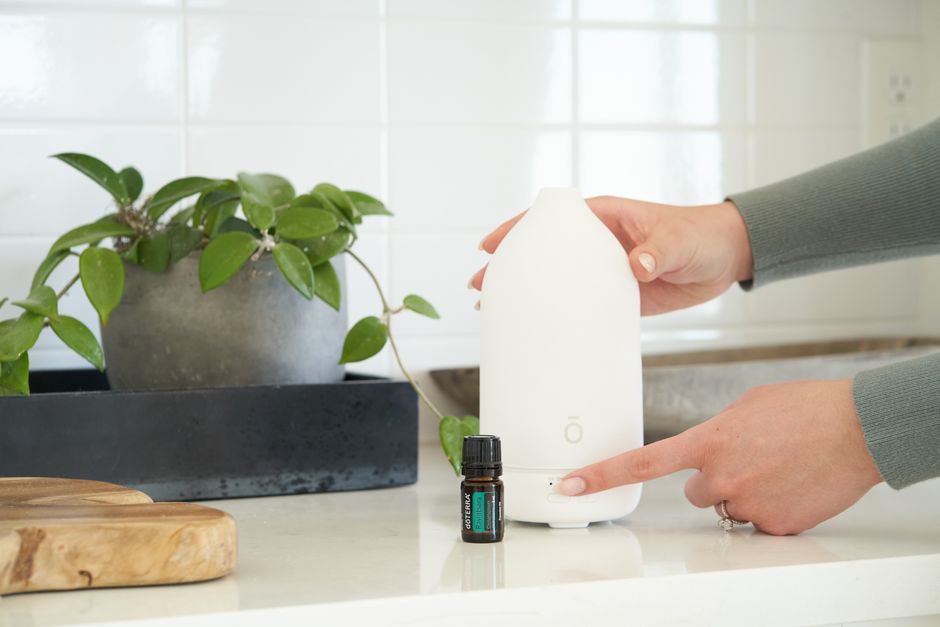
On Guard is a brand-name blend of essential oils sold by doTERRA, and the blend itself is also sold under the generic name “protective blend.” People typically use it in three ways: in a diffuser, diluted with a carrier oil and applied to the skin, or mixed with water and vinegar for cleaning surfaces. The details matter, because essential oils can irritate skin, harm pets, and damage some plastics and finishes. Here is what is known about each method, and where the evidence gets thin.
What Is in On Guard Essential Oil?
The blend contains oils from wild orange, clove bud, cinnamon bark, eucalyptus, and rosemary. Clove and cinnamon are the two that drive most of the safety concerns, because both are high in compounds that can irritate skin and mucous membranes.
It is worth separating two very different things here. There is laboratory research on individual oil components, often tested on bacteria grown in a dish. Then there is real-world use on a kitchen counter or a person’s arm. Those are not the same thing, and results from one do not automatically carry over to the other.
Some studies have found that certain essential oil components can disrupt bacterial cell membranes in laboratory settings. That is a genuine finding. It does not mean a diffuser will sterilize the air in your home, and no large human trial has shown that diffusing this blend prevents illness.
How Do You Diffuse On Guard Essential Oil?
Diffusing is the simplest method. You add drops to water in an ultrasonic or nebulizing diffuser, and the device releases a fine mist into the room.
A common approach is a few drops per diffuser, run for a limited time rather than all day. Because diffuser sizes vary widely and no official dosing standard exists for home diffusing, the practical rule is to start with less and see how the room and the people in it respond. Strong, continuous diffusion in a small closed room is where complaints usually start.
What diffusing actually does is add scent and, in some cases, a subjective sense of calm or freshness. Whether it does anything beyond that is not established. Aromatherapy research on mood is genuinely mixed, and much of it is small and hard to blind, since people know what they are smelling.
A few practical points that hold up:
- Ventilation matters. A closed bedroom with a diffuser running for hours concentrates airborne oils.
- Some people are sensitive to airborne essential oils and will notice coughing, headache, or nasal irritation.
- Asthma and other respiratory conditions can be triggered by strong scents in some people.
- Birds and other small pets are especially vulnerable to airborne oils. Do not diffuse around them.
How Do You Apply On Guard Essential Oil to Skin?
Never apply it undiluted. Clove and cinnamon oils are among the more aggressive essential oils for skin, and undiluted use can cause burning, redness, and in some cases a lasting reaction that gets worse with repeat exposure.
Dilution means mixing the essential oil into a carrier oil such as fractionated coconut oil, jojoba, or olive oil. A commonly cited range for adult skin is roughly 1 to 2 percent essential oil in carrier oil, though there is no single official standard for this specific blend. For reference, that is about 6 to 12 drops of essential oil per ounce of carrier oil. If you are unsure, use less.
Test on a small area of skin first. Wait a day before using it more widely. If you feel heat, stinging, or see redness, wash the area with soap and water and stop using it there.
Some cautions that are well supported:
- Do not apply to the face, eyes, or mucous membranes.
- Do not use on broken or irritated skin.
- Citrus oils like wild orange can increase sun sensitivity on treated skin.
- Keep it away from children’s hands and faces. Essential oils are a known cause of accidental poisoning in young children.
If you are pregnant, breastfeeding, or considering this for a child, there is no established clinical guidance for this blend in those groups. Talk to a clinician rather than relying on general instructions meant for adults.





How Do You Use On Guard Essential Oil for Cleaning?
This is where the blend gets used most often, usually mixed with water and white vinegar in a spray bottle. A common homemade version is a small amount of the oil plus vinegar and water.
Two honest points about cleaning with essential oils. First, they are not registered disinfectants in the way that EPA-registered products are. If you need to actually kill pathogens — after handling raw meat, for example — a product labeled as a disinfectant is the reliable choice. Second, oil and water do not mix. A spray made of oil and water will separate, and you will get uneven coverage unless you shake it constantly and add something to help it disperse.
Vinegar does have some antimicrobial activity, but it is not a substitute for a proper disinfectant on high-risk surfaces. For routine wiping of low-risk surfaces, an oil-and-vinegar spray is fine as a freshening cleaner. For actual disinfection, use a product designed for that job.
One more thing people miss: citrus oils can damage some plastics and finishes. Test on a hidden spot before spraying a countertop, cabinet, or painted surface.
Is On Guard Essential Oil Safe Around Pets and Children?
Pets are the bigger concern. Cats in particular have limited ability to metabolize many of the compounds in essential oils, and both diffusing and topical exposure can cause problems. Birds are highly sensitive to airborne oils. If you have pets, the cautious approach is to avoid diffusing in the same room and never apply oils to their fur or skin.
For children, the picture is similar. Essential oils are a documented cause of poisoning calls involving young children, mostly from swallowing bottles left within reach. Store them out of reach, and do not apply this blend to a child’s skin or use it in a diffuser around an infant without checking with a pediatrician first. Established guidance for this population does not exist for this specific blend.
If someone swallows essential oil, do not induce vomiting. Call Poison Control right away.
What Does the Evidence Actually Show?
This is the part worth being clear about. There is real laboratory research on the antimicrobial activity of compounds found in clove, cinnamon, and eucalyptus oils. There is also research on aromatherapy and mood, but it tends to be small and difficult to design well.
What does not exist is strong human evidence that diffusing this blend prevents illness, that applying it treats a medical condition, or that cleaning with it disinfects as well as a standard product. Marketing language often blurs these lines. Claims about “supporting” the immune system, for instance, are not the same as preventing infection, and no trial has shown that this blend does the latter.
None of that makes the product useless. It smells pleasant, some people find diffusing it calming, and it works as a general-purpose freshening cleaner. Those are reasonable uses. Treating it as medicine is not supported by the evidence.
If you want to compare the three main methods side by side:
| Method | Typical Use | Main Caution |
|---|---|---|
| Diffusing | A few drops in water, short sessions, ventilated room | Respiratory irritation; harmful to birds and small pets |
| Topical | Diluted in carrier oil, patch test first | Skin irritation; sun sensitivity; not for children or pregnancy without guidance |
| Cleaning | Mixed with vinegar and water, shaken before use | Not a registered disinfectant; can damage some plastics and finishes |
Frequently Asked Questions
Can you put On Guard essential oil directly on your skin?
No, it should be diluted in a carrier oil first because clove and cinnamon oils can irritate or burn skin. A common adult range is about 1 to 2 percent essential oil in carrier oil.
How many drops of On Guard do you put in a diffuser?
There is no official dosing standard for home diffusing, so start with a few drops in a ventilated room and use it in short sessions. Strong continuous diffusion in a closed small room is where irritation complaints usually come from.
Does diffusing On Guard essential oil kill germs in the air?
No human trial has shown that diffusing this blend disinfects the air or prevents illness. Some laboratory studies suggest certain oil components can disrupt bacteria in a dish, but that is not the same as real-world air disinfection.
Is On Guard essential oil safe around cats and dogs?
Cats in particular have limited ability to process many essential oil compounds, and birds are highly sensitive to airborne oils. The cautious approach is to avoid diffusing in the same room as pets and never apply oils to their skin or fur.
