
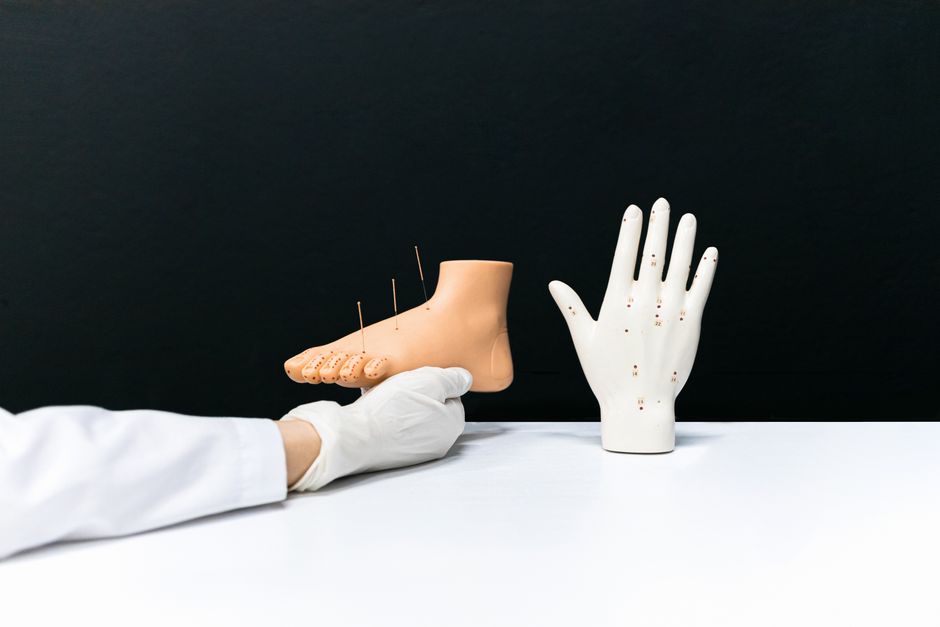
Studying acupuncture means learning a complete medical system, not just a set of needle techniques. The path involves accredited graduate programs, national board exams, and state licensing. You start with a master’s degree from an accredited school, then pass the national board exam through the NCCAOM, and finally apply for a license in the state where you want to practice.
What Are the Educational Requirements for Acupuncture School?
Acupuncture programs are graduate-level. You need a bachelor’s degree before you can apply. Most programs take three to four years to complete.
The curriculum includes both Western biomedical sciences and Traditional Chinese Medicine theory. You will study anatomy, physiology, pathology, and microbiology. You will also study acupuncture point locations, meridian theory, and Chinese herbal medicine.
Clinical training is a major part of the degree. Students complete hundreds of supervised patient treatment hours. This hands-on experience happens in school-run teaching clinics where you treat real patients under faculty supervision.
The Accreditation Commission for Acupuncture and Oriental Medicine (ACAOM) is the recognized accrediting body. Attending an ACAOM-accredited program matters because most states require it for licensure. Graduation from an accredited program also qualifies you to sit for the national board exams.
How To Study Acupuncture Programs Exams And Licensing in the United States?
The national certification process is run by the National Certification Commission for Acupuncture and Oriental Medicine, known as the NCCAOM. Passing NCCAOM exams is the standard pathway to state licensure.
The NCCAOM offers separate exams in different subjects. The main exam is the Foundations of Oriental Medicine. There are also separate exams for Acupuncture with Point Location, Biomedical Sciences, and Chinese Herbology. You do not need to take the herbology exam if you only want to practice acupuncture without herbal medicine.
Each exam is a computer-based test. You schedule them at testing centers across the country. You can take the exams during your final year of school, but most students take them after graduation.
Study materials are available through the NCCAOM directly. They publish exam content outlines that list every topic covered. Many students also use review courses and practice question banks. The content outlines are the most reliable study guide because they show exactly what the exam covers.
How Does State Licensing Work After Passing Board Exams?
Passing the NCCAOM exams does not give you a license to practice. It gives you national certification. Each state has its own licensing board with its own rules.
Most states accept NCCAOM certification as proof of competency. You still need to apply directly to the state board and pay their fees. Some states require additional paperwork, background checks, or proof of malpractice insurance.
A small number of states have additional requirements beyond the NCCAOM exams. California is the notable example. California has its own state licensing exam in addition to the national boards. You must pass both to practice in California.
Licenses must be renewed periodically. Most states require continuing education units (CEUs) every one to two years. The exact number of CEUs varies by state. Check with your state board for the specific renewal requirements.





How Much Does Acupuncture School Cost and How Long Does It Take?
Tuition varies widely by school. Public institutions and private colleges have different rates. In-state tuition is generally lower than out-of-state tuition.
Most master’s programs take about three years of full-time study. Some programs offer accelerated tracks or part-time options that extend the timeline. The total cost for a three-year program typically ranges from $50,000 to $100,000 or more depending on the school and location.
Financial aid is available. Most accredited schools participate in federal student aid programs. You can apply for loans, grants, and scholarships through the school’s financial aid office.
Consider the return on investment. Entry-level acupuncturists earn modest salaries in their first years. The Bureau of Labor Statistics groups acupuncturists with other healthcare practitioners. Median pay is competitive with other master’s-level health professions, but starting salaries are often lower than the median.
What Is the Difference Between a Master’s and a Doctorate in Acupuncture?
Many schools now offer doctoral programs in acupuncture or Oriental medicine. The entry-level degree is shifting from master’s to doctorate. This is a recent change in the profession.
The transition is gradual. Some states already require a doctorate for new licensees. Others still accept a master’s degree. The NCCAOM currently accepts both degrees for exam eligibility.
Doctoral programs take about four years. They include the same core curriculum as a master’s program with additional coursework. The extra training covers advanced clinical skills, research methods, and practice management.
If you are deciding between the two, check the licensing requirements in the states where you plan to practice. If your target state requires a doctorate, apply to doctoral programs directly. If a master’s is still accepted, that shorter path may be more practical.
What Job Opportunities Exist After Licensure?
Licensed acupuncturists work in several settings. Private practice is the most common path. Many acupuncturists open their own clinics or join established practices.
Some work in integrative health centers alongside medical doctors and chiropractors. Hospitals and pain management clinics increasingly employ acupuncturists. The military and Veterans Health Administration also hire licensed acupuncturists.
Insurance coverage for acupuncture has grown in recent years. Many private insurers now cover acupuncture for certain conditions. Medicare covers acupuncture for chronic low back pain, though this coverage is limited to specific circumstances.
Job growth projections are favorable. The aging population and increased interest in non-drug pain management support continued demand. However, competition exists in saturated urban markets. Building a patient base takes time and business skill.
How Hard Are the NCCAOM Board Exams?
The NCCAOM exams are rigorous. Pass rates vary by exam and year. The exams test both factual knowledge and clinical reasoning.
Questions range from point location and channel pathways to treatment strategies and biomedical safety. You need to know the material deeply, not just recognize it. The exams use case-based questions that require you to apply multiple concepts at once.
Most students need dedicated study time beyond their coursework. A typical study plan involves several months of review. Practice exams help you learn the question format and identify weak areas.
You can retake a failed exam. The NCCAOM allows reapplication after a waiting period. Some students need multiple attempts. This is common and does not reflect on your ability as a clinician.
Frequently Asked Questions
Can I practice acupuncture without a license?
No. Practicing acupuncture without a license is illegal in every state. Unlicensed practice can result in fines, criminal charges, and civil liability.
Do I need a bachelor’s degree before acupuncture school?
Yes, all accredited acupuncture programs require a bachelor’s degree for admission. The degree can be in any field, but some science coursework is often required as a prerequisite.
How many years does it take to become a licensed acupuncturist?
It typically takes seven to eight years total. This includes four years for a bachelor’s degree and three to four years for the acupuncture master’s or doctoral program.
Is the NCCAOM exam required in every state?
Most states require NCCAOM certification for licensure. A few states have their own exams, and California requires both the state exam and NCCAOM certification.
