
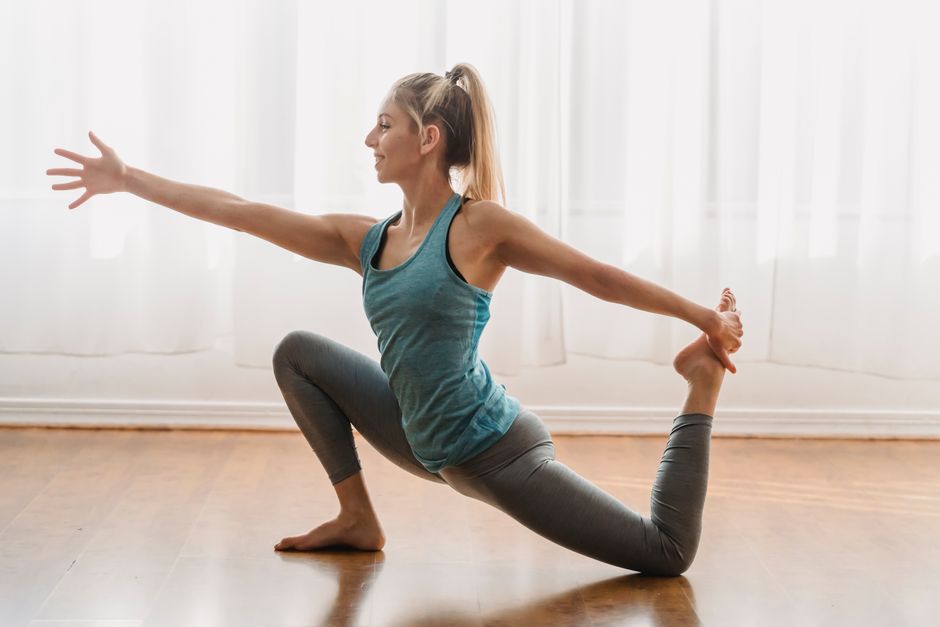
Stretching your quadriceps — the large muscle group at the front of your thigh — is one of the most direct ways to reduce knee pain, improve hip mobility, and loosen up after sitting for long periods. The most effective way to stretch your quads is to stand on one leg, bend your other knee, and gently pull your heel toward your glutes using your hand. Hold this position for 30 seconds on each side, keeping your knees together and your pelvis tucked slightly under. This single move targets the rectus femoris, the quad muscle that crosses both the hip and knee joints, which is why it tightens up so easily from both sitting and walking.
Why Do Your Quads Get So Tight in the First Place?
Your quadriceps are four muscles that run from your hip down to your kneecap. They work every time you straighten your leg or bend at the hip. That means walking, climbing stairs, and standing up from a chair all load these muscles heavily.
The problem starts when you sit for hours at a desk or in a car. Your hips are flexed and your knees are bent. In that position, the rectus femoris — the muscle that crosses both joints — stays shortened. Over time, it adapts to that shortened position. When you stand up, it resists full lengthening.
Research published in the Journal of Strength and Conditioning Research found that prolonged sitting reduces hip flexor flexibility by measurable amounts in as little as two weeks. Your quads are part of that system. Tight quads also pull on your kneecap, which can cause pain behind or around the kneecap during squatting or running.
The CDC reports that about 25% of adults experience chronic knee pain. Tight quadriceps are not the only cause, but they are one of the most correctable contributors.
How To Stretch Your Quads: The Standing Quad Stretch Step by Step
This is the standard version most people know, but most people do it wrong. Here is the correct sequence based on what physical therapists actually teach.
Step 1: Stand next to a wall or sturdy chair for balance. Place your weight on your left leg.
Step 2: Bend your right knee and bring your right heel toward your glutes. Reach back with your right hand and grasp your foot or ankle. Do not grab your toes — that stresses the ankle joint.
Step 3: Pull your heel gently toward your glutes. Stop when you feel a stretch in the front of your thigh. You should not feel pain in your knee. If you do, loosen the pull.
Step 4: Tuck your pelvis under slightly. Most people arch their lower back during this stretch, which reduces the stretch on the quads and puts pressure on the lumbar spine. Tucking the pelvis keeps the stretch on the muscle.
Step 5: Keep your knees touching. If your right knee drifts forward or out to the side, you lose the stretch on the rectus femoris. Hold your knees together.
Step 6: Hold for 30 seconds. Do not bounce. Breathe normally. Repeat on the other side.
This stretch directly targets the quadriceps, particularly the rectus femoris. If you do it correctly, you will feel it in the front of your thigh, not your hip or lower back.
What Does Research on Quad Stretching Actually Show?
A 2018 study in the International Journal of Sports Physical Therapy compared different quad stretching techniques. The researchers found that holding a stretch for 30 seconds improved flexibility more than holding for 15 seconds. They also found that stretching three times per week was enough to produce measurable changes in range of motion after four weeks.
Another study in the Journal of Athletic Training looked at whether stretching before exercise prevents injury. The evidence was mixed. Static stretching — holding a position — before explosive activity like sprinting may actually reduce power output temporarily. For most people, stretching quads after a warm-up or after exercise is the better approach.
Some studies suggest that static stretching does not reduce muscle soreness after exercise. That finding is often misinterpreted. Stretching may not prevent soreness, but it does improve flexibility over time. Improved flexibility reduces your risk of muscle strains and tendon problems in the long run.
The American College of Sports Medicine recommends holding each stretch for 15 to 30 seconds and repeating two to four times per muscle group. For tight quads, two sets of 30 seconds per side is a reasonable starting point.





Other Ways To Stretch Your Quads That Work Well
The standing quad stretch is not the only option. Some people cannot balance on one leg due to injury, age, or mobility issues. Here are three alternatives backed by physical therapy practice:
- Side-lying quad stretch: Lie on your left side. Bend your right knee and pull your right heel toward your glutes with your right hand. This removes the balance demand entirely. It is a good option for older adults or anyone with balance concerns.
- Prone quad stretch: Lie on your stomach. Bend one knee and reach back with the same-side hand to pull your heel toward your glutes. This position stabilizes your pelvis and isolates the quad better than standing. Some people find this more comfortable on the knee.
- Kneeling hip flexor stretch with quad emphasis: Kneel on one knee with the other foot flat in front. Squeeze your glutes and push your hips forward. This stretches the rectus femoris and the hip flexors together. It is especially useful for runners and people who sit all day.
Each of these stretches targets the quadriceps differently. Rotating between them over the course of a week gives the muscle a more complete stretch.
Common Mistakes That Make Quad Stretching Less Effective
Most people make the same errors when stretching their quads. These mistakes reduce effectiveness and increase the risk of strain.
Pulling the heel too far. Your quadriceps have a natural range of motion. Forcing your heel past your glutes does not increase the stretch. It stresses your knee joint and can irritate the patellar tendon. Stop when you feel a stretch, not when you reach a position.
Arching your lower back. This is the most common mistake. When you arch your back, you tilt your pelvis forward and shorten the rectus femoris at the hip. That defeats the purpose of the stretch. Tuck your pelvis under to keep the hip extended.
Not keeping your knees together. Letting the bent knee drift forward or outward reduces the stretch on the rectus femoris. The quad crosses the hip joint, so hip position matters. Keep your knees touching to maintain proper alignment.
Holding your breath. People instinctively hold their breath during uncomfortable stretches. That increases muscle tension and makes the stretch less effective. Exhale as you pull your heel in, then breathe normally.
Stretching cold muscles. Stretching a cold quad is less effective and slightly riskier. Walk for three to five minutes first, or do ten bodyweight squats to increase blood flow. A warm muscle stretches more easily and is less likely to tear.
When Quad Stretching Is Not the Answer
Not all quad tightness responds to stretching. Sometimes the feeling of tightness is actually weakness or overuse.
If your quads feel constantly tight despite regular stretching, you may have quadriceps tendinopathy. This is an overuse condition where the tendon attaching the quad to the kneecap becomes irritated. Stretching it aggressively can make it worse. The treatment for tendinopathy is often eccentric strengthening — slow, controlled lengthening under load — not stretching.
Some people report that their quads feel tight because their hamstrings or glutes are weak. The body creates a feeling of tightness in the quads to stabilize the knee when other muscles are not doing their job. In that case, strengthening the posterior chain — hamstrings, glutes, and calves — often resolves the quad tightness without any stretching.
As of 2025, there is no clinical evidence that stretching alone prevents quad strains in athletes. A 2019 review in the British Journal of Sports Medicine found that injury prevention programs that combine stretching with strengthening and balance training are far more effective than stretching alone.
If you have had a recent hamstring or groin strain, be cautious with quad stretching. The rectus femoris attaches near the hip and can pull on injured tissues nearby. Pain in the front of the hip during quad stretching may indicate hip impingement or labral irritation. Stop and see a physical therapist if the pain is sharp or persistent.
Comparison: Standing Quad Stretch vs. Prone Quad Stretch
| Feature | Standing Quad Stretch | Prone Quad Stretch |
|---|---|---|
| Balance required | Yes, significant | No |
| Pelvis stabilization | Self-controlled, often poor | Stabilized by the floor |
| Knee comfort | Can strain knee if pulled too far | Gentler on the knee |
| Rectus femoris isolation | Good if knees are kept together | Excellent |
| Ease of use | Can be done anywhere | Requires floor space |
| Best for | Quick stretch between activities | Deep, controlled stretching at home |
Frequently Asked Questions
How long should I hold a quad stretch?
Hold each quad stretch for 30 seconds. Do not bounce. Repeat two to three times per side if you have time.
Can stretching your quads help with knee pain?
Yes, tight quads pull on the kneecap and can cause pain. Stretching them regularly reduces that pull and may relieve some types of knee pain.
Is it safe to stretch your quads every day?
Yes, daily stretching is safe for most people as long as you do not force the stretch into pain. Light stretching daily is more effective than deep stretching once a week.
What is the best time of day to stretch your quads?
The best time is after a light warm-up or after exercise when your muscles are warm. Stretching cold quads first thing in the morning is less effective.
