
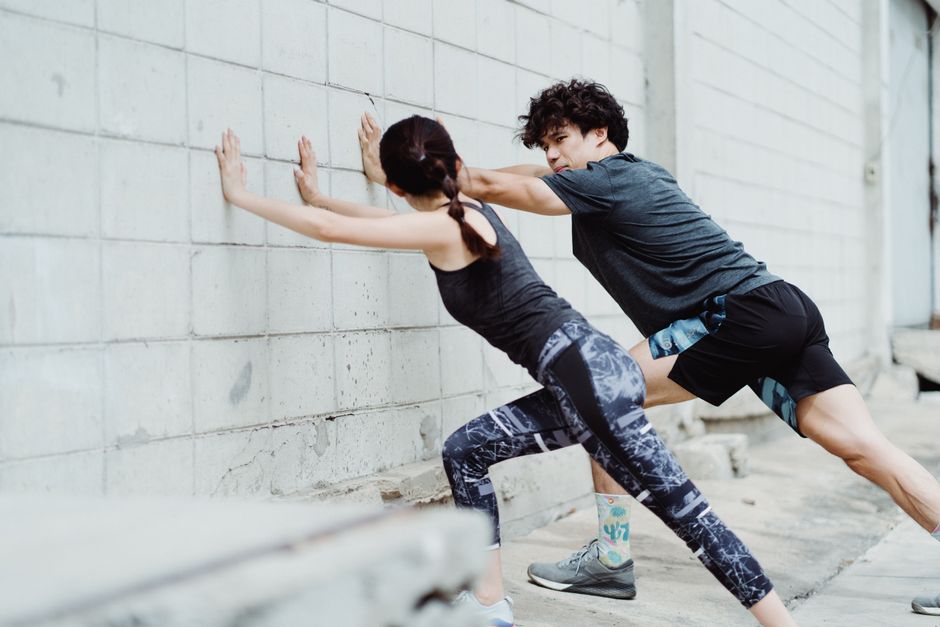
If your calves are sore from exercise or a long day on your feet, gentle stretching can help ease the tightness. The most effective method for fast relief is a combination of two specific stretches: one for the gastrocnemius and another for the soleus muscle. Hold each stretch for 20 to 30 seconds, do not bounce, and stop if you feel sharp pain.
What Causes Sore Calves?
Calf soreness usually comes from tiny tears in the muscle fibers. This happens when you exercise harder than usual, increase your running distance, or stand for long periods. The muscles in the back of your lower leg — the gastrocnemius and soleus — work hard every time you push off your foot or walk uphill.
Delayed onset muscle soreness, or DOMS, typically peaks 24 to 48 hours after activity. This type of soreness is normal and not a sign of injury. Stretching can help you feel better, but it does not speed up muscle repair.
Another cause of calf soreness is tightness from wearing high heels or sitting with your toes pointed. In these cases, the muscle shortens over time and feels stiff when you try to stretch it.
How To Stretch Sore Calves For Fast Relief
The best way to stretch sore calves is to target both the gastrocnemius and the soleus. These two muscles run from just behind your knee down to your heel. The gastrocnemius crosses the knee joint, so it stretches best with your knee straight. The soleus does not cross the knee, so it stretches more effectively with your knee slightly bent.
Gastrocnemius stretch: Stand facing a wall. Place both hands on the wall at shoulder height. Step one foot back, keeping that leg straight and your heel flat on the floor. Bend your front knee until you feel a gentle pull in the back of your straight leg. Hold for 20 to 30 seconds. Switch legs.
Soleus stretch: Stand facing the wall with the same starting position. This time, bend both knees slightly and keep your back heel on the floor. You should feel the stretch lower in your calf, near the Achilles tendon. Hold for 20 to 30 seconds. Switch legs.
Do each stretch two to three times per leg. Breathe normally and do not push into pain. Sore muscles need gentle movement, not force.
How Often Should You Stretch Sore Calves?
For sore calves, stretch once or twice a day. More frequent stretching does not provide extra benefit and may irritate the muscle further. The goal is to relieve tension, not to increase flexibility in an already damaged muscle.
If you are stretching before exercise, studies show that static stretching (holding a stretch) does not prevent injury or reduce soreness. A short warm-up like walking or light jogging is better before activity. Save the static stretches for after you finish moving.
If your calves are extremely sore, skip stretching entirely. Rest and gentle movement like walking may be more helpful. Active recovery — light activity that increases blood flow without straining the muscle — often relieves soreness faster than stretching alone.





When Not to Stretch: Other Ways to Get Relief
Stretching is not always the right answer for sore calves. If you have a pulled muscle or a calf strain, stretching can make the injury worse. Signs of a strain include a sudden sharp pain during activity, bruising, swelling, or trouble bearing weight. In these cases, rest, ice, and elevation are better first steps.
For ordinary muscle soreness without injury, other methods can help alongside stretching:
- Massage — Light massage with your hands or a foam roller can reduce tension in the muscle. Roll slowly and avoid pressing directly on the sore spot. Do not use a foam roller if the muscle is very tender.
- Heat — A warm bath or heating pad applied for 10 to 15 minutes can relax tight muscles. Do not use heat if there is any swelling.
- Ice — If there is swelling or the soreness is intense, cold packs for 15 minutes can reduce inflammation.
- Hydration — Dehydration can worsen muscle cramps and soreness. Drink water throughout the day, especially after exercise.
Over-the-counter pain relievers like ibuprofen can reduce soreness temporarily, but they do not help the muscle heal. Use them only if needed and follow the label instructions.
How to Prevent Calf Soreness
Preventing calf soreness is easier than treating it. Increase your exercise intensity or duration gradually — no more than a 10 percent increase per week. This gives your muscles time to adapt.
Strengthen your calves with exercises like heel raises. Stronger muscles are more resilient to fatigue and soreness. Do two to three sets of 10 to 15 heel raises several times a week.
Wear supportive shoes. Flat shoes without arch support or worn-out running shoes put more load on your calves. Replace running shoes every 300 to 500 miles.
Finally, do not skip warm-ups. Five minutes of walking or light jogging before a workout increases blood flow to your calf muscles. This prepares them for the work ahead and can reduce soreness later.
Frequently Asked Questions
Is it safe to stretch sore calves every day?
Yes, if you are gentle and do not push into pain. Once a day is usually enough. If soreness is extreme, rest is safer than stretching.
Can stretching a sore calf make it worse?
Yes, if the muscle is torn or strained. Stretching an injured calf can delay healing or worsen the injury. If you have sharp pain, swelling, or bruising, do not stretch.
What is the fastest way to relieve sore calves without stretching?
Light activity like walking or cycling at low intensity increases blood flow and helps clear waste products from the muscle. Gentle massage and heat also work quickly for many people.
Should I stretch before or after exercise for sore calves?
Stretch after exercise, not before. Static stretching before activity does not prevent soreness and may even reduce performance. A warm-up with light movement is better beforehand.
