
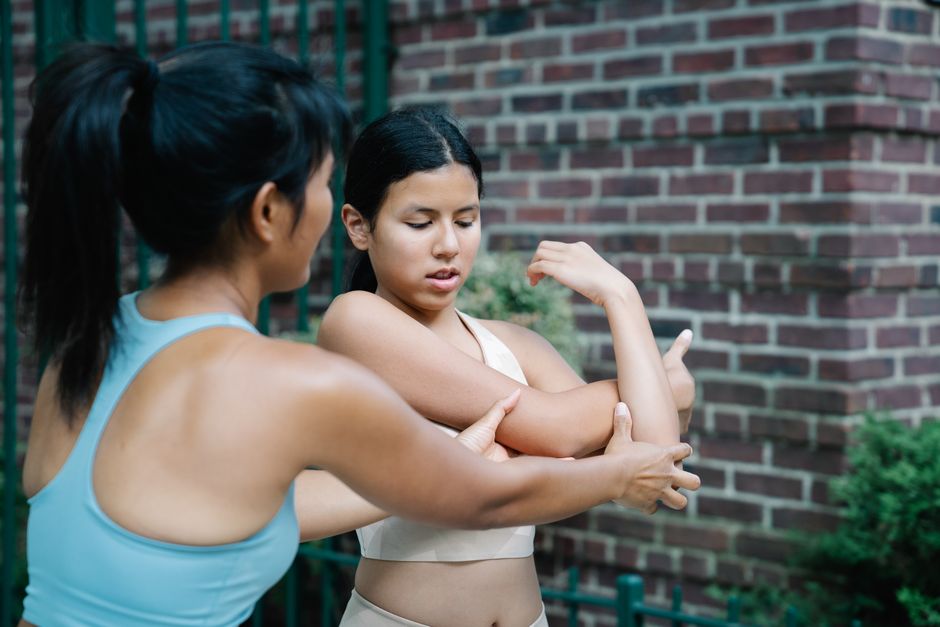
Arm stretches are simple, quick, and often the missing piece in a fitness routine. They can ease tightness from typing, lifting, or sleeping in an awkward position. To stretch your arms for flexibility and relief, focus on your shoulders, biceps, triceps, and forearms with slow, controlled movements. Hold each stretch for 20 to 30 seconds without bouncing, and repeat on both sides to keep your body balanced.
Why Do My Arms Feel Tight and Stiff?
Arm tightness usually comes from daily habits, not injury. Sitting at a desk for hours keeps your shoulders rounded forward and your chest muscles shortened. Over time, the muscles in the back of your shoulders and arms have to work harder, which makes them feel tight and achy.
Sleeping positions also matter. If you curl up or tuck your arms under your pillow, you may wake up with stiff elbows or shoulders. Repetitive movements like typing, texting, or carrying bags can also overwork the forearm muscles and make them feel heavy or sore.
When muscles stay in one position for long periods, blood flow slows down. That reduced circulation can make tissues feel stiff. Stretching helps by lengthening the muscle fibers and restoring normal movement to the joints.
How To Stretch Your Arms For Flexibility And Relief
The most effective arm routine covers four areas: shoulders, biceps, triceps, and forearms. These muscles work together for almost every arm movement, so stretching each one keeps the whole arm flexible.
Start with a simple warm-up. Walk for a few minutes or swing your arms gently in circles. Warm muscles stretch more easily and are less likely to strain. Then move through the stretches below in order, holding each one for 20 to 30 seconds.
Shoulder stretch: Bring one arm straight across your chest. Use your other hand to gently pull it closer. You should feel a stretch in the back of your shoulder. Keep your shoulder down, away from your ear.
Triceps stretch: Raise one arm overhead and bend your elbow so your hand reaches toward your upper back. Use your other hand to gently press the elbow down. You will feel this in the back of your upper arm.
Biceps stretch: Extend one arm straight out to the side with your palm facing up. Point your fingers toward the floor and use your other hand to gently pull your fingers down. You should feel a stretch along the front of your upper arm.
Forearm stretch: Extend one arm in front of you with your palm facing up. Use your other hand to gently pull your fingers toward the floor. Then flip your palm down and repeat. This targets the muscles that control your wrist and grip.
Repeat each stretch on both sides. Aim for two to three rounds of the full sequence if you have time. If you only have a few minutes, pick the two stretches that target your tightest areas.
How Often Should You Stretch Your Arms?
Daily stretching is safe for most people, but you do not need to stretch for long periods to see results. A five-minute routine every day is more effective than a 30-minute session once a week. Consistency matters more than duration.
If your arms feel especially tight, you can stretch twice a day. Morning stretching can help release overnight stiffness. Evening stretching can help undo the effects of a day spent at a desk or doing repetitive tasks.
Listen to your body. Mild tension during a stretch is normal. Sharp pain is not. If a stretch hurts, ease off or stop. Stretching should never feel like you are forcing a muscle to move beyond its comfortable range.




What Are the Best Stretches for Desk Workers?
People who work at computers often develop tight chest muscles and overstretched upper back muscles. This pattern pulls the shoulders forward and makes the arms feel heavy. The stretches above help, but adding a chest opener can make a big difference.
Stand in a doorway with your forearm resting on the doorframe. Your elbow should be at shoulder height. Gently step forward until you feel a stretch across your chest and the front of your shoulder. Hold for 20 to 30 seconds.
Desk workers also benefit from wrist and finger stretches. These small muscles get overworked from typing and clicking. Extend your arm with your palm facing up and gently pull your fingers back. Then make a fist and slowly open your fingers wide. Repeat five times on each hand.
Take stretch breaks every hour if you sit for long periods. Even 30 seconds of arm movement can help reset your posture and reduce stiffness. Set a timer if you tend to lose track of time while working.
Can Stretching Prevent Arm Injuries?
Regular stretching can reduce muscle tightness, which may lower your risk of strains. Flexible muscles are less likely to tear when you move suddenly or lift something heavy. However, stretching alone does not prevent all injuries.
Strength training matters too. Strong muscles support your joints and handle daily loads more easily. A balanced routine that includes both stretching and strengthening gives you the best protection against common arm problems like tendonitis or muscle strains.
If you already have pain that lasts more than a few days, see a healthcare provider before stretching aggressively. Pain can signal an injury that needs rest, not stretching. A doctor or physical therapist can tell you which movements are safe for your specific condition.
What Mistakes Make Stretching Less Effective?
The most common mistake is bouncing. Ballistic stretching, where you bounce into a stretch, can cause small muscle tears. It also triggers a reflex that makes the muscle tighten instead of relax. Hold still instead of bouncing.
Another mistake is rushing through the stretch. A five-second stretch does not give the muscle time to release. Hold each position for at least 20 seconds. Research shows that longer holds are more effective for improving flexibility.
Breathing matters more than people realize. Holding your breath makes your muscles tense up. Exhale as you ease into the stretch and breathe slowly while you hold it. This helps your nervous system signal the muscle to relax.
Finally, do not stretch cold muscles aggressively. A brief warm-up like arm circles or a short walk increases blood flow and makes the tissue more pliable. Cold muscles are more prone to strain.
When Should You See a Doctor About Arm Stiffness?
Occasional tightness that improves with stretching is normal. But some symptoms deserve medical attention. See a doctor if you have arm pain that does not improve after two weeks of gentle stretching, or if the pain is severe enough to interrupt sleep.
Seek immediate care if arm pain comes with chest pain, shortness of breath, dizziness, or nausea. These can be signs of a heart attack, especially if the pain travels down the left arm. This is an emergency situation, not something to stretch away.
Also see a doctor if you notice swelling, redness, or warmth in the arm, or if you cannot move the arm normally. These symptoms can indicate an injury or infection that needs proper treatment rather than stretching.
Frequently Asked Questions
How long should I hold an arm stretch?
Hold each stretch for 20 to 30 seconds. Longer holds are more effective for improving flexibility than quick five-second stretches.
Can I stretch my arms every day?
Yes, daily stretching is safe for most people. A consistent five-minute routine is more effective than occasional longer sessions.
Why do my arms feel tight even after stretching?
You may be stretching only one muscle group while ignoring others, like the chest or shoulders. Try a full routine that includes shoulders, biceps, triceps, and forearms.
Is it normal to feel pain while stretching?
Mild tension is normal, but sharp pain is not. If a stretch hurts, ease off or stop and talk to a healthcare provider if the pain continues.
