
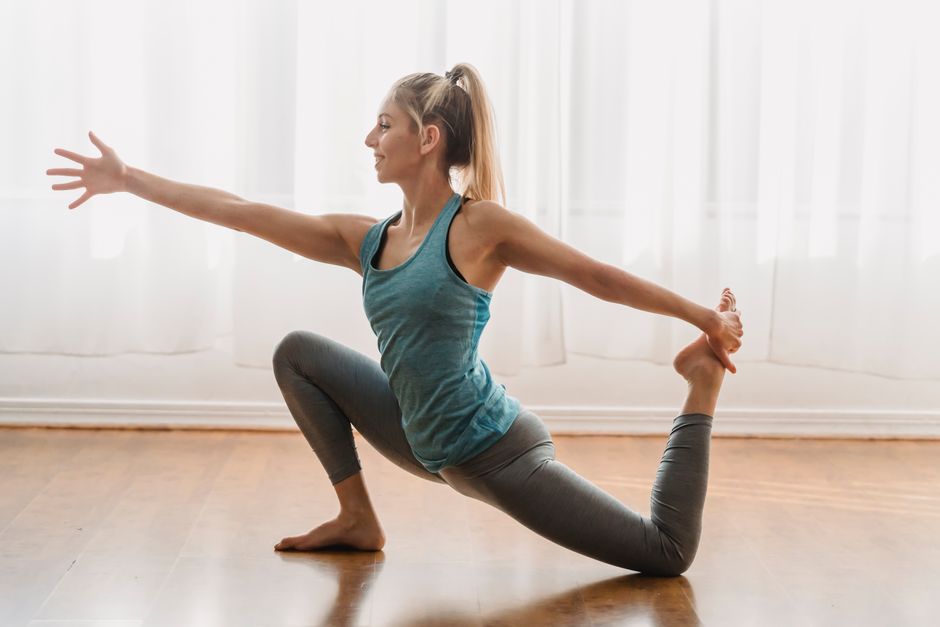
Tight thighs, quads, and hamstrings are a common complaint, especially if you sit for work or run for exercise. Stretching these muscles regularly can improve flexibility, reduce tension, and make daily movements like bending and walking feel easier. To stretch your thighs, quads, and hamstrings more effectively, you need a mix of static stretches held for 30 seconds and dynamic movements that warm the muscles up first.
Why Do My Thighs, Quads, and Hamstrings Feel So Tight?
Muscle tightness in the legs is often a product of how you use them. Sitting for long hours shortens the hip flexors and hamstrings. Running, cycling, and weightlifting repeatedly contract the quadriceps, which can leave them feeling dense and fatigued.
Dehydration and lack of sleep also affect muscle tone. When your body is low on fluids, muscles lose some elasticity. This is not a muscle being permanently “short.” It is a sensation of tension that stretching and movement can address.
It is worth noting that true muscle tightness is different from nerve tension. If you feel a shooting pain or numbness down the back of your leg during a hamstring stretch, you may be stretching your sciatic nerve instead of the muscle. Back off the intensity and focus on a gentler range of motion.
How To Stretch Thighs Quads Hamstrings More: The Core Routine
The most reliable way to increase flexibility in these muscles is consistency. Stretching once a week will not change much. Stretching most days of the week, even for five to ten minutes, produces measurable improvements in range of motion over several weeks.
Hold each static stretch for 30 seconds. Research consistently shows that holding a stretch for 30 seconds is more effective for increasing flexibility than holding for 10 or 15 seconds. Do not bounce. Bouncing triggers the stretch reflex, which causes the muscle to contract instead of relax.
Here is a simple routine that covers all three muscle groups:
- Standing Quad Stretch: Stand tall, bend one knee, and pull your heel toward your glute. Keep your knees together. Hold for 30 seconds per side.
- Seated Hamstring Stretch: Sit on the floor with one leg extended straight and the other foot against your inner thigh. Reach toward your toes, keeping your back flat. Hold for 30 seconds per side.
- Kneeling Hip Flexor Stretch: Kneel on one knee with the other foot flat in front. Gently push your hips forward until you feel a stretch in the front of the thigh. Hold for 30 seconds per side.
- Standing Hamstring Stretch: Place one heel on a low step or chair. Hinge forward at your hips with a straight back until you feel the stretch behind your thigh. Hold for 30 seconds per side.
Repeat this circuit twice. The total time is about eight minutes. This is enough to make a difference if done consistently.
What Is the Best Time of Day To Stretch?
Morning stretching feels good, but your muscles are cold after sleep. Cold muscles do not stretch as easily. A light warm-up before morning stretching—like a brisk walk or marching in place for a few minutes—helps.
Post-exercise is the most effective time for static stretching. Your muscles are warm, blood flow is increased, and tissue elasticity is at its peak. If you run or lift weights, do your static stretching immediately after your workout while you are still warm.
Evening stretching before bed is also effective. It helps release the day’s accumulated tension and can improve sleep quality. The key is not the time of day but the consistency. Pick a time you can maintain daily.





Dynamic Stretching vs. Static Stretching: Which Is Better?
Dynamic stretching involves movement. Leg swings, walking lunges, and hip circles are examples. Static stretching involves holding a position without movement.
For warming up before exercise, dynamic stretching is the better choice. It increases blood flow and prepares the muscles for activity without reducing power output. Static stretching before a heavy lift or sprint can temporarily reduce strength and performance.
For increasing overall flexibility, static stretching is more effective. The long hold allows the muscle fibers to lengthen and the nervous system to adapt to the new range of motion.
The practical approach is to use both. Do dynamic stretches as part of your warm-up. Do static stretches after your workout or on rest days. This covers both performance and flexibility goals.
How Long Does It Take To See Results From Stretching?
Most people feel a difference in how their legs move within one to two weeks of daily stretching. This early change is mostly neurological. Your brain becomes more comfortable allowing the muscle to lengthen.
Structural changes in the muscle tissue itself take longer. Studies indicate that significant increases in muscle length require about six to eight weeks of consistent stretching. This is why people who stretch for a week and stop do not maintain their gains.
Flexibility is a use-it-or-lose-it quality. If you stop stretching entirely, you will gradually return to your previous range of motion. The good news is that maintaining flexibility requires less work than gaining it. Two to three sessions per week can maintain what you have built.
Common Mistakes That Make Stretching Less Effective
The most common mistake is stretching through pain. A stretch should feel like mild tension or discomfort, not sharp pain. If it hurts, you are overdoing it. Back off until the sensation is manageable.
Holding your breath is another mistake. Breathing deeply during a stretch helps the muscle relax. Exhale as you ease into the stretch. Inhale as you hold.
Poor posture reduces the effectiveness of many stretches. In the seated hamstring stretch, rounding your back shifts the stretch into your spine instead of your hamstring. Keep your chest lifted and hinge from your hips.
Finally, stretching cold muscles increases the risk of strain. Always do a few minutes of light activity before stretching. This does not need to be intense. A short walk or some gentle leg swings will raise muscle temperature enough.
When Stretching Is Not Enough
Sometimes tightness does not resolve with stretching. If you have stretched consistently for several weeks and feel no improvement, consider other factors.
Muscle weakness can masquerade as tightness. Weak glutes often cause the hamstrings to overwork, making them feel perpetually tight. Strengthening your glutes with exercises like bridges and squats can relieve hamstring tension.
Poor footwear can also contribute. Shoes with elevated heels shorten the calf and hamstring muscles over time. Wearing flat, supportive shoes for part of the day can help.
If you experience persistent pain, swelling, or weakness in your legs, see a healthcare provider. Some conditions, like deep vein thrombosis or a muscle strain, require medical evaluation. Stretching will not fix these and could make them worse.
How to Make Stretching a Daily Habit
The best stretching routine is the one you actually do. Attach it to an existing habit. Stretch for five minutes while your morning coffee brews. Stretch after your evening shower. Stretch during commercial breaks while watching television.
Keep it simple. You do not need a mat, foam roller, or special equipment. A towel or a low step is helpful for some stretches but not required. The fewer barriers, the more likely you are to stick with it.
Track your progress. Notice if you can reach further in your hamstring stretch or if your quad stretch feels easier. These small wins reinforce the habit and keep you motivated.
Frequently Asked Questions
How often should I stretch my thighs and hamstrings?
Stretch these muscles most days of the week for best results.
Even five to ten minutes daily is more effective than one long weekly session.
Can stretching prevent muscle injuries?
Regular stretching improves flexibility, but the evidence that it prevents all injuries is mixed.
Warming up properly and strengthening muscles are also important for injury prevention.
Why do my hamstrings feel tight even after stretching?
Weak glutes or prolonged sitting can make hamstrings feel tight regardless of stretching.
If stretching does not help after several weeks, consider adding glute strengthening exercises to your routine.
Is it bad to stretch cold muscles?
Stretching cold muscles increases the risk of strain and is less effective.
Do a few minutes of light activity like walking before you stretch to warm the tissues.
