
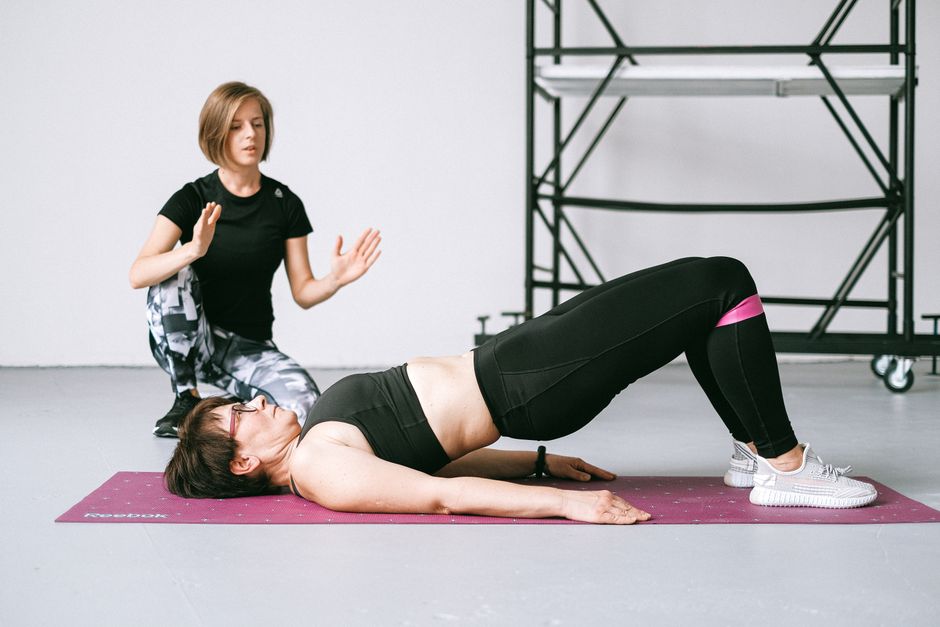
Stretching the pelvic floor, hips, and groin is not about forcing those muscles to relax. It is about teaching them to release tension they may have been holding for years. The pelvic floor is a hammock of muscle that sits at the base of your pelvis, and it works together with your hip rotators and inner thigh muscles as one connected system. When one part of that system stays tight, the others often tighten to compensate.
Stretching this area means using slow, controlled movements that lengthen the muscles around the pelvis, hips, and inner thighs. The goal is not to push into pain. It is to apply gentle, steady tension and breathe through it. Most people can learn a basic routine in a single session. Progress comes from doing it consistently, not from stretching harder.
Why Do the Pelvic Floor, Hips, and Groin Tighten Together?
These muscle groups are physically and neurologically linked. The pelvic floor connects to the hip rotators through shared connective tissue and nerve pathways. The adductors, the muscles of your inner thigh, attach to the pubic bone, which is part of the same bony ring that anchors the pelvic floor. When one area tightens, the others often follow.
This is why someone with tight hips frequently has a tight pelvic floor, and the reverse is also true. Common drivers include:
- Prolonged sitting, which shortens the hip flexors and can keep the pelvic floor in a mildly contracted state
- Chronic stress, which often shows up as unconscious clenching of the pelvic floor and jaw
- Running, cycling, and heavy lifting without adequate mobility work
- Pregnancy and childbirth, which place significant demand on the pelvic floor
- Guarding after injury or surgery, where the body protects an area by keeping it tense
One detail worth understanding: a “tight” pelvic floor is not always a strong one. Muscle can be both weak and tense at the same time. This is why simply doing more Kegels is not the answer for everyone. Kegels contract the pelvic floor. If the muscle is already overactive, adding more contraction can make symptoms worse. For people with an overactive or non-relaxing pelvic floor, the priority is learning to release, not to squeeze harder.
How To Stretch The Pelvic Area Floor Hips Groin Safely?
Safety in this area comes down to three principles: go slow, breathe, and never push into sharp pain. The pelvic floor responds to gentle, sustained pressure. It does not respond well to bouncing or forcing.
Before any stretch, take a moment to notice your current state. Lie on your back with your knees bent. Let your breath move into your belly and lower ribs. On the exhale, allow the pelvic floor to soften rather than actively pushing down. This is sometimes called a reverse Kegel, though the term is used loosely. The key is that you are not bearing down hard. You are letting go.
Signs you should stop a stretch and consult a clinician include:
- Sharp, shooting, or electric pain
- Numbness or tingling in the legs or groin
- Sudden loss of bladder or bowel control
- Pain that worsens with each repetition
If you are pregnant, postpartum, or recovering from pelvic surgery, work with a pelvic floor physical therapist rather than following general routines. No universal clinical guidelines exist for stretching during these periods, because the safe approach depends on your individual assessment.
Which Stretches Target the Pelvic Floor, Hips, and Groin?
The following stretches are widely used in physical therapy and movement practice. They are not a cure for any condition. They are tools for reducing muscular tension and improving mobility.
Diaphragmatic breathing with pelvic floor release. Lie on your back, knees bent, feet flat. Place one hand on your belly. Inhale slowly through your nose, letting the belly and ribs expand. On the exhale, allow the pelvic floor to relax. This is the foundation for everything else. Without breath, stretching the pelvic floor is difficult.
Happy baby pose. On your back, bring your knees toward your chest and hold the outside of your feet or your calves. Let your knees fall toward your armpits. Gently rock side to side. This opens the hips and inner thighs while placing mild, indirect stretch on the pelvic floor.
Butterfly stretch. Sit with the soles of your feet together and let your knees fall outward. Keep your spine tall. Do not press your knees down with your hands. Let gravity do the work. This targets the adductors, the inner thigh muscles that attach near the pelvic floor.
Figure-four stretch. Lie on your back. Cross one ankle over the opposite knee, forming a figure four. Reach through and pull the bottom thigh toward your chest. This targets the glutes and deep hip rotators, which are often tight alongside the pelvic floor.
Deep squat hold. With feet slightly wider than hip width and toes turned out, lower into a squat as far as comfortable. Hold onto a doorframe or sturdy support if needed. This is one of the most direct positions for lengthening the pelvic floor and inner thighs at once.
Adductor stretch. Stand with a wide stance. Shift your weight to one side, bending that knee while keeping the other leg straight. You should feel a stretch along the inner thigh of the straight leg. Keep the movement small and controlled.
Hold each stretch for a slow, relaxed period, breathing throughout. The pelvic floor does not release under tension. If you are holding your breath or bracing, you are working against yourself.




How Often Should You Stretch These Areas?
Consistency matters more than duration. Most physical therapy approaches favor short, frequent sessions over long, occasional ones. Daily gentle stretching tends to work better than one aggressive session per week.
There is no single evidence-based number that applies to everyone. What the research generally supports is that regular movement and stretching can improve flexibility and reduce perceived tension. What it does not support is the idea that any specific stretch schedule will resolve pelvic floor dysfunction on its own.
Watch for these signs that you are overdoing it:
- Soreness that lasts more than a day or two
- Increased pelvic pain or urinary urgency after stretching
- Feeling tighter rather than looser over time
If stretching consistently makes things worse, that is useful information. It may mean the issue is not simple tightness, and a clinician should evaluate it.
When Stretching Is Not Enough
Stretching helps with muscular tension. It does not fix every cause of pelvic, hip, or groin symptoms. Some conditions need a different approach entirely.
Pelvic floor dysfunction can involve muscles that are too tight, too weak, poorly coordinated, or some combination. Hip pain can come from the joint itself, the labrum, or the lower back. Groin pain can involve the adductors, the hip joint, a hernia, or nerve irritation. These causes look similar from the outside but require different care.
See a healthcare provider if you have:
- Pain that persists despite weeks of gentle stretching
- Pain that interferes with daily activities or sleep
- Pelvic pain with urination, bowel movements, or sex
- New weakness, numbness, or changes in bladder or bowel control
A pelvic floor physical therapist can assess whether your muscles are overactive, underactive, or poorly coordinated. That assessment determines whether you need to stretch, strengthen, relax, or retrain coordination. This distinction matters, because doing the wrong thing can prolong symptoms. Some clinicians also recommend techniques like biofeedback or manual therapy, though evidence for specific approaches varies and no single method is proven superior for all cases.
What Else Supports Pelvic and Hip Mobility?
Stretching is one piece of a larger picture. The muscles around the pelvis respond to how you use your body all day, not just during a stretching session.
Daily movement matters. Standing up regularly, walking, and changing positions throughout the day reduce the prolonged sitting that shortens hip muscles. If you sit for work, taking short movement breaks is more useful than one long stretch at the end of the day.
Breathing patterns matter too. Shallow chest breathing keeps the pelvic floor in a more guarded state. Slow breathing that expands the belly and ribs supports relaxation of the pelvic floor.
Strength has a role as well. A pelvic floor that can relax also needs to be able to contract when needed. Once tension is reduced, building strength and coordination in the hips, glutes, and deep core often helps maintain the gains. This is why a balanced approach, rather than stretching alone, tends to work best.
Stress is a factor that is easy to overlook. The pelvic floor is responsive to the nervous system. When you are in a prolonged state of stress, the muscles in this region often stay tense without you noticing. Addressing stress through sleep, breathing, and general relaxation is not separate from pelvic floor health. It is part of it.
Frequently Asked Questions
Can I stretch my pelvic floor too much?
Yes. Overstretching or forcing the pelvic floor can increase pain, irritation, and muscle guarding. Gentle, consistent stretching with relaxed breathing is safer than pushing into discomfort.
How long does it take to see results from pelvic floor stretching?
Some people notice reduced tension within days of consistent gentle practice, while others take weeks. There is no standard timeline, because results depend on the cause of your tightness and how consistently you practice.
Are Kegels the same as pelvic floor stretching?
No. Kegels are contractions that strengthen the pelvic floor, while stretching aims to release tension. For an overactive pelvic floor, Kegels can make symptoms worse, so the right choice depends on your individual assessment.
Should I see a doctor before starting these stretches?
It is wise to check with a healthcare provider if you have pain, are pregnant or postpartum, or have had pelvic surgery. A pelvic floor physical therapist can assess whether stretching is appropriate for you.
