
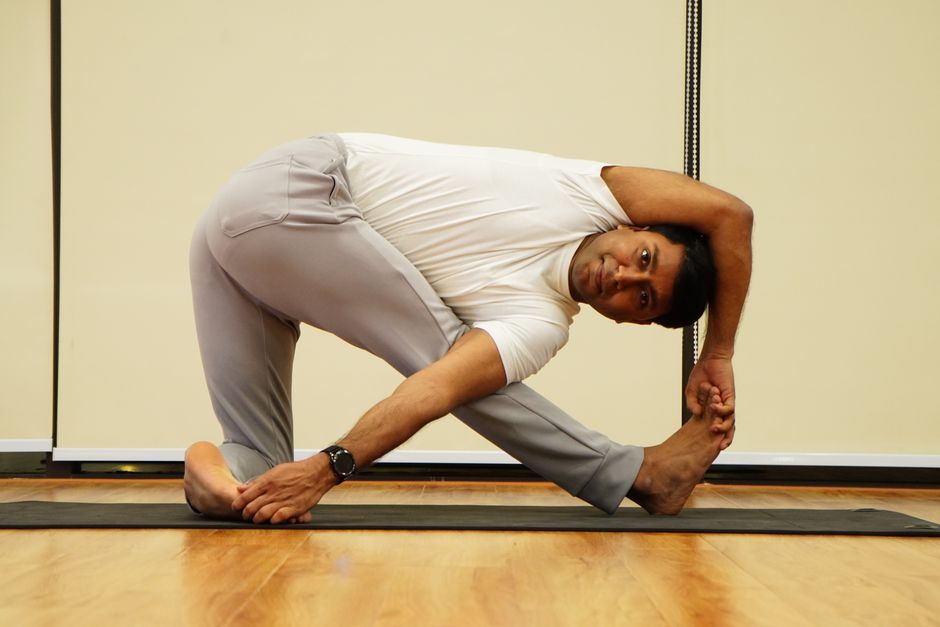
Your gluteus medius is a fan-shaped muscle that runs along the outer side of your hip, from the top of your pelvis down to the outer bump of your thigh bone. Stretching it can ease outer-hip tension and improve how the joint moves. The trick is that this muscle does not respond well to the same stretches people use for the larger gluteus maximus in the back of the hip. It needs moves that pull the leg across the body and rotate it inward.
What Does the Gluteus Medius Actually Do?
The gluteus medius is one of the main stabilizers of your pelvis. Every time you stand on one leg — walking, climbing stairs, stepping off a curb — this muscle fires to keep your hips level and stop your body from tipping over.
It also helps lift your leg out to the side and rotate it inward. Because it works constantly during normal movement, it can become tight, overworked, or weak. Those are two different problems, and they call for different solutions.
A tight muscle feels restricted. A weak muscle cannot do its job. Many people have both at once, especially if they sit for long hours or favor one side of the body. Stretching helps the tightness. It does not build strength. That distinction matters for how you build a routine.
One useful clarification: hip pain on the outer side is often blamed on this muscle, but the most common cause of outer-hip pain in adults is actually inflammation of the bursa — a fluid-filled sac — or the gluteal tendons that sit right next to the muscle. Stretching can help muscular tightness, but it will not fix a tendon or bursa problem. If pain is sharp, persistent, or worse at night, that is a reason to see a clinician, not to stretch harder.
How To Stretch The Gluteus Medius For Hip Relief
Effective gluteus medius stretches all share one feature: they move your thigh across the front of your body or rotate it inward. That is the direction the muscle resists. Hold each stretch long enough to let the tissue relax — most clinical guidance suggests roughly 15 to 30 seconds per side, repeated two to four times.
Move into each position slowly. You are looking for a mild pull along the outer hip, not a sharp pinch. If you feel pinching at the front of the hip joint, you have gone too far.
Seated Cross-Body Stretch
Sit on the floor or a firm chair. Bend one knee and cross that foot over your other leg. Gently pull the crossed knee toward your opposite shoulder until you feel a stretch along the outer hip. Keep your back straight and breathe.
Standing Cross-Body Stretch
Stand and cross one leg behind the other. Lean your hips away from the stretched side while keeping both feet planted. This is a gentle option for people who cannot get down to the floor.
Side-Lying Stretch
Lie on your side with the bottom leg straight. Bend the top knee and let it fall forward toward the floor in front of you, keeping your pelvis still. You should feel the pull in the outer hip of the bottom leg.
Figure-Four Stretch
Lie on your back with both knees bent. Cross one ankle over the opposite thigh, then draw the uncrossed leg toward your chest. This targets the outer hip and the deep rotator muscles together.
Kneeling Side Lean
Kneel on all fours, then extend one leg straight out to the side. Shift your weight toward the opposite side until you feel a stretch along the extended hip. Keep your back flat.
Do not bounce. Ballistic bouncing triggers a reflex that makes the muscle tighten rather than relax. A slow, steady hold works better.
How Long Should You Hold a Glute Stretch?
Hold each stretch for about 15 to 30 seconds and repeat it two to four times per side. That range comes from general flexibility guidelines, not from studies specific to this muscle.
The evidence on exact stretching duration is genuinely limited. What research does support is that regular, consistent stretching over weeks produces more change than occasional long sessions. A few minutes most days beats one long session once a week.
Warm up first. Stretching a cold muscle is less effective and more likely to feel uncomfortable. A short walk or a few minutes of easy movement raises tissue temperature and makes the muscle more willing to lengthen.
Stop if you feel sharp pain, numbness, or tingling down the leg. Those are not signs of a good stretch. Numbness or tingling suggests a nerve is involved, which is a different problem that stretching will not solve.




Stretching Alone May Not Fix Outer Hip Pain
Stretching releases tension, but it does not make a weak muscle stronger. If your gluteus medius is weak — a common finding in people with hip, knee, and lower back complaints — stretching by itself may not resolve your symptoms.
Strength work is often the missing piece. Exercises like side-lying leg lifts, clamshells, and standing hip abduction target this muscle directly. Some clinicians pair stretching with strengthening for that reason: stretch what is tight, strengthen what is weak.
This is also where the honest limits show up. The evidence that stretching specifically relieves outer hip pain is not strong. Some studies suggest stretching and strengthening together can help certain hip conditions, but results vary and no single routine has been proven best. Physical therapy for hip pain generally combines several approaches rather than relying on stretching alone.
If your pain comes from a tendon or bursa, loading the muscle appropriately — not stretching it — is usually the direction clinicians take. That is a meaningful difference. Stretching an inflamed tendon can make it worse.
When Stretching Is Not the Right Answer
Stretching is not appropriate for every kind of hip pain. Knowing when to stop is as useful as knowing how to start.
- Sharp or shooting pain during the stretch
- Numbness, tingling, or weakness in the leg
- Pain that wakes you at night
- Pain after a fall or injury
- Swelling, redness, or warmth around the hip
- Pain that keeps getting worse despite rest
Any of these point toward seeing a doctor or physical therapist rather than pushing through. Hip pain has many possible causes, and they do not all respond to the same treatment.
Age and history matter too. In adults over 50, persistent groin or hip pain deserves a proper evaluation, because several conditions can produce similar symptoms and only an exam and imaging can tell them apart.
Common Mistakes That Keep Hip Tightness Around
The most common mistake is stretching the wrong muscle. Many people feel outer-hip tightness and stretch the back of the hip instead, because that is the stretch they know. If the pull is in your buttock or the back of your thigh, you are likely stretching the gluteus maximus or hamstrings, not the medius.
The second mistake is stretching too hard. A stretch should feel like a mild pull, not a strain. Pushing into pain causes the muscle to guard and tighten, which is the opposite of what you want.
The third is skipping the other side. Even if only one hip feels tight, stretching both sides keeps your movement balanced and is generally recommended.
The fourth is expecting fast results. Flexibility changes take weeks of consistent practice, not days. That timeline is not a reason to quit — it is just how tissue adapts.
Frequently Asked Questions
How often should I stretch my gluteus medius?
Most flexibility guidance suggests stretching most days of the week, holding each stretch for about 15 to 30 seconds and repeating two to four times per side. Consistency over weeks matters more than any single session.
Can stretching the gluteus medius relieve hip pain?
It can ease muscular tightness along the outer hip, but the evidence that stretching alone resolves hip pain is limited. Many cases of outer-hip pain involve tendons or the bursa, which usually need a different approach.
How long does it take to see results from hip stretches?
Flexibility changes typically take several weeks of regular practice, not days. There is no fixed timeline, and results depend on how consistently you stretch and whether weakness is also part of the problem.
Should I stretch a gluteus medius that feels weak?
If the muscle is weak rather than tight, strengthening exercises usually help more than stretching. Some clinicians combine both, so it is worth having a professional assess which issue you actually have.
