
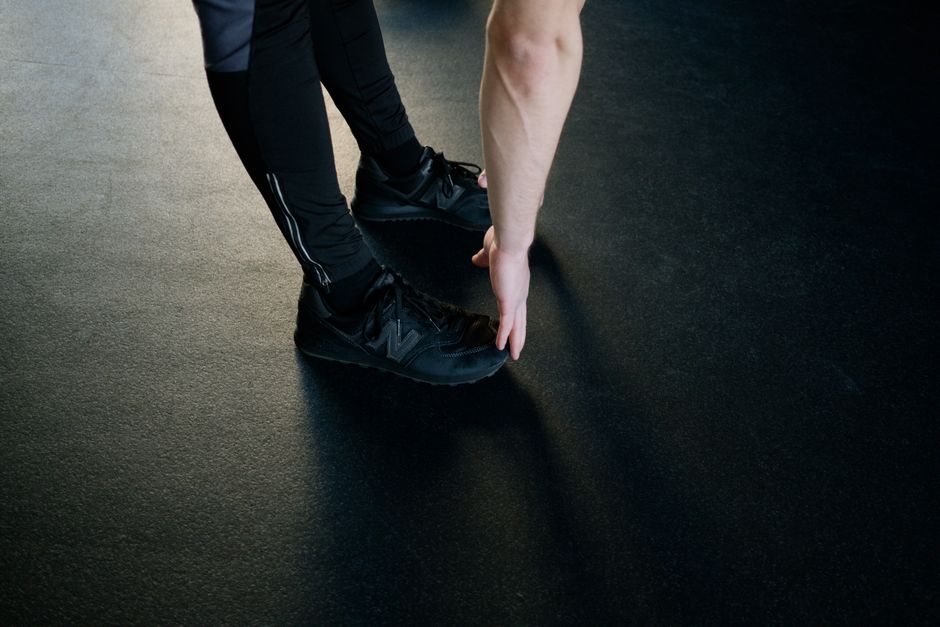
Stretching the front of your shin, the tibialis anterior muscle, is a simple but often misunderstood movement. The most reliable way to do it is to kneel on the floor with your toes tucked under, then sit back gently toward your heels until you feel a pull in the front of your lower leg. Hold that position for 20 to 30 seconds without bouncing. This targets the muscle that runs along the outer edge of the shinbone and is the same muscle you use to flex your foot upward.
Why Does the Front of My Shin Feel Tight?
The tibialis anterior runs down the front of your lower leg alongside the shinbone. It is responsible for pulling your toes and foot upward toward your knee, a motion called dorsiflexion. It also helps control the speed at which your foot slaps the ground when you walk or run.
Tightness in this area usually comes from overuse. Runners, hikers, and people who walk on uneven surfaces frequently develop tension here. Wearing shoes with poor arch support can also force this muscle to work harder than it should. When the muscle is overworked, it can feel sore, tight, or even painful during activity.
Some people confuse shin tightness with shin splints. Shin splints are a more serious condition involving inflammation of the tissue around the bone. A simple muscle tightness is different. It feels like a deep pull or stiffness, not a sharp pain during impact. If you have persistent pain that worsens with activity, see a healthcare provider rather than assuming a stretch will fix it.
How To Stretch The Front Of Your Shin Properly
The kneeling shin stretch is the most effective and commonly recommended position. Start by kneeling on a padded surface or yoga mat. Tuck your toes under so the tops of your feet rest flat on the floor. Your knees should be hip-width apart. Slowly sit back toward your heels until you feel a stretch along the front of your lower legs. Keep your spine tall and your hands resting on your thighs for balance.
Hold the position for 20 to 30 seconds. Breathe normally and relax the muscles in your legs as much as possible. Repeat two to three times. If you feel any pinching in your toes or the top of your foot, adjust your position or place a folded towel under your ankles for extra cushioning.
Do not bounce. Bouncing activates the stretch reflex, which causes the muscle to contract rather than relax. This makes the stretch less effective and increases the risk of straining the tissue. A slow, steady hold is always better.
Are There Other Ways To Stretch the Shin?
If kneeling is uncomfortable for your knees, there are alternatives. One option is the seated shin stretch. Sit in a chair and tuck one foot under you so the top of your foot rests on the floor. Gently press down on your knee or ankle to increase the stretch. Hold for 20 to 30 seconds, then switch sides.
Another option is the standing shin stretch. Stand facing a wall with one hand on the wall for support. Place the top of one foot against the floor behind you with your toes pointing down. Bend the knee of the standing leg slightly and press your hip forward until you feel a stretch in the front of the raised leg. This position takes pressure off the knees and is a good choice for people with knee sensitivity.
A towel stretch can also work. Sit on the floor with your legs straight out in front of you. Loop a towel around the ball of one foot and gently pull your toes toward you. This stretches the calf primarily, but it also engages the muscles on the front of the shin through the range of motion. It is less targeted than the kneeling version but still helpful as a general lower-leg mobility exercise.





When Should You Stretch Your Shins?
Stretching is most effective when the muscle is warm. Cold muscles are less pliable and more prone to injury. A light five-minute walk or a few minutes on a stationary bike before stretching will increase blood flow and make the stretch more comfortable and effective.
Many people benefit from stretching after a run or workout rather than before. Post-exercise stretching helps address the tightness that accumulates during activity. If you stretch before exercise, keep the holds shorter, around 10 to 15 seconds, and focus on gentle movement rather than deep static holds.
Stretching once a day is sufficient for most people. If you are training heavily or experiencing early signs of shin tightness, stretching twice a day may help. Consistency matters more than duration. A daily two-minute routine will produce better results than a single long session once a week.
What Else Can Help With Shin Tightness?
Stretching alone may not resolve shin tightness if the underlying cause is not addressed. Footwear plays a significant role. Shoes with adequate cushioning and arch support reduce the workload on the tibialis anterior. Replacing worn-out shoes is one of the simplest ways to reduce shin strain.
Strengthening the muscles that oppose the tibialis anterior can also help. The calf muscles, particularly the gastrocnemius and soleus, work in opposition to the front shin muscle. A balanced lower leg is less likely to develop chronic tightness. Simple calf raises, performed slowly and with control, can improve this balance.
Massage or self-myofascial release with a foam roller may provide temporary relief. Rolling the front of the shin is often uncomfortable because the muscle is thin and sits close to the bone. Use light pressure and roll slowly. If it causes sharp pain, stop. Some research suggests that massage can reduce muscle tension and improve range of motion, but the effects are typically short-lived compared to consistent stretching.
What Does the Evidence Say About Shin Stretching?
Research on stretching in general shows that regular static stretching can improve flexibility and range of motion over time. Studies have found that holding a stretch for 30 seconds or more, repeated several times per week, produces measurable gains in muscle length. The evidence specifically for shin stretches is less extensive, but the muscle responds to stretching the same way other skeletal muscles do.
Stretching has not been proven to prevent injuries on its own. Some studies suggest that stretching reduces the risk of muscle strains, while others show no significant benefit. The current consensus is that stretching is useful for maintaining flexibility and addressing tightness, but it is not a substitute for proper training, adequate rest, and appropriate footwear.
There is no strong evidence that stretching speeds up recovery from shin splints or other overuse injuries. If you have been diagnosed with shin splints, follow the treatment plan from your healthcare provider. Stretching may be part of that plan, but it should not be the only intervention.
Common Mistakes and How To Avoid Them
The most common mistake is stretching too aggressively. The shin area has less muscle mass than the thighs or calves, so it is easier to overstretch. You should feel a gentle pull, never sharp pain. If it hurts, back off immediately.
Another mistake is holding your breath during the stretch. Breathing helps the muscle relax. Exhale as you ease into the stretch and breathe steadily while holding it.
Poor form is also common. Many people round their back or let their hips shift to one side during a kneeling stretch. This reduces the effectiveness of the stretch and can put unnecessary strain on the lower back. Keep your hips square and your spine neutral throughout the movement.
Finally, do not stretch through severe pain. Mild discomfort is normal. Sharp or shooting pain is a sign that something is wrong. Stop and consult a healthcare professional if the pain persists.
Frequently Asked Questions
How long should I hold a shin stretch?
Hold each shin stretch for 20 to 30 seconds. Repeat two to three times per session for the best results.
Can I stretch my shin every day?
Yes, daily stretching is safe for most people. If you feel sharp pain or increased soreness, reduce the frequency and check your technique.
Does stretching help with shin splints?
Stretching may relieve some discomfort associated with shin splints, but it is not a proven treatment for the condition itself. Follow your healthcare provider’s advice for managing shin splints.
Why does my shin hurt when I stretch it?
Mild discomfort during a stretch is normal, but sharp pain is not. Pain can indicate overstretching, a strain, or a more serious condition like a stress fracture. Stop and seek medical advice if the pain is severe or persistent.
