
Stretching your Achilles tendon is one of the most direct ways to reduce stiffness in your lower leg and heel. The safest and most effective method is the towel stretch, where you sit with your leg straight and gently pull a towel wrapped around the ball of your foot toward you for 30 seconds. This simple movement targets the calf muscles and the Achilles tendon without forcing the joint into a painful position.
Why Stretching the Achilles Tendon Matters
The Achilles tendon is the thick band of tissue connecting your calf muscles to your heel bone. It absorbs enormous force every time you walk, run, or jump. When it becomes tight, it can pull on the heel and cause pain during everyday activity.
Tightness in this tendon is common in people who sit for long hours or suddenly increase their exercise level. Regular stretching helps maintain length in the calf muscle group, which reduces strain on the tendon itself. Keeping this area flexible supports normal ankle motion and lowers the risk of irritation.
How To Stretch Achilles Tendon: Step By Step
Follow these steps for a safe and effective Achilles tendon stretch. You will need a towel and a flat surface to sit on.
- Step 1: Sit on the floor with your affected leg straight out in front of you.
- Step 2: Loop a towel around the ball of your foot, holding one end in each hand.
- Step 3: Keep your knee straight and gently pull the towel toward your body.
- Step 4: You should feel a pull along the back of your calf and heel. Stop if you feel sharp pain.
- Step 5: Hold the stretch for 30 seconds. Relax for 30 seconds.
- Step 6: Repeat this 3 times per session.
Perform this stretch twice daily. Consistency matters more than intensity. A gentle daily stretch is more effective than an aggressive stretch done once a week.
Is It Better To Stretch With a Bent or Straight Knee?
Both positions matter, and they target different muscles. With a straight knee, the stretch focuses on the gastrocnemius muscle, which is the large calf muscle visible at the back of the leg. With a bent knee, the stretch targets the soleus muscle, a flatter muscle lying beneath the gastrocnemius.
Since both muscles join to form the Achilles tendon, you should stretch both ways. Use the towel stretch with a straight knee first. Then bend your knee slightly and repeat the same towel pull. This ensures the entire calf complex gets lengthened, not just one portion.
Many people only stretch with a straight knee and wonder why their heel pain persists. Adding the bent-knee version often makes the difference because the soleus is a major contributor to tendon tension.





The Wall Stretch: An Alternative Method
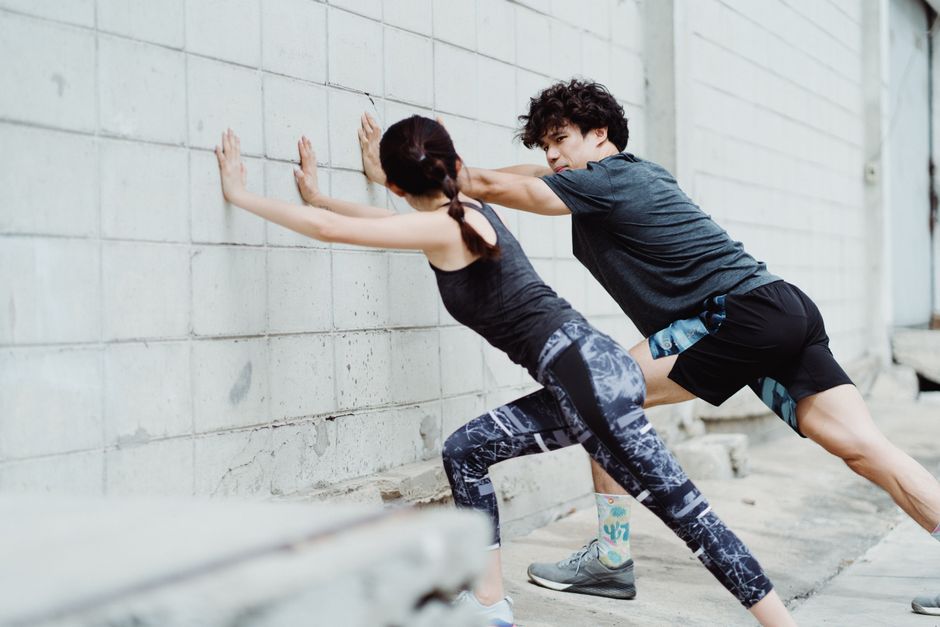
The wall stretch is a standing alternative that requires no equipment. It is equally effective when done correctly.
- Stand facing a wall with your hands placed flat against it at shoulder height.
- Step your affected leg back about one to two feet. Keep both heels flat on the floor.
- Bend your front knee while keeping your back leg straight.
- Lean your hips toward the wall until you feel a stretch in the back calf.
- Hold for 30 seconds. Repeat 3 times.
For the bent-knee version, keep your back knee slightly bent throughout the movement. This shifts the stretch into the soleus muscle. The wall stretch is convenient for people who prefer standing positions or who find sitting on the floor uncomfortable.
When Should You Avoid Stretching?
Stretching is not always the right answer. If you have sudden, sharp pain in the back of your heel, stop stretching and seek medical evaluation. A sudden pop or snap in the calf area may indicate a tendon rupture, which requires immediate medical attention.
Do not stretch through severe pain. Mild discomfort during a stretch is normal. Sharp or worsening pain is a signal to stop. If you have been diagnosed with Achilles tendinopathy, stretching alone may not resolve the issue. Tendinopathy often requires a progressive strengthening program in addition to flexibility work.
Some research suggests that heavy, slow resistance training is more effective than stretching alone for chronic Achilles tendon problems. This does not mean stretching is useless. It means stretching should be part of a broader approach that includes strengthening the tendon under controlled load.
How Long Before You See Results?
Most people notice reduced stiffness within two to four weeks of daily stretching. Full improvement in tendon flexibility can take six to eight weeks. The tendon is a dense, fibrous structure that remodels slowly compared to muscle tissue.
Do not expect overnight changes. The Achilles tendon has a poor blood supply, which slows its response to training and stretching. Patience is essential. If you see no improvement after six weeks of consistent stretching, consult a physical therapist or sports medicine clinician for a more detailed assessment.
Common Mistakes in Achilles Stretching
Several errors reduce the effectiveness of Achilles stretching. The most common is bouncing during the stretch. Bouncing triggers a reflex that actually tightens the muscle instead of lengthening it. Always use slow, steady tension.
Another mistake is stretching a cold tendon. A brief warm-up, such as a five-minute walk or a few gentle heel raises, increases blood flow and makes the tissue more pliable. Stretching a cold tendon increases the risk of irritation.
Holding your breath during the stretch is also counterproductive. Breathe normally and exhale as you increase the stretch. Relaxed muscles respond better to lengthening than tense ones.
Stretching vs. Strengthening for Achilles Pain
Stretching addresses flexibility. Strengthening addresses the tendon’s ability to handle load. Both are important, but they serve different purposes.
For tendon pain that has lasted more than a few weeks, strengthening is often the more critical component. Controlled loading of the tendon through exercises like calf raises encourages the tendon to adapt and become more resilient. Stretching alone rarely resolves chronic tendinopathy.
A balanced program includes daily stretching for flexibility and two to three sessions per week of strengthening exercises. Start with bodyweight calf raises and progress slowly. A physical therapist can guide the appropriate loading intensity based on your specific condition.
Preventing Achilles Tightness
Prevention is easier than treatment. Maintain regular calf flexibility even when you are not experiencing pain. This is especially important if you run, play court sports, or wear shoes with elevated heels for most of the day.
Footwear matters. Shoes with a high heel lift keep the calf in a shortened position for hours. Switching to shoes with a lower heel drop or spending time barefoot on flat surfaces can help maintain natural tendon length. Make these changes gradually to avoid sudden strain.
Staying adequately hydrated and warming up properly before exercise also supports tendon health. The Achilles tendon is resilient but not indestructible. Consistent, moderate care prevents most problems.
Frequently Asked Questions
How long should I hold an Achilles stretch?
Hold each stretch for 30 seconds. Repeat three times per session, twice daily.
Can I stretch my Achilles tendon every day?
Yes, daily stretching is safe for most people. Stop if you experience sharp pain during the stretch.
Why does my Achilles tendon hurt when I stretch it?
Mild discomfort is normal, but sharp pain may indicate tendinopathy or a partial tear. Consult a clinician if pain persists.
Is walking good for a tight Achilles tendon?
Walking is generally safe and helps warm the tendon. Stop if walking increases your pain significantly.
