
Carpal tunnel syndrome happens when the median nerve gets compressed as it passes through a narrow passage in your wrist called the carpal tunnel. You cannot strengthen the median nerve itself — nerves do not build strength like muscles do. What you can do is reduce compression on the nerve through specific gliding exercises, stretch the tendons and ligaments that share that tunnel, and strengthen the muscles of the forearm and hand that support healthy wrist mechanics. Tendon gliding exercises, nerve gliding exercises, and controlled strengthening of the forearm and grip muscles are the three main approaches supported by clinical practice.
What Is Actually Happening Inside the Carpal Tunnel?
The carpal tunnel is a narrow passageway on the palm side of your wrist. It is bounded by the carpal bones on the bottom and the transverse carpal ligament across the top. Through this tunnel run nine flexor tendons and the median nerve.
The median nerve controls sensation in your thumb, index, middle, and part of your ring finger. It also controls the muscles at the base of your thumb. When the tissues around the tendons swell, or when the tunnel narrows for other reasons, the nerve gets squeezed. That pressure causes numbness, tingling, weakness, and sometimes pain.
Here is the key point that many people miss: the nerve is not a muscle. You cannot make it stronger through exercise. What exercise can do is reduce the pressure around it, improve how it slides through the tunnel, and address muscle imbalances that may contribute to wrist positioning problems.
Anything that reduces swelling or improves the mechanical environment inside the tunnel helps the nerve function better. That is the goal.
What Are Tendon Gliding Exercises and How Do They Help?
Tendon gliding exercises move the flexor tendons through their full range of motion inside the carpal tunnel. The idea is to reduce adhesions, improve tendon mobility, and prevent stiffness that can make compression worse.
These exercises were popularized by hand therapists and are widely used in clinical practice. Some studies suggest they can reduce symptoms when combined with other treatments like splinting. The evidence for tendon gliding alone is modest, but it is low-risk and commonly recommended.
The sequence typically involves moving through five positions:
- Straight fist — fingers extended straight, then curl fingers down to meet the palm without bending the knuckles
- Hook fist — bend the top two joints of each finger while keeping the knuckles straight
- Full fist — curl all joints so fingertips touch the palm
- Tabletop — bend the knuckles to 90 degrees while keeping the finger joints straight, like a tabletop
- Straight fist again — return to the starting position
Hold each position for a few seconds. Move slowly. Repeat the full sequence several times. The goal is smooth, controlled movement — not speed or force.
If any position causes sharp pain or increased numbness, stop and talk to a doctor or hand therapist. Numbness that worsens during exercise is a signal that the nerve is being irritated, not helped.
How Do Nerve Gliding Exercises Work for Carpal Tunnel?
Nerve gliding exercises — sometimes called nerve flossing — are designed to help the median nerve slide and stretch through the carpal tunnel and up the arm. The theory is that a nerve that moves freely is less vulnerable to compression.
These exercises are different from tendon glides. They focus on the nerve itself, not the tendons.
A common median nerve glide sequence looks like this:
- Start with your arm out to the side, elbow bent, palm facing up
- Slowly straighten your elbow while gently extending your wrist and fingers
- At the same time, tilt your head away from the extended arm
- Hold for a moment, then return to the starting position
The movement should be gentle. You are not trying to stretch the nerve aggressively. Nerves do not like being stretched hard. If you feel a strong electric shock sensation or sharp pain, you have gone too far.
Some research suggests nerve gliding can reduce pain and improve function in mild to moderate carpal tunnel syndrome. Other studies show mixed results. The evidence is not strong enough to say nerve gliding alone will fix carpal tunnel, but it is a reasonable part of a broader treatment plan.
One important caution: if your symptoms are severe or you have lost muscle mass at the base of your thumb, nerve gliding exercises are not a substitute for medical evaluation. Thumb muscle wasting indicates nerve damage that needs proper assessment.





Can You Strengthen the Muscles Around the Carpal Tunnel?
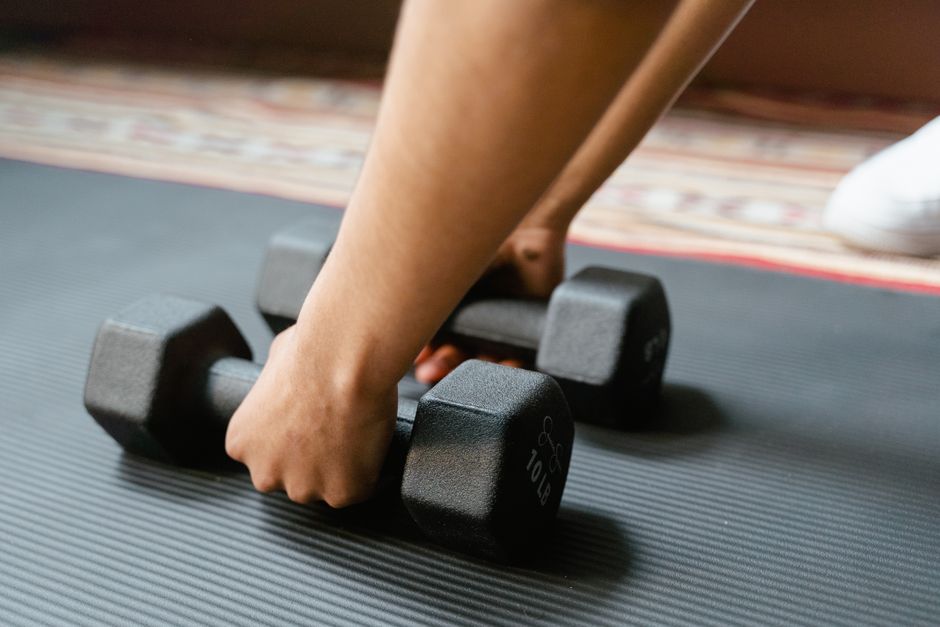
Yes, but with an important caveat. Strengthening the forearm and hand muscles can improve wrist stability and support better positioning. However, gripping exercises that heavily load the flexor tendons can temporarily increase pressure inside the carpal tunnel.
This is a real concern. Research has shown that activities requiring sustained or repetitive gripping raise carpal tunnel pressure. That does not mean you should avoid all strengthening — it means you should be smart about how you do it.
Exercises that may help include:
- Wrist extension strengthening — using a light dumbbell or resistance band to work the muscles on the back of the forearm
- Finger extension — spreading rubber bands with your fingers to strengthen the extensor muscles
- Thumb opposition — touching your thumb to each fingertip against light resistance
- Forearm rotation — turning your palm up and down with light resistance
Notice that most of these focus on extension, not flexion. The flexor muscles are already strong from daily activities like gripping and typing. The extensor muscles on the back of the forearm are often weaker and may contribute to poor wrist posture.
Start with very light resistance or no resistance at all. If your symptoms flare up, back off. Strengthening should not make numbness or tingling worse.
What Stretches Help Relieve Carpal Tunnel Pressure?
Stretching the wrist flexors and the transverse carpal ligament may help reduce tightness that contributes to compression. These stretches are commonly recommended by hand therapists and are generally safe for most people.
A basic wrist flexor stretch:
- Extend your arm in front of you with your palm facing up
- Use your other hand to gently pull your fingers and hand downward
- Hold for 15 to 30 seconds
- Release slowly and repeat on the other side
You can also stretch the wrist extensors by flipping your palm down and gently pulling your hand toward your body.
Some clinicians also recommend stretching the transverse carpal ligament by pressing the palm of one hand against the fingers of the other in a prayer position and slowly lowering the hands toward the waist. The evidence for this specific stretch is limited, but it is low-risk.
Stretching should feel like a gentle pull, not pain. If a stretch increases tingling or numbness, stop. Nerves do not respond well to being pushed into a stretched position when they are already irritated.
How Long Does It Take to See Improvement?
This depends on how long you have had symptoms and how severe they are. Mild cases that respond to exercise and activity modification may improve over several weeks. More established cases can take months.
There is no guaranteed timeline. Some people improve with conservative care. Others do not. If symptoms are not improving after a few weeks of consistent exercise, or if they are getting worse, see a doctor.
Conservative treatment for carpal tunnel typically includes splinting at night, activity modification, and exercises. Some clinicians also recommend corticosteroid injections for short-term relief. Surgery is considered when conservative measures fail or when there is evidence of nerve damage.
Exercise is not a replacement for medical care when the condition is moderate to severe. It works best as part of a broader plan.
What Else Affects Whether These Exercises Work?
Ergonomics matter. If you spend hours typing with your wrists bent upward or downward, you are maintaining pressure on the median nerve regardless of how many exercises you do.
Keep your wrists in a neutral position — roughly straight, not bent up or down — when working. A wrist rest can help, but it should support the heel of your hand, not press into the wrist itself.
Take breaks. Sustained positions increase pressure. Even short breaks to shake out your hands and move your wrists through their range of motion can help.
Underlying health conditions also play a role. Diabetes, thyroid disorders, and fluid retention during pregnancy can all contribute to carpal tunnel syndrome. Addressing those conditions may improve symptoms more than any exercise.
If you are pregnant, carpal tunnel symptoms often improve after delivery as fluid shifts normalize. No clinical guidelines currently recommend specific exercise protocols for carpal tunnel during pregnancy beyond general activity modification and splinting.
Frequently Asked Questions
Can you actually strengthen the median nerve?
No. Nerves do not build strength through exercise the way muscles do. Nerve gliding exercises aim to improve how the nerve moves and reduce compression, not to make the nerve stronger.
How often should I do tendon gliding exercises?
Most hand therapists recommend doing them several times a day, especially before and after activities that strain your wrists. There is no single established protocol, so follow the guidance of your doctor or therapist.
Do carpal tunnel exercises work without splinting or other treatment?
For mild cases, exercise alone may help. For moderate to severe cases, research suggests that combining exercise with splinting or other treatments tends to be more effective than exercise alone.
When should I stop exercising and see a doctor?
If exercises increase numbness, cause sharp pain, or if you notice muscle wasting at the base of your thumb, stop and see a doctor. These signs suggest the nerve is being compressed enough to cause damage.
