
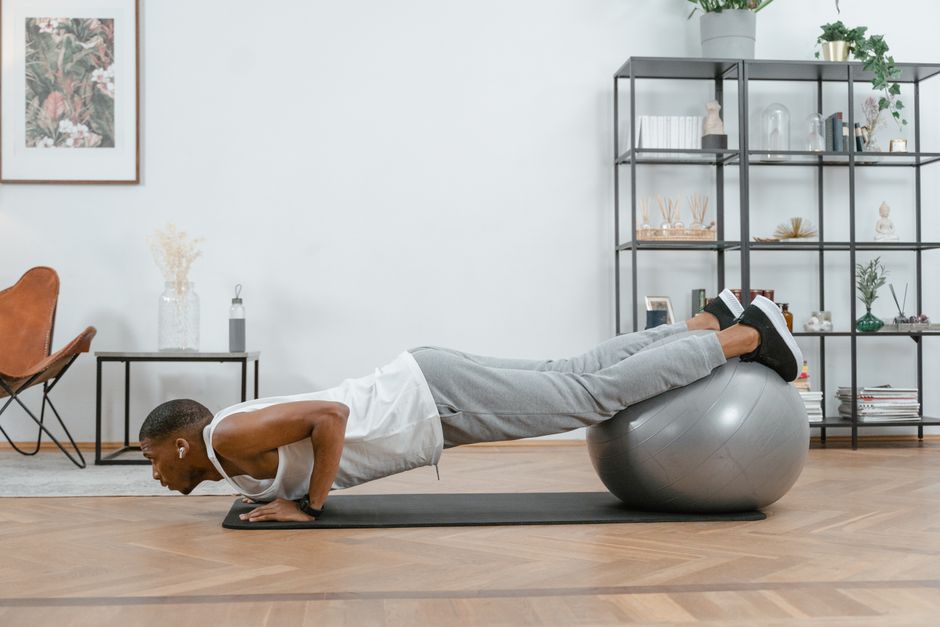
Living with a herniated disc often makes you afraid to move. You might think any core work will make things worse. That fear is understandable, but it can hold you back. The truth is that a weak core can actually contribute to back pain. Strengthening it with the right approach can help protect your spine and reduce symptoms. The goal is not to do crunches or sit-ups. The goal is to build stability so your spine is supported during daily movements.
What Does a Herniated Disc Actually Mean for Your Core?
A herniated disc happens when the soft center of a spinal disc pushes through a tear in the tougher outer layer. This can irritate nearby nerves. That irritation is what causes pain, numbness, or weakness that travels down your leg.
Your core muscles wrap around your spine like a natural brace. When these muscles are strong and coordinated, they take pressure off your spinal discs. When they are weak, your spine bears more load. That is why core training matters for disc health. But the type of core training you do matters just as much.
High-force movements that bend and twist the spine can increase disc pressure. That is why traditional ab exercises like crunches, sit-ups, and Russian twists are often off the table. Instead, you need exercises that teach your core to brace and stabilize without excessive spinal movement.
Is It Safe to Exercise With a Herniated Disc?
In most cases, yes. Movement is generally safe and often helpful for disc-related back pain. Prolonged bed rest is rarely recommended anymore. Research consistently shows that gradual return to activity leads to better outcomes than staying still.
However, safety depends on your specific situation. If you have severe nerve symptoms, loss of bladder or bowel control, or progressive leg weakness, you need immediate medical attention. These are signs of a serious condition called cauda equina syndrome. That is an emergency.
For everyone else, the rule is simple: avoid movements that increase your pain. Some discomfort during exercise is normal. Sharp, shooting, or radiating pain is not. If an exercise makes your leg symptoms worse, stop doing it. That is your body telling you the movement is not right for your current state.
How To Strengthen Your Core With a Herniated Disc
Start with exercises that keep your spine in a neutral position. Neutral means maintaining the natural curve of your lower back without flattening or arching it excessively. You are not trying to move your spine. You are trying to hold it steady while your muscles work.
Breathing is a critical part of this. You want to brace your core like you are preparing to take a light punch to the stomach. You should not hold your breath. Breathe normally while maintaining that gentle tension in your abdominal wall.
Begin with these foundational exercises. Do them slowly. Focus on quality of movement, not quantity.
- Dead bug: Lie on your back with your arms pointing toward the ceiling and your knees bent at 90 degrees. Slowly lower one arm and the opposite leg toward the floor. Keep your lower back pressed gently into the floor. Return to start and switch sides.
- Bird dog: Start on your hands and knees. Extend one arm forward and the opposite leg back. Keep your hips level and your spine still. Hold briefly, then return to start.
- Pelvic tilt: Lie on your back with your knees bent. Gently tilt your pelvis to flatten your lower back against the floor. Hold for a few seconds, then release.
- Heel slides: Lie on your back with your legs straight. Slowly slide one heel toward your buttock, bending your knee. Keep your lower back stable. Slide the leg back out and repeat.
- Glute bridge: Lie on your back with knees bent and feet flat. Squeeze your glutes to lift your hips a few inches off the floor. Do not arch your lower back. Lower down slowly.
These exercises train the core without putting excessive compression on your spinal discs. They are widely used in physical therapy settings for people with disc issues. Some studies suggest that exercises like these can reduce pain and improve function in people with low back pain.




What Exercises Should You Avoid?
Full sit-ups and crunches involve repeated spinal flexion. That repeated bending can increase pressure on the disc and potentially worsen herniation. Most clinicians advise against them during the acute phase of symptoms.
Russian twists involve rotation under load. That combination of twisting and weighted movement can be problematic. Avoid them until your symptoms have fully resolved, and even then, consider safer alternatives.
Heavy loaded exercises like squats and deadlifts are not necessarily off-limits forever. But they require proper form and a well-conditioned core. Attempting them while you are in pain is not wise. Work with a physical therapist to determine when your body is ready for that level of loading.
Also avoid exercises that cause you to hold your breath and bear down. This is called the Valsalva maneuver. It increases intra-abdominal pressure, which can translate to increased spinal pressure. If you find yourself straining, lighten the load or simplify the movement.
How Much Core Work Should You Do?
There is no single correct answer for everyone. A reasonable starting point is every other day. That gives your muscles time to recover and adapt. Each session might last 10 to 15 minutes.
Start with 5 to 10 repetitions of each exercise. If you can do them without increased pain, gradually add more repetitions. If you feel good, you can also progress to holding positions longer. For example, in the dead bug, you can hold the extended position for a breath before returning to start.
Pain is your guide here. Mild muscle soreness the next day is normal. Increased back pain or leg symptoms are not. If symptoms flare, reduce the intensity or take a day off. Then try again at a lower level.
Consistency matters more than intensity. Ten minutes of careful core work three times a week is better than one intense session that leaves you unable to move for days.
When Should You See a Professional?
If you have not been evaluated for your herniated disc, start there. A doctor can confirm the diagnosis and rule out other conditions. Imaging like an MRI is not always needed, but it can be helpful in certain situations.
A physical therapist can design a program specific to your symptoms and limitations. This is especially valuable if you are unsure which movements are safe for you. The evidence supports physical therapy as a first-line treatment for disc-related back pain.
You should also see a professional if your symptoms are not improving after a few weeks of careful exercise. Persistent pain, worsening symptoms, or new symptoms all warrant a check-in. Your body is telling you something, and it deserves attention.
Some people benefit from seeing a specialist for injections or other procedures. Surgery is reserved for severe cases where nerve compression is significant or when conservative treatment fails. Most people with herniated discs improve without surgery.
What Does Recovery Look Like?
Recovery takes time. Disc tissue heals slowly because it has a limited blood supply. Some research suggests that most people feel significantly better within six to eight weeks. But full healing of the disc itself can take longer. Do not be discouraged if you are not back to normal in a month.
Your goal during recovery is not to rush back to your previous fitness level. It is to build a foundation that prevents future problems. A strong core is one piece of that foundation. Maintaining a healthy weight, staying active, and practicing good posture during daily activities are also important.
Walking is one of the best things you can do. It is low impact, promotes blood flow, and helps keep your spine mobile. Start with short walks and gradually increase distance as your symptoms allow.
Frequently Asked Questions
Can I do planks with a herniated disc?
Planks can be safe if you can maintain a neutral spine without pain. Start with short holds on your knees and stop if you feel back or leg pain.
How long does a herniated disc take to heal?
Most people notice significant improvement within six to eight weeks, but complete healing can take several months. The timeline varies based on the severity of the herniation and your individual response to treatment.
Should I wear a back brace while exercising?
Back braces are not generally recommended for routine core exercise. They can limit natural muscle activation. Some clinicians use them briefly for heavy lifting, but long-term reliance can weaken your core.
Is walking good for a herniated disc?
Yes, walking is generally safe and beneficial. It keeps your spine mobile and promotes circulation without placing excessive load on your discs. Start with short walks and increase gradually.
Strengthening your core with a herniated disc is possible. It requires patience, careful movement choices, and attention to your body’s signals. Start slow, stay consistent, and let your pain guide your progress. Over time, a stable core can reduce your symptoms and help you move with more confidence.
