
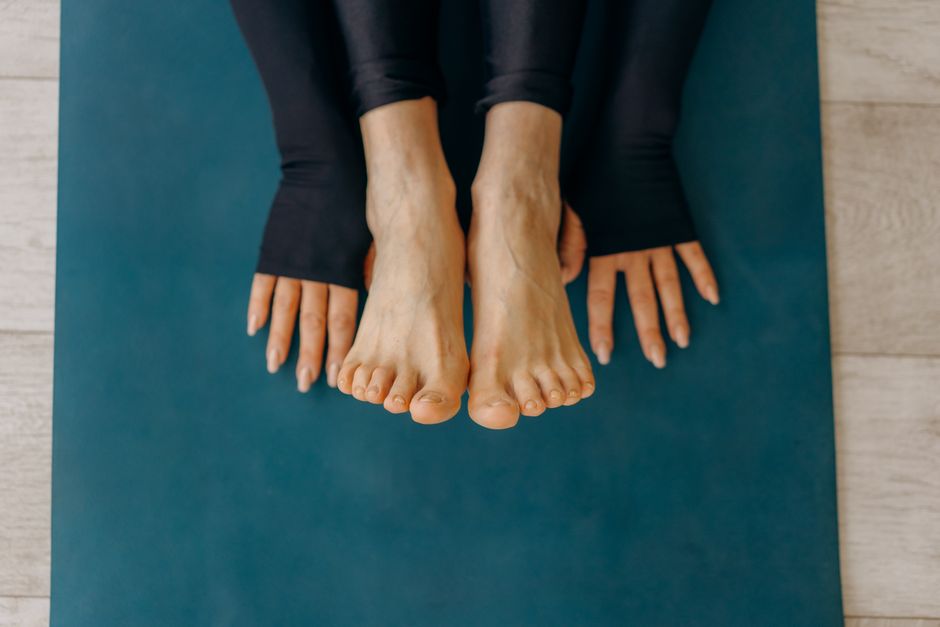
The arch of your foot is not a single structure you can exercise like a bicep. It is a mechanical system held up by a network of muscles, tendons, and ligaments working together. Strengthening that system naturally means training the muscles that support it, loading the foot in ways that build tissue tolerance, and addressing habits that quietly weaken it over time. For many people with flexible, non-painful flat feet or mild arch discomfort, targeted foot exercises and smarter footwear choices can meaningfully improve support. For structural flatfoot or arch pain with an underlying medical cause, exercise alone is not a substitute for a proper diagnosis.
What Actually Holds Up The Arch Of Your Foot?
The arch is a load-bearing structure, not a rigid block. It works like a spring. When you step down, the arch flattens slightly to absorb force. When you push off, it springs back and helps propel you forward.
Two systems do this work. The first is passive: bones, ligaments, and the plantar fascia — a thick band of tissue running from your heel to the ball of your foot. The second is active: muscles and tendons, most importantly the tibialis posterior tendon, which runs down the inside of your ankle and attaches to bones in the midfoot. The tibialis posterior is the primary dynamic supporter of the medial arch.
This distinction matters. If the passive structures are stretched or damaged, exercises cannot fully rebuild them. If the active structures are weak, exercise can help. Most people fall somewhere in between, which is why a combined approach tends to make sense.
There is also a common misconception worth correcting. You cannot “build” an arch that was never there through exercise alone. What you can do is improve the muscular support around whatever arch structure you have. For some people that means less fatigue and better function. It does not mean a flat foot becomes a high-arched foot.
How To Strengthen The Arch Of Your Foot Naturally With Exercises
Foot and lower leg exercises can improve muscular support for the arch in people whose flat feet are flexible and not caused by nerve, joint, or tendon disease. The evidence for these exercises is moderate — better than nothing, but not a guaranteed fix.
Here are the exercises most commonly used in clinical practice and studied in foot-strength research.
- Short foot exercise. Sit or stand with your foot flat. Without curling your toes, try to shorten your foot by lifting the arch slightly. Hold for a few seconds, then relax. This trains the small muscles inside the foot.
- Toe spreads. Spread your toes apart as wide as you can, hold briefly, and release. This works the muscles between the toes.
- Heel raises. Rise onto the balls of your feet, then lower slowly. This loads the tibialis posterior and calf complex. Doing them on one foot is harder and more targeted.
- Towel scrunches. Curl a towel toward you with your toes. This is popular, but it mostly works the toe flexors, not the arch supporters. Useful as a warm-up, not a primary exercise.
- Single-leg balance. Stand on one foot for as long as you can, up to about 30 seconds. This trains the foot and ankle to stabilize under load.
Do these barefoot, on a firm surface, and progress gradually. A few minutes a day is a reasonable starting point. More is not automatically better — foot muscles respond to consistent, moderate loading, not to sudden spikes.
One non-obvious point: the muscles that support your arch are also affected by what happens higher up. Weak hip muscles can change how your foot lands when you walk. Some clinicians include hip strengthening in arch-support programs for that reason. The evidence for this is still developing.
Which Shoes Help And Which Ones Hurt?
Footwear has a real effect on how hard your arch-supporting muscles have to work. The right shoe does not strengthen your arch, but the wrong one can make weakness worse over time.
Supportive shoes with a firm heel counter, a slight heel-to-toe drop, and a stable midsole reduce demand on the tibialis posterior. For people with arch fatigue or early flatfoot, that can be helpful.
Minimalist shoes and flat sandals do the opposite. They ask more of the foot’s own muscles. That can be a training stimulus for some people, but for others it is a fast track to pain. The transition to minimal footwear should be slow — weeks to months, not days. Sudden switches are a common cause of arch and heel pain.
Orthotics are another option. Over-the-counter arch supports can reduce symptoms for some people. Custom orthotics are sometimes recommended, but the evidence that they change arch structure is weak. They mostly change how load is distributed and how the foot feels. That can still be valuable, even if it is not “strengthening.”




Can Being Overweight Affect Your Arch?
Higher body weight increases the load the arch has to carry with every step. Some research suggests that higher body mass index is associated with a greater likelihood of developing flatfoot over time, though the relationship is not simple and other factors — age, genetics, and activity — play a role.
This does not mean weight loss is a treatment for flat feet. It means load matters, and load is one of the few variables a person can influence. Even modest weight reduction may reduce the daily strain on the foot, though the direct evidence for arch-specific improvement is limited.
What Makes Arch Support Weaker Over Time?
Arches tend to lose support gradually, and several factors contribute.
- Age. Tendons lose elasticity and strength with age. This is one reason flatfoot becomes more common in older adults.
- Prolonged standing on hard surfaces. Constant load without recovery can fatigue the supporting muscles.
- Sudden increases in activity. Going from sedentary to long walks or runs without building up is a common trigger for arch and heel pain.
- Certain medical conditions. Diabetes, rheumatoid arthritis, and posterior tibial tendon dysfunction can all weaken arch support.
- Genetics. Some people are simply built with flatter arches, and that is not a defect.
Posterior tibial tendon dysfunction deserves a specific mention. It is a progressive condition where the tendon that supports the arch becomes inflamed, stretched, or torn. It is one of the most common causes of adult-acquired flatfoot. Exercise can help in early stages, but it is a condition that benefits from medical evaluation. If your arch has visibly flattened on one side, or if you have pain along the inside of your ankle that is getting worse, that is a reason to see a clinician rather than to self-treat.
When Should You See A Doctor About Your Arches?
Most people with flat feet do not need medical care. Flat feet are common and often painless. The question is whether the foot is causing problems or changing.
See a clinician if you have:
- Pain in the arch, heel, or inner ankle that lasts more than a few weeks
- Swelling along the inside of the ankle
- A visible change in the shape of one foot over time
- Difficulty standing on your toes on one foot
- Numbness, tingling, or burning in the foot
- Foot pain in the context of diabetes or rheumatoid arthritis
These signs point to causes that exercise alone will not fix. A proper exam can distinguish between flexible flatfoot, which is usually benign, and rigid flatfoot or tendon dysfunction, which may need more targeted care. Imaging is sometimes used, but many cases can be assessed clinically.
Children with flat feet are a separate situation. Most children have flat feet until around age 5 to 6, and the arch often develops on its own. Routine treatment of flexible flat feet in children without symptoms is not generally recommended. If a child has pain, stiffness, or a foot that looks different from the other, that warrants evaluation.
Does Barefoot Walking Help Or Hurt?
Walking barefoot on natural, uneven surfaces challenges the foot’s muscles in ways shoes do not. Some research suggests that people who habitually walk barefoot have stronger intrinsic foot muscles than those who always wear shoes.
That does not mean barefoot walking is right for everyone. On hard, flat surfaces like concrete, barefoot walking increases impact forces and can aggravate heel pain or plantar fasciitis. For most people, a middle path works best: some barefoot time on soft or uneven ground, supportive shoes for long days on hard surfaces.
If you have diabetes, peripheral neuropathy, or poor circulation, barefoot walking carries real risk of unnoticed injury. That is a case where shoes are not optional.
Frequently Asked Questions
Can you rebuild a flat foot arch naturally?
You cannot rebuild the bony structure of a flat foot through exercise. You can strengthen the muscles and tendons that support the arch, which may improve function and reduce fatigue for people with flexible flat feet.
How long does it take to strengthen foot arches?
Most people notice some change in foot strength or comfort after several weeks of consistent exercise. Meaningful change typically takes two to three months, and results vary widely depending on the cause of the flat foot.
Do arch support insoles weaken your feet?
There is no strong evidence that wearing insoles weakens foot muscles in most people. Some clinicians raise the concern that long-term reliance on rigid support may reduce the foot’s own workload, but this remains debated.
Is walking barefoot good for flat feet?
Brief barefoot walking on soft or uneven surfaces can challenge foot muscles in a useful way. Long barefoot walking on hard surfaces often aggravates heel and arch pain, especially for people with existing foot problems.
