
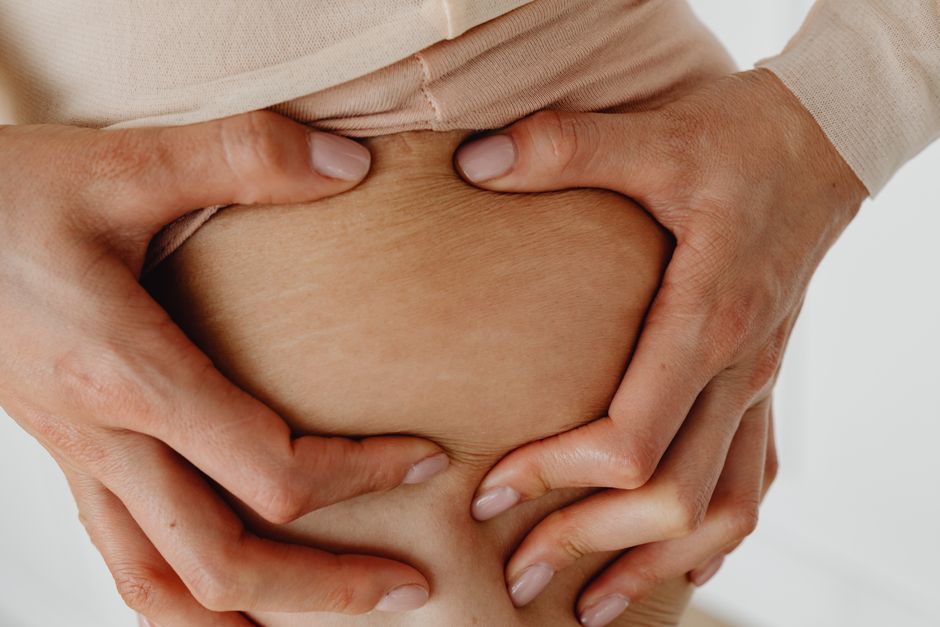
Stretch marks are scars, and scars do not vanish. That is the honest starting point. The marks that appear after weight loss — or during the weight gain that came before it — form when skin stretches faster than its supporting fibers can keep up, and the torn tissue heals as a permanent change in the deeper layer of your skin. What you can do naturally is improve how they look: soften the texture, fade the color, and keep new marks from forming. Complete removal is not something any cream, oil, or home remedy has been shown to achieve.
What Actually Causes Stretch Marks After Weight Loss?
The marks usually form during the weight gain, not the loss. When body size changes quickly — from pregnancy, rapid weight gain, or fast muscle growth — the skin has to expand. The middle layer of skin, the dermis, contains collagen and elastin fibers that give skin its stretch and snap-back. When that layer is pulled beyond what those fibers can handle, they tear.
The body repairs the tear with scar tissue. That scar tissue has less collagen and elastin than normal skin, so it looks different and feels different. Early on, the marks often appear red, purple, or pink because blood vessels are still active in the healing tissue. Over months to years, that color fades to a silvery white or a shade lighter than your surrounding skin.
Weight loss itself does not create the tears. But it can make existing marks more visible. As fat under the skin shrinks, the skin loosens, and the thin, scarred areas stand out more against the surrounding surface. This is why many people notice their stretch marks most clearly after losing weight, even though the marks began forming earlier.
Some factors raise the odds. Genetics matter a great deal — if a parent has stretch marks, you are more likely to develop them. Rapid weight change, pregnancy, and periods of fast growth during the teen years all increase risk. Cortisol, a hormone your body releases during stress and in higher amounts in conditions like Cushing’s syndrome, weakens skin fibers and can make marks more likely. Certain medications, including long-term use of corticosteroid creams or pills, can have a similar effect.
Can Natural Remedies Really Remove Stretch Marks?
No natural remedy has been shown to remove stretch marks completely. The evidence for fading them is modest and mixed. This is worth stating plainly, because a large share of what you read online overstates what these treatments can do.
That said, some approaches have at least a reasonable basis, and a few have been studied more than others. Here is the honest picture of the most common options.
- Moisturizers and oils. Cocoa butter, shea butter, olive oil, and similar products keep skin hydrated and may improve how marks feel. Research on whether they prevent or fade stretch marks is largely discouraging. A well-known review of prevention studies found no clear benefit from these products. They are safe and inexpensive, but they are not a proven treatment.
- Retinoids. Tretinoin, a prescription vitamin A derivative, is one of the better-studied options for early stretch marks. Some studies suggest it can improve appearance when used on newer, still-colored marks. It does not work as well on older white marks. It should not be used during pregnancy or breastfeeding.
- Hyaluronic acid and vitamin C products. These are common in over-the-counter creams. Evidence that they meaningfully change stretch marks is limited. Some small studies suggest minor improvement, but results vary and the studies are not strong enough to promise much.
- Centella asiatica (gotu kola) and similar plant extracts. These appear in some creams and have been studied for skin healing. Evidence specifically for stretch marks is thin. Some studies suggest modest benefit, but the research is not consistent enough to call it proven.
- Aloe vera and other soothing gels. These can calm irritated skin and add moisture. No strong evidence shows they fade or remove stretch marks.
The pattern across all of these is the same: they may help a little, especially with newer marks, but none has been shown to erase them. Anyone who tells you otherwise is selling something.
Which Home Treatments Have the Best Evidence?
The treatments with the most support are not the ones most often marketed as “natural.” They are procedures done in a clinic. This matters because knowing the real options helps you avoid wasting money on products that cannot deliver.
Among in-office options, laser therapy and microneedling have the most evidence behind them. Lasers can stimulate collagen production and improve both the color and texture of stretch marks. Microneedling uses fine needles to create controlled micro-injuries that prompt the skin to rebuild collagen. Both show improvement in studies, though results vary by person and by how old the marks are. Neither erases marks entirely — they make them less noticeable.
Radiofrequency and ultrasound treatments are also used. Evidence for these is more limited, and results are generally modest.
If you want to stay with at-home approaches, the most reasonable strategy is to focus on the things that genuinely support skin health and to be patient. Skin turns over slowly, and any change from a topical product — if it happens at all — typically takes months, not days. Realistic timelines matter here. A cream that promises visible fading in a week is not describing how skin biology works.



How Can You Prevent New Stretch Marks Naturally?
Prevention is where natural approaches have the most honest value, though even here the evidence is not strong. The goal is to avoid the rapid skin stretching that causes the tears in the first place, and to keep skin as healthy as possible.
Managing weight changes gradually rather than in sharp spikes is the most direct step. When weight goes up or down slowly, skin has more time to adapt. This is easier said than done, and it is not fully within anyone’s control, but it is the factor most connected to whether marks form.
Keeping skin hydrated supports its barrier and elasticity. Drinking enough water and using a daily moisturizer will not stop stretch marks on their own, but dry, poorly nourished skin is more prone to damage. Eating a diet with enough protein, vitamin C, and zinc supports collagen production, since your body needs these nutrients to build and repair skin. Vitamin C is directly involved in collagen formation, so consistently low intake can work against skin repair.
Avoiding smoking helps. Smoking damages collagen and elastin throughout the body and is linked to poorer skin quality and slower healing. If you smoke, this is one of the more meaningful changes you can make for your skin.
During pregnancy, where stretch marks are very common, some clinicians recommend keeping skin moisturized and gaining weight within the range your doctor advises. The evidence that moisturizers prevent stretch marks is weak, but the practice is low-risk. No topical product has been shown to reliably prevent stretch marks in pregnancy.
Do Stretch Marks Fade on Their Own?
Yes, they change over time, and this is the one thing you can count on. New stretch marks are usually red, purple, or pink. Over months to a few years, most fade to a lighter, silvery tone that sits closer to your natural skin color.
This natural fading is why timing matters so much for treatment. Marks that are still colored tend to respond better to treatment than older white marks. The active healing phase is when the tissue is still being remodeled, and that is when interventions — whether prescription creams or procedures — have the best chance of helping.
Fading is not the same as disappearing. The change in skin texture, the slight indentation or thinning, usually remains. Most people find that the color change alone makes a big difference in how noticeable the marks are, even if the texture does not fully smooth out.
Weight loss adds a wrinkle to this. When you lose a significant amount of weight, especially quickly, the skin may not fully tighten to match your new shape. This can make stretch marks and loose skin more visible for a while. Skin has some ability to retract over time, but how much depends on age, genetics, how much weight was lost, and how long the skin was stretched. For some people, particularly after large weight loss, the skin does not fully tighten on its own, and that is a matter of biology rather than effort.
The Bottom Line on Natural Removal
Stretch marks are a type of scar, and no natural product removes a scar. What natural approaches can realistically do is support overall skin health, keep new marks from forming where possible, and possibly soften the appearance of newer marks. Prescription retinoids and in-office procedures like laser and microneedling have the most evidence for improving appearance, though even these make marks less noticeable rather than gone.
The most honest advice is to focus on what is within your control: gradual weight changes, good nutrition, hydration, not smoking, and patience with the natural fading process. Be skeptical of any product that promises to erase stretch marks. The science does not support that claim, and the money spent chasing it is often better saved.
Frequently Asked Questions
Can stretch marks be removed completely?
No. Stretch marks are scars in the deeper layer of skin, and no treatment — natural or medical — has been shown to remove them completely. Treatments can make them less noticeable by improving color and texture.
Do cocoa butter and oils really work on stretch marks?
Research has largely found no clear benefit from cocoa butter and similar oils for preventing or fading stretch marks. They are safe and can keep skin moisturized, but they are not a proven treatment.
Which stretch marks respond best to treatment?
Newer marks that are still red, purple, or pink tend to respond better than older marks that have faded to white or silver. The active healing phase is when treatment has the best chance of helping.
How long does it take for stretch marks to fade naturally?
Most stretch marks fade over months to a few years, gradually turning from colored to a lighter, silvery tone. The color fades, but the change in skin texture usually remains.
