
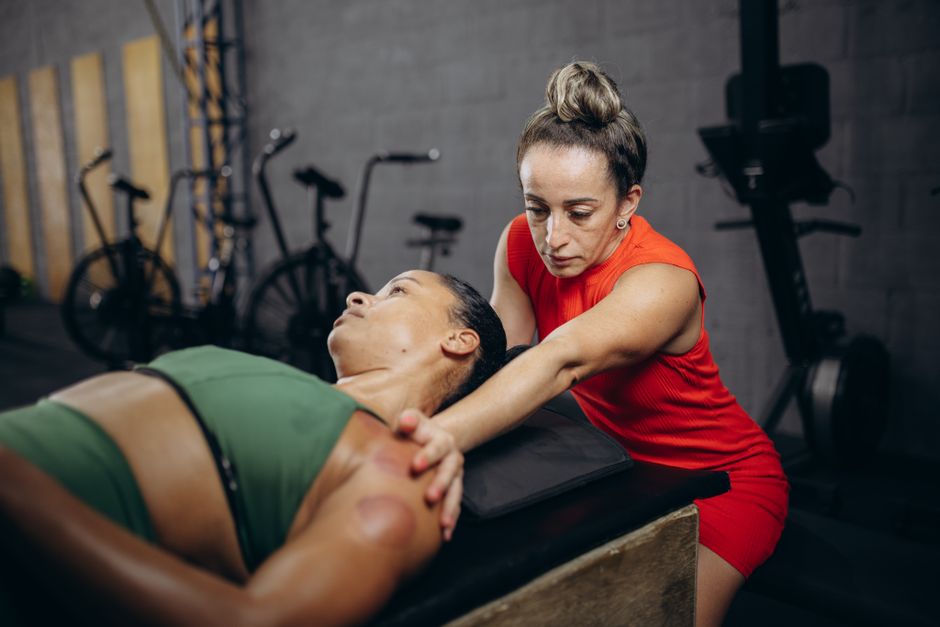
Neck and shoulder pain is one of the most common complaints among adults, and the muscles in these areas often weaken from years of poor posture and sedentary work. You can strengthen these muscles at home with bodyweight exercises, resistance bands, and a consistent routine of 10 to 15 minutes per day. The most effective approach combines gentle strengthening moves with daily stretching, focusing on the deep neck flexors, upper trapezius, and rotator cuff muscles.
Why Neck and Shoulder Muscles Get Weak
Most people hold their heads forward while looking at screens. This position puts the neck muscles in a constant state of strain. Over time, the muscles in the front of the neck weaken, and the muscles in the back become tight and overworked.
The shoulders follow the same pattern. The upper trapezius muscle at the top of the shoulder takes on extra work. The deeper stabilizing muscles around the shoulder blade lose strength. This imbalance is what leads to that familiar ache between the shoulder blades or at the base of the skull.
Understanding this pattern matters. If you only stretch the tight muscles without strengthening the weak ones, the problem returns. A balanced program addresses both sides of the equation.
How To Strengthen Neck And Shoulder Muscles At Home: Start With Posture
Before you pick up a resistance band, you need to fix your resting position. Strengthening exercises work best when your spine is in a neutral position. If you strengthen muscles while slouching, you are training them to hold a poor posture.
Stand or sit tall. Your ears should line up over your shoulders. Your shoulder blades should sit flat against your ribcage, not winging outward. This is the starting position for nearly every exercise in this routine.
Check your posture several times a day. Set a reminder on your phone if needed. The exercises will be far more effective when you practice good alignment during your regular activities.
The Best Neck Strengthening Exercises for Home
The neck has small muscles that respond well to low-resistance exercises. You do not need heavy weights. In fact, heavy loading on the neck can be risky if done improperly. Start with bodyweight and progress slowly.
Chin tucks are the foundation of neck strengthening. Sit or stand tall. Draw your chin straight back as if making a double chin. Hold for 3 to 5 seconds. Release. Do 10 repetitions. This exercise targets the deep neck flexors that hold your head upright.
Isometric neck presses build strength without movement. Place your palm on your forehead. Push your head forward against your hand while your hand resists. Hold for 5 seconds. Repeat with pressure from the back and each side. Use only about 20 to 30 percent of your maximum effort. This is not about pushing hard. It is about activating the muscles safely.
Neck extension against resistance works the muscles at the back of the neck. Lie on your back. Tuck your chin slightly. Lift your head a few inches off the floor. Hold for 5 seconds. Lower slowly. This exercise is more advanced, so begin with chin tucks and isometric presses first.



Shoulder Strengthening Without Equipment
Your shoulder muscles support the arm and control the shoulder blade. The rotator cuff is a group of four small muscles that stabilize the shoulder joint. These muscles respond well to light resistance and high repetitions.
Wall slides strengthen the muscles that control the shoulder blade. Stand with your back against a wall. Place your arms against the wall with elbows bent at 90 degrees. Slide your arms upward slowly. Keep your wrists, elbows, and hands in contact with the wall. Return to the start. Do 10 repetitions.
Scapular squeezes target the rhomboids between the shoulder blades. Sit or stand tall. Squeeze your shoulder blades together as if holding a pencil between them. Hold for 5 seconds. Release completely. Do 15 repetitions.
Prone Y raises work the lower trapezius. Lie on your stomach with arms extended forward in a Y shape. Lift your arms and chest slightly off the floor. Hold for 3 seconds. Lower slowly. This exercise is challenging, so start with a small range of motion.
Using Resistance Bands for Progressive Strength
Resistance bands are the most practical equipment for home neck and shoulder strengthening. They are inexpensive, portable, and allow you to increase resistance gradually. Light to medium bands are appropriate for most people starting this routine.
External rotation targets the rotator cuff. Attach a band to a doorknob at waist height. Hold the band with your elbow bent at 90 degrees and tucked against your side. Rotate your forearm outward against the resistance. Return slowly. Do 10 to 12 repetitions on each side.
Band pull-aparts work the rear deltoids and upper back. Hold the band with both hands at shoulder width. Keep your arms straight. Pull the band apart by moving your hands outward. Squeeze your shoulder blades together at the end. Return slowly. Do 12 repetitions.
Band rows strengthen the mid-back muscles. Sit on the floor with legs extended. Loop the band around your feet. Hold one end in each hand. Pull the band toward your waist while keeping your back straight. Squeeze your shoulder blades. Do 10 to 12 repetitions.
A Simple Weekly Routine You Can Follow
Consistency matters more than intensity. A short daily routine produces better results than a long weekly session that you skip half the time.
Perform these exercises 4 to 5 days per week. Start with one set of each exercise. Add a second set after two weeks if you feel no pain. Never push through sharp or shooting pain. Mild muscle soreness is normal. Joint pain is not.
- Day 1: Chin tucks, isometric neck presses, scapular squeezes
- Day 2: Wall slides, band pull-aparts, band external rotation
- Day 3: Rest or gentle stretching only
- Day 4: Chin tucks, prone Y raises, band rows
- Day 5: Isometric neck presses, scapular squeezes, band pull-aparts
- Day 6: Gentle stretching and mobility work
- Day 7: Rest
Each session should take about 10 minutes. The goal is gradual improvement over weeks and months, not immediate results.
When To Avoid Certain Neck Exercises
Not everyone should do the same exercises. If you have a diagnosed cervical spine condition such as a herniated disc, spinal stenosis, or arthritis, some neck exercises can make things worse. Extension exercises in particular can compress the joints in the back of the spine.
If you experience dizziness, numbness, tingling, or pain radiating into your arm during any exercise, stop immediately. These symptoms suggest nerve involvement. Consult a healthcare provider before continuing.
No clinical guidelines currently exist for specific neck strengthening routines in people with pre-existing spinal conditions. The general medical advice is to work with a physical therapist who can tailor exercises to your specific anatomy and limitations.
Stretching Matters More Than You Think
Strengthening tight muscles without stretching them can increase tension. The upper trapezius and levator scapulae muscles are often shortened from prolonged screen use. These muscles need regular stretching to maintain their full range of motion.
Simple neck stretches can be done anywhere. Gently tilt your head toward one shoulder. Hold for 30 seconds. Return to center. Repeat on the other side. You can add a gentle pull with your hand for a deeper stretch, but never force the movement.
Chest stretches are equally important. Tight chest muscles pull the shoulders forward. Stand in a doorway with your arm bent at 90 degrees. Place your forearm on the doorframe. Gently rotate your body away. You should feel a stretch across your chest. Hold for 30 seconds on each side.
How Long Before You Notice Results
Muscle strengthening follows a predictable timeline. Neuromuscular adaptation, where your brain learns to recruit more muscle fibers, begins within 2 to 3 weeks. This is why people often feel stronger before visible muscle growth occurs.
Visible changes in muscle size typically take 8 to 12 weeks of consistent training. Postural improvements may appear sooner. Many people report reduced neck and shoulder pain within 3 to 4 weeks of starting a regular routine.
Results vary based on your starting fitness level, consistency, and the quality of your exercise form. Do not compare your progress to someone else. Focus on performing each repetition with control and maintaining your routine.
Frequently Asked Questions
Can I strengthen my neck and shoulders without equipment?
Yes. Bodyweight exercises like chin tucks, scapular squeezes, and wall slides effectively strengthen these muscles. You can progress by increasing repetitions or holding positions longer.
How often should I do neck and shoulder exercises?
Perform the routine 4 to 5 days per week with at least one rest day. Each session takes about 10 minutes.
Is it safe to strengthen neck muscles every day?
Daily light strengthening is generally safe for healthy individuals. Use low resistance and stop if you experience sharp pain, dizziness, or numbness.
What is the best exercise for neck pain from computer work?
Chin tucks are the most effective exercise for counteracting forward head posture. Perform 10 repetitions every few hours during your workday.
