
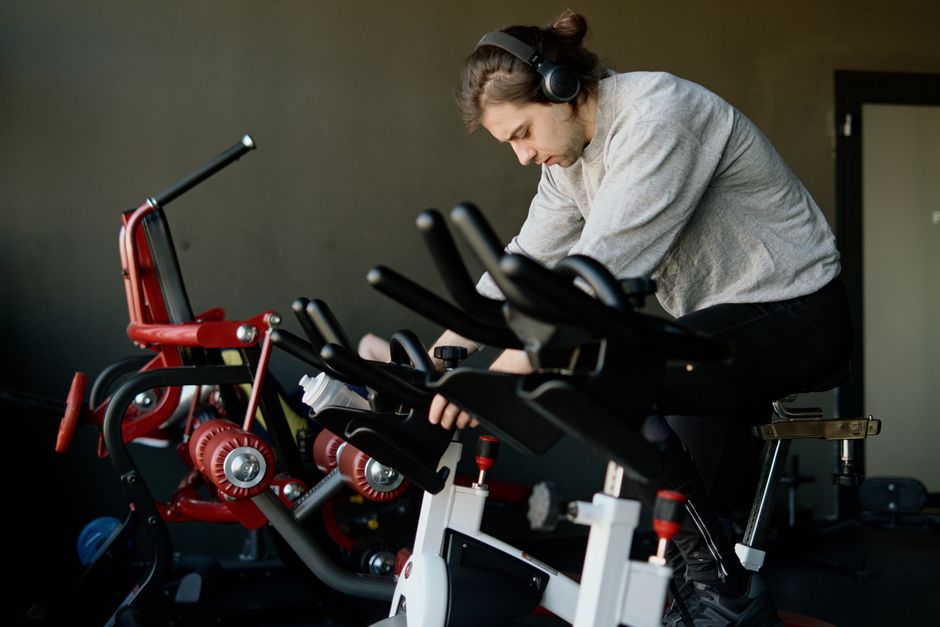
To strengthen your legs for cycling, focus on three key exercises: squats, lunges, and deadlifts. These movements build the quadriceps, hamstrings, glutes, and calves in ways that directly transfer to pedaling power. Combine these with cycling-specific moves like single-leg presses and step-ups, and you will see real improvements in strength and endurance on the bike within six to eight weeks of consistent training.
Why Do Cyclists Need Leg Strength Training?
Cycling alone builds cardiovascular fitness but does not fully develop leg strength. The pedaling motion is repetitive and limited in range of motion. Your muscles work through a small arc, which means they never fully extend or contract. Over time, this can lead to muscle imbalances.
Research from the Journal of Strength and Conditioning Research found that cyclists who added strength training twice a week improved their sprint power by 11 percent and their time to exhaustion by 8 percent. The study followed recreational cyclists over eight weeks. The control group that only cycled saw no power gains.
Stronger legs also protect your knees. The quadriceps and hamstrings act as stabilizers for the knee joint. Weakness in either muscle group increases the risk of patellar tendinitis or IT band syndrome. Strength training corrects this imbalance before pain starts.
What Are the Best Gym Exercises for Cycling Leg Strength?
The barbell back squat is the gold standard for cyclists. It works the quads, glutes, and hamstrings through a full range of motion. The American Council on Exercise notes that squats activate the quadriceps more than leg presses or lunges when performed to parallel depth or below.
Deadlifts target the posterior chain — hamstrings, glutes, and lower back. A strong posterior chain stabilizes your pelvis on the bike and prevents your lower back from rounding during hard efforts. Romanian deadlifts are especially useful because they isolate the hamstrings without heavy load on the lower back.
Lunges improve single-leg strength and balance. Cycling is a single-leg sport — each leg pushes independently. Walking lunges and reverse lunges build the stabilizing muscles around the hip and knee that keep your pedal stroke smooth. Bulgarian split squats are a more advanced version that loads the front leg heavily.
Calf raises are often forgotten. The gastrocnemius and soleus muscles help transfer power through the ankle during the downstroke. Weak calves can limit your ability to maintain a high cadence or climb steep grades.
| Exercise | Primary Muscles | Sets x Reps | Cycling Benefit |
|---|---|---|---|
| Barbell Back Squat | Quads, Glutes, Hamstrings | 3-4 x 6-8 | Max power for sprints and climbs |
| Romanian Deadlift | Hamstrings, Glutes | 3-4 x 8-10 | Stable pelvis, reduced back fatigue |
| Walking Lunge | Quads, Glutes, Core | 3 x 10 each leg | Single-leg drive, balance on bike |
| Standing Calf Raise | Gastrocnemius | 3 x 12-15 | Ankle power, high cadence support |
| Leg Press | Quads, Hamstrings, Glutes | 3 x 10-12 | Controlled load without spinal stress |
Can Bodyweight Exercises Strengthen Legs Enough for Cycling?
Bodyweight exercises can build a solid foundation, especially for new cyclists or those returning from injury. Air squats, lunges, step-ups, and glute bridges all activate the same muscle groups as weighted versions. The difference is the load.
Research published in the International Journal of Sports Physical Therapy showed that bodyweight squats produce about 50 percent of the muscle activation of barbell squats at 70 percent of your one-rep max. That means bodyweight work is effective for endurance and joint health but will not drive significant power gains.
If you choose bodyweight training, increase the challenge by slowing the tempo. A three-second descent on a squat increases time under tension and builds muscle without adding weight. Single-leg work, like pistol squats or single-leg step-ups, also increases the relative load because you are supporting your full body weight on one leg.
For most cyclists, a mix of bodyweight and weighted exercises works best. Use bodyweight moves as warm-ups or recovery day work. Use barbell or dumbbell exercises for your main strength sessions.


How Often Should Cyclists Do Leg Strength Training?
Two sessions per week is the sweet spot for most cyclists. This frequency allows enough stimulus for muscle growth without interfering with your cycling performance. The National Strength and Conditioning Association recommends at least 48 hours of recovery between strength sessions for the same muscle groups.
If you are in the off-season or training for a specific event, you can increase to three sessions per week for four to six weeks. This is called a hypertrophy block. It builds muscle mass and strength that you can maintain with two sessions once your season starts.
Timing matters. Do not do a heavy leg workout the day before a long ride or an interval session. Your legs will be fatigued and your power output will drop. Schedule strength sessions after your hardest rides or on separate days entirely.
A sample weekly schedule might look like this: Monday strength, Tuesday easy ride, Wednesday intervals, Thursday rest or recovery ride, Friday strength, Saturday long ride, Sunday rest. This spreads the load and gives your legs time to adapt.
What Are Common Mistakes Cyclists Make With Leg Training?
The most common mistake is ignoring the hamstrings. Many cyclists focus on quad exercises because quads feel like the primary muscle during pedaling. But the hamstrings are equally important for pulling through the bottom of the pedal stroke and stabilizing the knee. A 2019 study in the Journal of Sports Sciences found that cyclists with weaker hamstrings had a 40 percent higher risk of knee pain over a season.
Another mistake is using too much weight with poor form. Cyclists often have tight hip flexors from hours in the saddle. This can limit squat depth and shift the load to the lower back. If you cannot squat to parallel with your chest up and heels down, reduce the weight. Poor form does not build strength — it builds injury risk.
Skipping warm-ups is also common. Cold muscles are more prone to strain. Before any leg strength session, do five minutes of light cardio like a stationary bike or jumping jacks, then dynamic stretches like leg swings and walking lunges. This increases blood flow and range of motion.
Finally, many cyclists train their legs but neglect their core. A weak core causes your pelvis to rock on the bike, which wastes energy and puts stress on your lower back. Planks, dead bugs, and bird dogs are simple core exercises that support leg strength.
How To Strengthen Legs For Cycling Key Exercises at Home
If you do not have gym access, you can still build cycling leg strength at home. The key is to focus on single-leg and explosive movements that increase the challenge without heavy weights.
Single-leg step-ups target the quads and glutes almost as effectively as a barbell squat, according to research from the Journal of Orthopaedic & Sports Physical Therapy. Use a sturdy chair or bench at knee height. Step up slowly, drive through your heel, and lower with control. Do three sets of 10 to 12 reps per leg.
Reverse lunges are gentler on the knees than forward lunges and activate the glutes more. Step backward into a lunge, keep your front shin vertical, and push through your front heel to return to standing. Add dumbbells or a backpack filled with books for extra resistance.
Glute bridges build hip extension strength, which is critical for generating power from the top of the pedal stroke. Lie on your back with knees bent, feet flat. Drive your hips up, squeeze your glutes at the top, and lower slowly. Single-leg glute bridges double the load on one side.
For explosive power, add jump squats or box jumps. These plyometric exercises train your fast-twitch muscle fibers, which are responsible for sprinting and surging. Start with two sets of five jumps and increase gradually. Land softly with bent knees to protect your joints.
- Single-leg step-ups: 3 x 10 per leg
- Reverse lunges: 3 x 10 per leg
- Glute bridges: 3 x 12
- Jump squats: 2 x 5 (start low, increase slowly)
- Plank hold: 3 x 30-60 seconds
Frequently Asked Questions
How long does it take to see leg strength gains for cycling?
Most cyclists notice improved power and endurance after six to eight weeks of consistent strength training twice per week.
Can I do leg strength training on the same day as cycling?
Yes, but do strength after your ride, not before, to avoid fatigue that reduces cycling performance.
Do I need weights to strengthen my legs for cycling?
No, bodyweight exercises like single-leg step-ups and lunges can build strength, but progress will be slower than with added resistance.
What is the most important leg exercise for cycling?
The squat is the most effective single exercise because it targets the quads, glutes, and hamstrings together in a functional movement pattern.
