
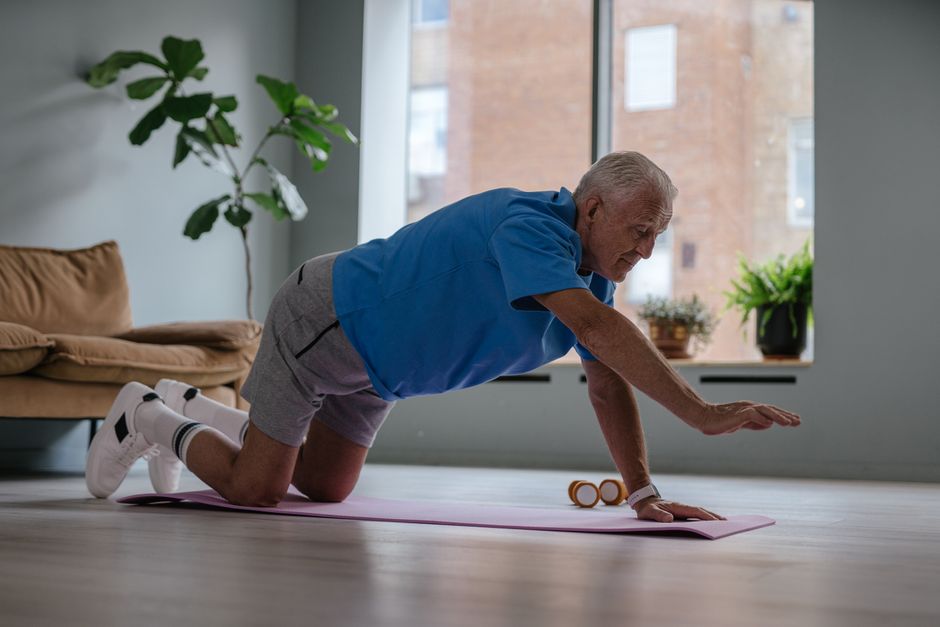
A rounded upper back can be improved, but “fixing” hyperkyphosis depends on what is causing it. Exercise is the mainstay for the most common postural and age-related forms, and it can reduce pain and improve posture. Bracing helps in specific situations, mainly in growing children with Scheuermann’s disease or adolescent kyphosis. Surgery is reserved for severe cases that press on the spinal cord or cause serious disability.
What Is Hyperkyphosis?
Hyperkyphosis is an excessive forward curve of the thoracic spine. The upper back normally curves forward. When that curve becomes too pronounced, the upper back looks rounded and the head juts forward.
The thoracic spine has a natural curve of roughly 20 to 40 degrees when measured on an X-ray. Measurements above that range are generally considered hyperkyphosis, though the exact threshold a clinician uses can vary. A curve of 40 to 60 degrees is often called moderate. Curves above 60 degrees are usually described as severe.
Two broad groups exist. Postural kyphosis is flexible. The spine can still straighten when the person actively pulls their shoulders back. Structural kyphosis is stiffer and does not fully correct with effort. The most common structural cause in adolescents is Scheuermann’s disease, a condition where the front of the vertebrae grow unevenly during a growth spurt.
In older adults, hyperkyphosis often develops from a mix of factors. Age-related disc changes, muscle weakness, and in some cases vertebral compression fractures all contribute. This is why the approach to treatment differs so much by age and cause.
What Causes Hyperkyphosis?
The cause determines everything about treatment. Postural habits are one contributor, but they are rarely the whole story.
- Postural kyphosis. Slouching over time, especially during growth years, can contribute to a flexible curve. This form responds best to exercise.
- Scheuermann’s disease. A structural condition that develops during adolescence. The vertebrae become wedge-shaped, creating a fixed curve.
- Osteoporosis and compression fractures. Weakened bone can collapse in the front of a vertebra, pushing the spine forward. This is a leading cause in older adults.
- Degenerative disc disease. As discs wear down with age, the spine can lose some of its ability to hold an upright position.
- Neuromuscular conditions. Some conditions affecting muscle tone or control can contribute to spinal curve changes.
- Congenital causes. Rarely, vertebrae form abnormally before birth.
One point worth clarifying: poor posture alone does not usually create a severe fixed curve. If a curve is stiff and does not straighten with effort, the cause is more likely structural. That distinction shapes whether exercise alone will help.
How To Fix Hyperkyphosis: Exercises, Bracing And More
Exercise is the most studied and most useful approach for flexible, postural, and age-related kyphosis. It targets the muscles that support the upper back and helps counteract the forward pull of the curve.
The muscles that matter most here are the ones that pull the shoulder blades back and down, and the ones that extend the thoracic spine. These include the middle and lower trapezius, the rhomboids, and the spinal erectors. Strengthening them does not change the shape of the vertebrae. It does improve posture, reduce fatigue, and often reduce pain.
Exercises That Target the Upper Back
A physical therapist or qualified trainer can tailor a program to the individual. Common exercises include:
- Prone extension. Lying face down and lifting the chest slightly off the floor, engaging the back muscles.
- Seated or standing rows. Pulling the elbows back to squeeze the shoulder blades together.
- Wall angels. Standing with the back against a wall and sliding the arms up and down while keeping contact.
- Chin tucks. Gently drawing the chin back to counter forward head position.
- Thoracic extension over a foam roller. A gentle stretch for the mid-back, used with care.
- Stretching the chest. Tight chest muscles pull the shoulders forward, so stretching them helps balance the back work.
Consistency matters more than intensity. A few sessions per week over months produces more change than an aggressive program abandoned after two weeks. The evidence for exercise improving posture and reducing pain is reasonable but not uniform. Some studies show clear benefit, others show modest change. What is well established is that staying active and strong supports spinal health.
Bracing for Hyperkyphosis
Bracing is not a first-line treatment for most adults. It works best in growing children and adolescents whose spines are still developing.
In Scheuermann’s disease, a brace can help guide the spine as the child grows and may slow curve progression. It does not reverse an existing curve. Bracing requires wearing the brace for a significant portion of each day, and the exact schedule is set by the treating specialist. Compliance is often the biggest challenge.
For older adults with osteoporosis-related kyphosis, bracing is sometimes used to support posture and reduce pain. The evidence here is more limited. Some clinicians recommend it, but it is not strongly supported by large trials. A brace can also weaken muscles if worn too much without exercise, so it is usually paired with a strengthening program rather than used alone.
Other Approaches
Physical therapy is the backbone of non-surgical care. Beyond exercise, it can include manual therapy, posture training, and education about daily habits.
For pain, standard approaches include over-the-counter pain relievers and, in some cases, prescription medication. These treat symptoms, not the curve itself.
Surgery is reserved for severe cases. It is considered when the curve presses on the spinal cord or nerves, causes significant pain that other treatments cannot control, or leads to serious functional problems. Spinal fusion is the most common procedure. It is a major operation with real risks, and it is not appropriate for most people with hyperkyphosis.
Does Posture Correction Actually Work?
Posture correction helps, but it is not a cure for a structural curve. This is where a lot of online advice overpromises.
For flexible postural kyphosis, improving posture through strengthening and awareness can make a visible difference. For a fixed structural curve, posture work can improve comfort and function but will not straighten the spine. Anyone claiming a stretch or device can reverse a fixed curve is overstating what is possible.
The realistic goal is better posture, less pain, and improved function. Not a perfectly straight spine.
When Should You See a Doctor?
See a healthcare provider if the curve is getting worse, if it causes pain, or if it affects breathing or daily activities. In children and adolescents, any noticeable curve during a growth spurt deserves a medical evaluation, because early treatment can make a difference.
Warning signs that need prompt attention include difficulty breathing, weakness or numbness in the arms or legs, changes in bowel or bladder control, or a curve that is progressing quickly. These can indicate pressure on the spinal cord or nerves and require urgent assessment.
A diagnosis is usually made through a physical exam and imaging. X-rays measure the curve and help determine whether it is flexible or structural. This determines the treatment path.
What Is the Outlook?
Most people with hyperkyphosis do well with non-surgical care. Postural and age-related forms often improve with consistent exercise. Structural curves in adolescents may need bracing during growth. Only a small minority need surgery.
The key is matching treatment to cause. A flexible curve from posture responds to exercise. A fixed curve from Scheuermann’s may need bracing. A curve from osteoporosis needs attention to bone health as well as the spine. Getting the cause right is what makes treatment work.
Frequently Asked Questions
Can hyperkyphosis be reversed with exercise?
Flexible postural kyphosis can improve noticeably with consistent exercise. A fixed structural curve will not straighten with exercise, though strength and posture can still improve.
Does a back brace fix hyperkyphosis?
A brace may slow curve progression in growing children and adolescents, but it does not reverse an existing curve. For adults, the evidence supporting bracing is limited.
Is hyperkyphosis serious?
Most cases are not dangerous and respond to non-surgical care. Severe curves that press on the spinal cord or nerves can be serious and may require surgery.
When should I see a doctor for a rounded upper back?
See a provider if the curve is worsening, causes pain, or affects breathing or daily activities. In children, any curve during a growth spurt should be evaluated early.
