
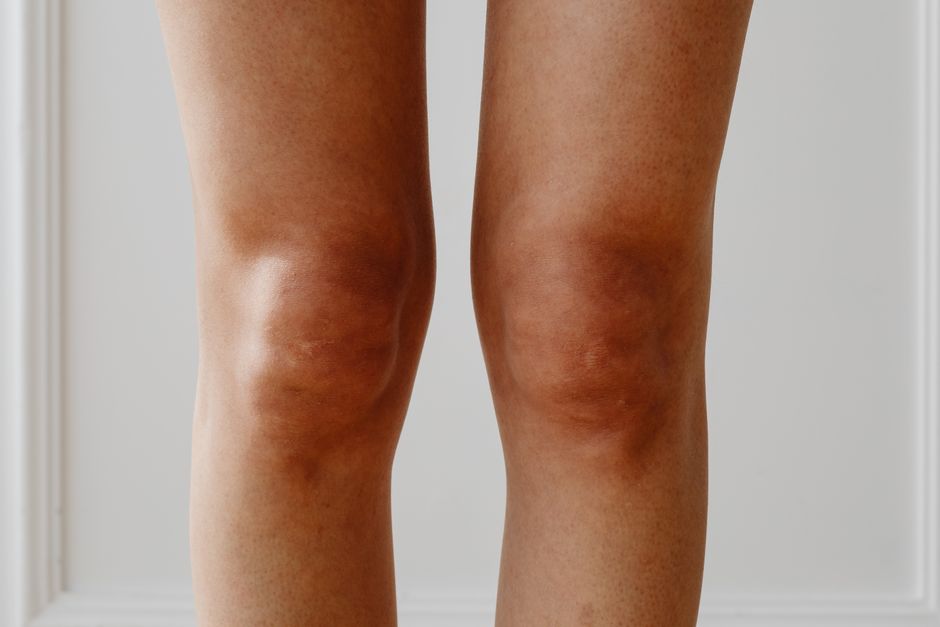
Your knees carry you up stairs, out of chairs, and around the block — and when they ache, everything slows down. Strengthening the muscles around the knee is one of the few things you can do at home that genuinely helps. The quadriceps, hamstrings, glutes, and calves all support the joint, and working them consistently reduces the load the knee itself has to absorb. No equipment is required to start. Consistency matters far more than intensity.
How To Strengthen Knees Naturally At Home
Knee strength comes from the muscles that control the joint, not from the joint itself. Cartilage has no blood supply and does not strengthen like muscle does. What you can build is the muscular support system around the knee — and that system does most of the work of protecting it.
The quadriceps on the front of the thigh absorb force when you walk downhill, squat, or stand up. The hamstrings on the back of the thigh control how fast the knee straightens. The glutes stabilize the whole leg and keep the knee from caving inward. When these muscles are weak, the knee takes more of the load directly. That is the mechanism behind most “weak knee” complaints that are not caused by injury.
The exercises below are the ones most commonly used in physical therapy for general knee strengthening. They are not a substitute for care after a specific injury or surgery, and anyone with a diagnosed knee condition should get clearance from a clinician before starting.
Straight leg raises
Lie on your back with one knee bent and the other leg straight. Tighten the thigh muscle of the straight leg and lift it about a foot off the floor. Hold briefly, then lower slowly. This works the quadriceps without bending the knee, which makes it useful when bending is painful.
Wall sits
Stand with your back against a wall and slide down until your knees are bent. How far you go depends on your comfort — a shallow bend is fine to start. Hold for as long as you can without pain, then stand up. This builds quadriceps endurance under load.
Step-ups
Use a low, stable step. Place one foot on it, step up, and step back down with control. The height matters less than the control. A slow, deliberate step works the quadriceps and glutes more than a fast one.
Hamstring curls
Lie face down and bend one knee, bringing your heel toward your buttocks. Add resistance with an ankle weight only after the movement feels easy without it. This balances the front and back of the thigh.
Glute bridges
Lie on your back with knees bent and feet flat. Squeeze your glutes and lift your hips off the floor. Hold, then lower. Weak glutes are a common reason knees drift inward during movement, which increases joint stress.
Why Do Weak Knees Feel Better With Exercise?
Muscles adapt to demand. When you load a muscle repeatedly, it gets stronger, and stronger muscles absorb more of the force that would otherwise reach the joint. That is the core reason exercise helps.
There is a second effect that gets less attention. Regular movement stimulates the production of synovial fluid, the fluid inside the knee joint that lubricates and nourishes cartilage. Cartilage has no direct blood supply, so it depends on this fluid and on mechanical loading to stay healthy. Immobility works against it.
This does not mean exercise can regrow cartilage that is already worn. No home exercise has been shown to reverse osteoarthritis. What the evidence does support is that strengthening the surrounding muscles reduces pain and improves function in people with knee osteoarthritis. That is a meaningful difference — function and pain are what most people actually care about.
One clarification worth making: soreness after exercise is normal and usually fades within a day or two. Sharp pain during exercise is not. If a movement causes sharp or stabbing pain, stop it. That is a signal, not a challenge to push through.
How Often Should You Train Your Knees?
Two to three sessions per week is the range most often used in strength training research and clinical practice. Muscles need recovery time between sessions, so daily hard training is not better — it is usually worse.
Start with one set of each exercise and see how your knees respond over the following days. If they feel stable, add a second set. If they feel worse, reduce the range of motion or the number of repetitions rather than quitting entirely.
Progress comes from doing slightly more over time — more repetitions, a deeper bend, or added resistance. The specific numbers matter less than the direction. A person who does five careful repetitions three times a week for months will generally do better than someone who does thirty repetitions once and then stops because it hurt.
Walking is a reasonable complement to strengthening work. It loads the knee through a natural range of motion and supports cardiovascular health. It is not a substitute for resistance exercise, because walking alone does not build enough quadriceps strength to change how the knee handles load.





What Makes Knee Pain Worse At Home?
Several everyday habits quietly work against knee health. None of them are dramatic, which is exactly why they are easy to miss.
- Prolonged sitting — long stretches without movement stiffen the joint and reduce synovial fluid circulation.
- Deep squatting on hard surfaces — repeated deep bends under load increase pressure between the kneecap and the thigh bone.
- Sudden increases in activity — going from sedentary to a long hike is a common trigger for knee pain.
- Ignoring hip and ankle strength — weakness above or below the knee changes how the knee moves.
- Excess body weight — every pound of body weight adds several pounds of force through the knee during walking.
That last point deserves care. Weight and knee pain are related, but the relationship is not simple, and weight loss is not a guaranteed fix for everyone. What is well established is that higher body weight increases mechanical load on the knee during weight-bearing activity. Whether reducing weight reduces pain varies from person to person.
Do You Need Supplements Or Equipment?
No supplement has been shown to strengthen the knee joint itself. Glucosamine and chondroitin are the most studied, and the results have been mixed — some trials show modest pain relief, others show none. If you are considering either, that is a conversation for your doctor, not a decision to make from a label.
Collagen supplements have gained popularity for joint health. The evidence is early and not strong enough to call it established. Some small studies suggest possible benefit for knee pain, but the trials are limited in size and duration. It is reasonable to say the jury is still out.
Equipment is optional. A sturdy chair, a wall, and a low step cover most of what you need. Resistance bands and ankle weights are inexpensive additions once the basic movements feel easy. A yoga mat helps with floor exercises but is not required.
What actually matters is the same thing that matters in most areas of physical health: showing up regularly with moderate effort over a long period. There is no shortcut here, and products that promise one are not supported by evidence.
When Should You See A Doctor About Knee Pain?
Some knee symptoms need medical evaluation rather than home exercise. See a clinician if any of the following apply:
- The knee locks, catches, or gives way unexpectedly
- Swelling appears suddenly or does not improve over several days
- You cannot bear weight on the leg
- Pain follows a fall, twist, or impact
- The knee is red, hot, or accompanied by fever
- Pain wakes you at night or is present at rest
These signs can point to conditions that home strengthening will not fix and may make worse. A torn ligament, a meniscus tear, an infection, or an inflammatory arthritis all require different care. Home exercise is appropriate for general knee weakness and for many cases of mild osteoarthritis, not for acute injury or unexplained severe pain.
Age is also a factor worth naming honestly. Knees change with time, and some age-related changes are not reversible. That does not mean strengthening stops helping — it means the goal shifts from restoring a young knee to supporting the knee you have now.
Frequently Asked Questions
How long does it take to strengthen knees at home?
Most people notice some improvement in comfort and stability within four to six weeks of consistent training two to three times per week. Meaningful strength gains typically take longer, often two to three months.
Can you strengthen knees without weights?
Yes. Bodyweight exercises like straight leg raises, wall sits, step-ups, and glute bridges build knee-supporting strength without any equipment. Resistance can be added later with bands or ankle weights if the movements become easy.
Is walking good for weak knees?
Walking is generally good for knee health because it keeps the joint moving and supports circulation of synovial fluid. It does not build enough quadriceps strength on its own, so it works best alongside targeted strengthening exercises.
What is the best exercise for knee pain?
There is no single best exercise, because the right choice depends on what is causing the pain. Straight leg raises and shallow wall sits are commonly used starting points because they load the quadriceps with minimal knee bending.
