
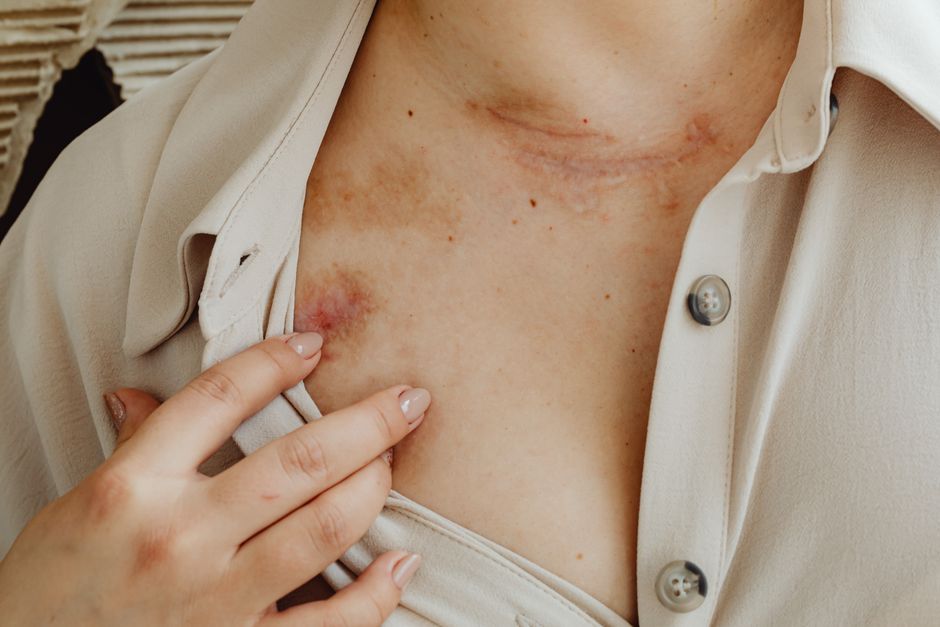
Keloid scars are raised, thickened areas of skin that form when the body produces too much collagen during healing. No natural remedy has been proven in clinical trials to flatten a keloid scar, and the treatments with the strongest evidence — corticosteroid injections, cryotherapy, silicone sheeting, and laser therapy — are medical or over-the-counter products rather than home remedies. What you can do naturally is protect the scar from friction and irritation, keep it moisturized and covered, and avoid the triggers that make keloids grow. Anything stronger needs a dermatologist.
What Exactly Is a Keloid Scar?
A keloid is scar tissue that keeps growing after the original wound has healed. It extends beyond the boundary of the injury, which is what separates it from a hypertrophic scar. A hypertrophic scar stays within the original wound edges and often flattens on its own over time. A keloid does not.
The mechanism is well understood. After skin injury, cells called fibroblasts lay down collagen to close the wound. In a keloid, that process does not shut off properly. Collagen keeps accumulating, blood vessels multiply, and the result is a firm, raised, often shiny growth that can be pink, red, purple, or darker than the surrounding skin. Keloids can itch, sting, or feel tender, though many are painless.
They most often appear on the chest, shoulders, upper back, earlobes, and jawline — areas where skin is under more tension. They can form weeks to months after the injury. Some appear after surgery, acne, burns, piercings, or even a minor scratch. Others show up with no clear trigger at all.
Keloids are more common in people with darker skin tones, particularly those of African, Asian, or Hispanic descent. There is a genetic component; keloids tend to run in families. This is not a hygiene problem and not a sign that a wound was cared for badly.
Can Keloid Scars Really Be Flattened Without Medical Treatment?
No. There is no natural method with clinical evidence showing it flattens an established keloid. This is the honest position, and it matters because a lot of online content implies otherwise.
Keloids are made of dense, cross-linked collagen. Once that tissue has formed, topical oils, creams, and household ingredients do not break it down. Some may soften the surface slightly or reduce itching. None has been shown in controlled studies to reduce keloid height.
What natural measures can do is support the scar and reduce irritation that makes keloids worse. That is a real benefit, just a limited one. Think of it as care, not treatment.
If a keloid is growing, painful, or bothering you, the effective options are medical. A dermatologist can discuss intralesional corticosteroid injections, which are among the most established treatments for flattening keloids. Cryotherapy, silicone gel sheeting, pressure therapy, and laser treatment are also used. Results vary by person and by scar, and no single treatment works for everyone. Even with treatment, keloids often improve rather than disappear completely, and they can return after treatment stops.
How To Flatten A Keloid Scar Naturally: What Actually Helps
The steps below will not flatten a keloid on their own. They reduce irritation and protect the scar, which is the realistic goal of at-home care.
Keep the scar covered and moist
Silicone gel sheeting is the most studied non-invasive option for raised scars. It is sold over the counter and is not a home remedy in the kitchen sense, but it is non-prescription and widely used. Evidence for silicone on keloids specifically is mixed; it appears to help some people, particularly with newer scars, and it is generally well tolerated. It is reasonable to try, especially early.
Reduce tension and friction on the scar
Keloids grow in areas of skin tension. Repeated pulling, rubbing, or pressure from clothing, straps, or jewelry can make a scar more irritated. Loose clothing over the area and avoiding tight straps can help. For earlobe keloids, removing the earring is often necessary.
Protect the scar from the sun
Sun exposure can darken a scar and make it more noticeable. Covering the area or using sunscreen on healed skin helps prevent that color change. It does not flatten the keloid, but it can keep it from looking darker.
Do not pick, scrub, or massage aggressively
Picking at a keloid or scrubbing it can cause new injury, and new injury can trigger more collagen. Gentle care is better than aggressive treatment. There is no evidence that firm massage flattens keloids, and it may irritate them.
Treat the underlying acne or skin condition
If keloids form after acne, controlling the acne reduces new keloid risk. This is prevention rather than treatment of an existing scar, and it is one of the most useful things a person prone to keloids can do.
Which Natural Remedies Have No Evidence Behind Them?
Several popular home treatments are widely shared but not supported by clinical evidence for keloid flattening. Being clear about this saves people time, money, and disappointment.
- Onion extract gels: Some evidence supports these for hypertrophic scars, but evidence for keloids is weak and inconsistent.
- Vitamin E oil: Commonly recommended, but studies have not shown it flattens keloids, and it can cause skin irritation in some people.
- Tea tree oil, apple cider vinegar, lemon juice: No clinical evidence for keloid treatment. Lemon juice and vinegar can irritate or burn skin.
- Honey, aloe vera, coconut oil: May soothe or moisturize, but no evidence they reduce keloid height.
- Essential oil blends marketed for scars: No controlled studies support keloid flattening.
None of these is dangerous in most cases, but presenting them as keloid treatments is misleading. Moisturizing is fine. Expecting a keloid to flatten from a topical oil is not realistic.
What Medical Treatments Are Most Effective?
Medical treatment is where the real evidence sits. A dermatologist will match the approach to the scar’s size, location, age, and your skin type.
Intralesional corticosteroid injections are the most established first-line treatment. A steroid is injected directly into the keloid, which can soften and flatten it over a series of sessions. It is not a single-visit fix, and results vary.
Cryotherapy freezes keloid tissue and is often combined with steroid injections. It can be effective for smaller keloids.
Silicone gel sheeting or gel is non-invasive and used both to treat and to prevent raised scars. Evidence is stronger for prevention and for hypertrophic scars than for established keloids.
Pressure therapy, often with custom garments, is used especially after burns and on earlobes. It requires consistent wear over months and works better for prevention than for existing keloids.
Laser therapy can reduce redness and flatten some keloids, usually alongside other treatments.
Surgical removal is an option but carries a high risk of the keloid returning, often larger than before. Surgery is usually paired with another treatment such as steroid injections or radiation to lower that risk.
Combination treatment is common because single approaches often fall short. Your dermatologist can explain which options fit your situation and what results are realistic.
Can You Prevent a Keloid From Forming?
Prevention is more reliable than treatment, especially if you know you are prone to keloids. The goal is to reduce injury and tension on healing skin.
Avoid unnecessary piercings and elective surgeries in high-risk areas if you form keloids easily. If you do have a wound, keep it clean, moist, and covered, and avoid picking at it. Silicone sheeting started early on a healing wound may lower the chance of a raised scar, though the evidence is stronger for hypertrophic scars than for keloids.
If you have acne, treating it reduces the chance of new keloids forming from inflamed pimples. If you are planning surgery and have a history of keloids, tell your surgeon beforehand. They may adjust the closure technique or recommend preventive measures.
None of this guarantees a keloid will not form. It lowers the odds and gives the skin the best chance to heal without extra irritation.
When Should You See a Dermatologist?
See a dermatologist if the keloid is growing, painful, itching badly, or affecting how you feel about your appearance. Also see one if it is on a joint and limiting movement, or if you have tried home care for several months with no change.
Keloids are not dangerous and do not turn into skin cancer. But they can be persistent and frustrating, and early treatment tends to work better than waiting. A dermatologist can confirm the diagnosis, rule out other skin conditions that can look similar, and discuss options.
If you are not sure whether a raised scar is a keloid or a hypertrophic scar, that distinction matters for treatment. A dermatologist can tell the difference.
Frequently Asked Questions
Can a keloid scar go away on its own?
Keloids rarely disappear without treatment, and many continue to grow slowly for months or longer. Some flatten partially over years, but complete resolution is uncommon.
Does vitamin E oil flatten keloid scars?
No clinical evidence shows that vitamin E oil flattens keloids, and it can irritate some people’s skin. Moisturizing is fine, but do not expect it to reduce scar height.
What is the most effective treatment for keloid scars?
Intralesional corticosteroid injections are the most established first-line treatment, often combined with cryotherapy or other approaches. Results vary, and keloids often improve rather than disappear completely.
Can I flatten a keloid at home without a doctor?
No home remedy has been proven to flatten an established keloid. Silicone sheeting is a reasonable non-prescription option, especially early, but stronger results usually require medical treatment.
