
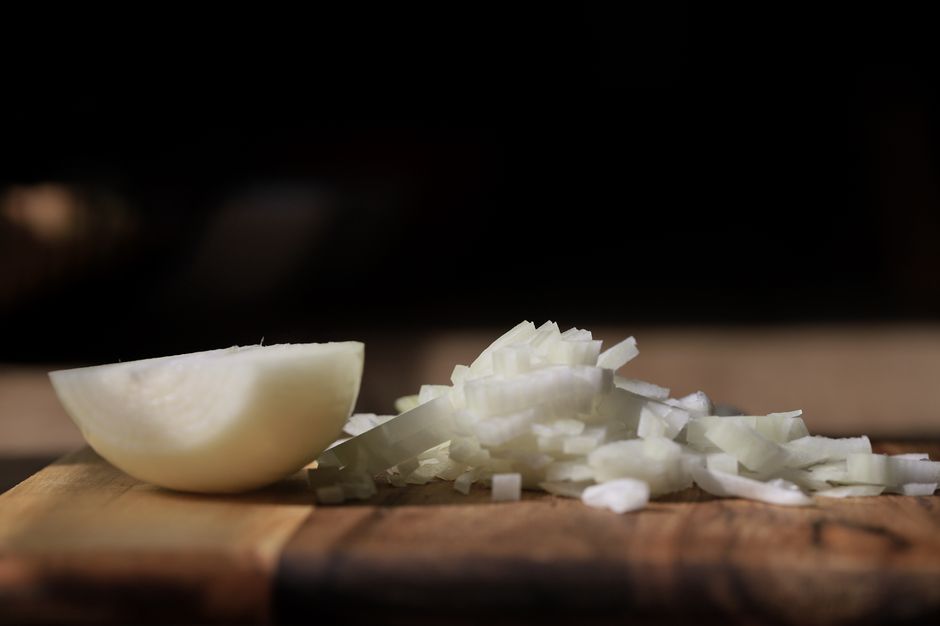
Cut a whole onion in half and you are left with a kitchen problem: what to do with the leftover piece. The short answer is to wrap the cut onion tightly, refrigerate it, and use it within a few days. The outer layers dry out first, so a good wrap slows that down. The onion itself will not stay fresh forever, and a few simple habits make the difference between a usable half onion and one headed for the trash.
This matters more than most people think. Onions are a staple in nearly every kitchen, and half an onion is one of the most commonly wasted food items in American homes. The good news is that storing it correctly is easy, and the rules are built on how onions actually behave once their protective skin is broken.
Why Does a Cut Onion Need Different Care Than a Whole One?
A whole, unpeeled onion is a self-contained storage system. Its papery outer skin and dry layers keep moisture in and oxygen out, which is why whole onions can sit in a cool, dark, dry place for weeks or even months.
Cutting an onion ends that protection. The moment the knife goes through, the inner layers are exposed to air. Two things happen at once. First, moisture starts escaping from the cut surface, which leads to drying and a leathery texture. Second, oxygen and airborne microbes now have direct access to the moist interior, which is exactly the environment bacteria and mold prefer.
That is the whole reason a cut onion cannot simply go back in the bowl with the whole ones. The intact onions are fine. The cut one is now a perishable food, closer to a cut vegetable than to a pantry staple.
What Happens to Flavor and Texture
Flavor also changes. When onion cells are damaged by cutting, enzymes mix with sulfur compounds and create the sharp, pungent taste we associate with raw onion. Over time in the fridge, that sharpness fades. A cut onion stored for several days will taste milder and flatter than a freshly cut one, even if it is still safe to eat.
Texture is the more obvious change. The exposed surface dries and softens. That is why the outer cut face of a stored half onion is often the part you trim away before using the rest.
How To Store Half An Onion in the Refrigerator
Refrigeration is the standard method, and for good reason. Cold temperatures slow microbial growth and reduce moisture loss. The goal is to create a tight barrier that keeps air out and moisture in.
Here is the approach that works reliably:
- Leave the skin on if you can. The dry outer layers still offer some protection to the untouched side.
- Wrap tightly in plastic wrap, pressing it against the cut surface, or place the onion cut-side down in a small airtight container.
- Skip the loose plastic bag. A loosely tied bag traps some moisture but still lets air circulate around the cut face.
- Store in the main compartment, not the door. The door temperature fluctuates every time it opens.
- Use it within a few days for the best quality and safety.
The cut-side-down trick in a container is underused. It limits the exposed surface to the container floor, reduces air contact, and keeps the onion from rolling around. It also keeps the onion’s strong smell from spreading to other foods.
How Long Does a Cut Onion Last in the Fridge?
Most food safety guidance points to a short window — roughly a few days — for a cut onion kept refrigerated in a sealed container. Quality starts to drop before safety does, so the onion may still be technically fine when it already tastes dull.
If you are unsure, use your senses. A cut onion that has turned soft, slimy, or developed an off smell should be discarded. Visible mold means the whole piece goes, not just the moldy spot, because mold can send threads into the surrounding tissue.
Can You Store a Cut Onion at Room Temperature?
No, not safely for more than a very short time. A cut onion left on the counter is a moist, nutrient-rich surface at room temperature, which is ideal for bacterial growth.
Some people leave a cut onion out for an hour or two while cooking, and that is generally fine as part of normal meal preparation. But leaving it out overnight, or for most of the day, is a different situation. Refrigerate it as soon as you are done with it.
One common myth is that a cut onion left out absorbs bacteria from the air and becomes toxic. That specific claim is not supported by evidence. The real concern is ordinary microbial growth on a moist cut surface, which is reason enough to refrigerate.





Can You Freeze Half an Onion?
Yes, and for many people this is the better option when they know they will not use the rest within a few days. Freezing stops the clock on spoilage.
Frozen onions will not have the crisp texture of fresh ones. The freezing process damages cell walls, so thawed onion turns soft and releases more water. That makes frozen onion a poor choice for a raw salad or a garnish, but a perfectly good choice for cooking, where it softens anyway.
To freeze a half onion:
- Chop or slice it first, since a whole frozen half is hard to use later.
- Spread the pieces on a tray and freeze briefly so they do not clump, or pack them flat in a freezer bag.
- Press out excess air and seal tightly.
- Label it with the date.
Frozen chopped onion holds up well for cooked dishes for several months when stored properly. After that, quality declines even though it may still be safe.
What About the Smell and Other Foods?
Onions are strong-smelling, and their aroma can migrate. A well-sealed container solves two problems at once: it keeps the onion from drying out and keeps its smell from reaching nearby foods.
This is especially relevant for items that readily absorb odors, such as butter, milk, and soft cheeses. If you have ever had a stick of butter that tasted faintly of onion, an uncovered cut onion in the fridge was likely the cause.
Glass containers with tight lids tend to work better than plastic for odor control, though a good plastic container with a firm seal is fine too. The key is the seal, not the material.
Is a Sprouting or Soft Onion Still Safe?
A green sprout emerging from an onion is not a sign of spoilage. It means the onion is using its stored energy to try to grow. A sprouted onion is generally safe to eat, though the sprout itself can taste bitter and the onion may be somewhat softer.
Softness is where judgment comes in. A slightly soft onion that still smells normal and has no slime can often be used in cooked dishes. An onion that is mushy, leaking, or foul-smelling should be thrown out. The line between “past its best” and “spoiled” is usually clear once you look and smell.
One note worth making: the idea that onions “absorb” toxins or bacteria from their surroundings in a way that makes them dangerous is a persistent myth with no solid evidence behind it. The real risks with cut onions are ordinary and boring — drying out, microbial growth, and odor transfer.
Practical Habits That Reduce Waste
The best storage method is the one that matches how you actually cook. If you use half an onion most days, a wrapped half in the fridge will rarely go to waste. If you use onions only occasionally, freezing chopped portions is the smarter move.
Buying onions in a size that matches your cooking helps too. A smaller onion used whole beats a large one cut in half and forgotten. When you do cut one, deal with the leftover right away rather than leaving it on the board, because the decision you make in that first minute determines how the next few days go.
Frequently Asked Questions
How long can you keep a cut onion in the fridge?
A cut onion stored in a sealed container in the refrigerator is generally best used within a few days. Quality drops faster than safety, so use your senses to judge softness, slime, or off smells.
Should you wrap a cut onion in plastic wrap or put it in a container?
Either works as long as the seal is tight. A container with a firm lid also helps keep the onion’s strong smell from reaching other foods in the fridge.
Can you freeze a half onion without chopping it?
You can, but it is harder to use later because the pieces freeze together into a solid block. Chopping before freezing makes it much easier to take out only what you need.
Is a cut onion left out overnight still safe to eat?
It is safer to discard it. A moist cut surface at room temperature supports bacterial growth, so an onion left out overnight is not worth the risk.
