
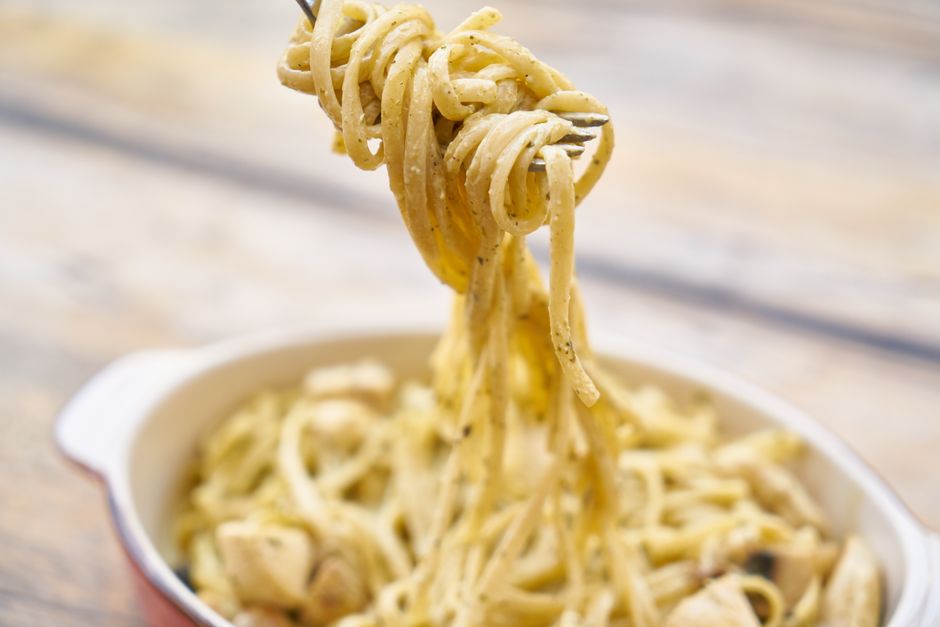
Cooked pasta keeps safely in the refrigerator for three to five days when stored in a sealed container. That range comes from the U.S. Department of Agriculture’s food safety guidance, and it applies to plain pasta and pasta mixed with sauce. The single most important step is cooling it quickly and getting it into the fridge within two hours of cooking.
How you store it matters more than most people think. Pasta is a moist, low-acid food, which is exactly the environment where bacteria grow fastest. The good news is that proper storage is simple. A shallow container, a tight lid, and a cold fridge handle almost everything.
How long does cooked pasta last in the fridge?
Three to five days. That is the standard window used by food safety agencies, and it starts counting from the day you cook the pasta, not the day you open a package.
The clock matters because bacteria multiply quickly at room temperature. The “danger zone” — the temperature range where pathogens grow most rapidly — is generally described as 40°F to 140°F. The two-hour rule exists for this reason: perishable food left out longer than two hours should be discarded, and that window shortens to one hour when the air temperature is above 90°F.
Some practical signals that pasta has gone past its prime:
- A sour or fermented smell
- A slick, slimy texture on the surface
- Visible mold, which can appear as fuzzy patches in white, green, or dark colors
- Any change in color from the original dish
If you are unsure, throw it out. You cannot reliably smell or taste the bacteria that cause most foodborne illness, so appearance and odor are not dependable safety tests.
What is the best container for storing cooked pasta?
An airtight container is the answer, and shallow beats deep. A wide, shallow container lets the pasta cool faster and more evenly than a tall, narrow one.
Glass containers with locking lids work well because they do not hold onto odors or stain from tomato sauce. Food-grade plastic containers with tight-sealing lids are also fine. So are zip-top bags, as long as you press out most of the air before sealing.
What you want to avoid is an open bowl covered loosely with plastic wrap or foil. That setup lets air in, which dries the pasta out, and it does not protect against drips or cross-contamination from other foods in the fridge. It also tends to fall open when something else gets moved around.
One detail people miss: let the pasta stop steaming before you seal it. Putting a lid on hot pasta traps moisture, and that condensation turns into a puddle at the bottom of the container. The pasta sitting in that puddle gets mushy within a day.
Should you cool pasta before putting it in the refrigerator?
Yes, but not for long. Cool it at room temperature for no more than about 30 minutes, then refrigerate.
This is where a lot of home cooks get it wrong in one of two directions. Some people put a big pot of hot pasta straight into the fridge, which raises the internal temperature of the refrigerator and can nudge other foods into the danger zone. Others leave the pasta sitting on the counter for hours to “cool completely,” which is the more serious mistake. Room temperature is exactly where bacteria thrive.
The fix is to spread the pasta out. Transfer it to a shallow container or spread it on a sheet pan so more surface area is exposed to cool air. Stir it once or twice. It will drop in temperature much faster than a dense mound sitting in a pot.
Do not run it under cold water to speed things up unless you plan to eat it cold. Rinsing removes surface starch, which is what helps sauce cling to the pasta.


How To Store Cooked Pasta So It Does Not Stick Together
Toss it with a small amount of oil before it cools. A light coating of olive oil or another cooking oil keeps strands from fusing into a solid block.
This is the step that saves you later. Pasta that goes into the fridge plain and unloved comes out as a single mass, and separating it usually damages the texture. A teaspoon or two of oil for a standard batch is enough — you are coating, not frying.
If the pasta is already mixed with sauce, you do not need added oil. The sauce does the same job. But if you are storing plain pasta to use in a different dish later, the oil matters.
Some people also add a splash of water to the container before sealing. This is a reasonable move for plain pasta you plan to reheat, since it creates a bit of steam in the microwave and helps loosen anything that has stuck. It is not necessary if the pasta is sauced.
Can you freeze cooked pasta?
Yes, and it holds up better than most people expect. Cooked pasta freezes well for about two to three months when stored properly.
The key is to freeze it before it turns to mush. Pasta that is cooked to a firm texture — slightly underdone is ideal — survives freezing and reheating far better than pasta cooked until soft. The freezing process itself does some additional softening, so starting firm gives you room.
How to do it:
- Cool the pasta quickly, following the same 30-minute rule.
- Toss plain pasta with a little oil to prevent clumping.
- Portion it into freezer bags or containers in the amounts you will actually use.
- Press out air, seal, label with the date, and freeze.
Sauced pasta freezes well too, and the sauce helps protect the texture. Cream-based sauces are the exception — they tend to separate and turn grainy when thawed. Tomato and oil-based sauces freeze more reliably.
Thaw frozen pasta in the refrigerator overnight, then reheat. You can also reheat directly from frozen, though it takes longer and the texture is a little less even.
How do you reheat stored pasta without ruining it?
Add a splash of water, cover loosely, and heat in short bursts. That is the method that works most consistently.
Pasta dries out in the fridge because the starch retrogrades — a real chemical process where starch molecules reorganize and firm up as they cool. This is why leftover pasta often feels harder than it did fresh. Heat plus a little moisture reverses much of that. The water you add turns to steam and softens the pasta from the outside in.
On the stovetop, put the pasta in a pan with a tablespoon or two of water and warm it over medium heat, stirring occasionally. In the microwave, cover the bowl with a lid or damp paper towel and heat in 30-second intervals, stirring between them.
What you want to avoid is reheating the same portion more than once. Each cooling and reheating cycle gives bacteria another opportunity, and it also degrades the texture further. Reheat only what you plan to eat.
Does pasta storage carry any safety risks?
Yes, and one of them surprises people. Cooked rice and cooked pasta can both support the growth of Bacillus cereus, a bacterium found widely in soil and in dry grain products.
The spores survive cooking. If the cooked pasta sits at room temperature for an extended period, those spores can germinate and the bacteria can multiply, producing toxins that are not destroyed by reheating. This is why the two-hour rule matters more for pasta and rice than it does for many other leftovers. The illness it causes is usually short-lived, but it is unpleasant.
Refrigeration is the control. Rapid cooling and prompt refrigeration keep the spores from germinating in the first place. This is not a reason to fear leftovers — it is a reason to treat the cooling step as non-negotiable.
One more note on reheating: get leftovers steaming hot throughout, not just warm in the middle. Even heating matters more than high heat.
How do you store pasta salad and pasta with sauce?
Pasta salad and sauced pasta follow the same rules as plain pasta. Airtight container, refrigerator, three to five days.
There is one wrinkle worth knowing. Pasta salad made with a mayonnaise-based dressing is often treated with extra caution, but commercially prepared mayonnaise is acidic enough that it does not behave the way people assume. The real risk in any pasta salad is the same as anywhere else: time at room temperature. A bowl of pasta salad sitting out at a picnic for four hours is a problem regardless of what is in the dressing.
If you are serving pasta salad at an outdoor event, keep it over ice or in a cooler until it is time to eat, and put it away within two hours. In hot weather above 90°F, cut that to one hour.
Sauced pasta stored in the fridge sometimes absorbs extra liquid and thickens. A spoonful of water or a splash of the original sauce when reheating brings it back.
Frequently Asked Questions
How long can you keep cooked pasta in the fridge?
Cooked pasta keeps for three to five days in the refrigerator when stored in an airtight container. Count from the day you cooked it, not the day you bought the pasta.
Can you eat cold pasta the next day?
Yes, pasta that has been refrigerated properly is safe to eat cold. In fact, cooling pasta changes its starch structure in a way that some research suggests produces a smaller blood sugar response than freshly cooked pasta.
Is it safe to reheat pasta more than once?
No, reheating the same portion multiple times is not recommended. Each warming and cooling cycle gives bacteria more chances to grow and further breaks down the texture, so reheat only what you will eat.
Why does leftover pasta get hard in the fridge?
Starch molecules reorganize and firm up as pasta cools, a process called retrogradation. Adding a splash of water and reheating with steam softens it again.
