
Most muscle spasms stop on their own within seconds to a few minutes. You can often speed that up by gently stretching the muscle, stopping the activity that triggered it, and relaxing rather than fighting the contraction. Preventing them comes down to a few unglamorous basics: hydration, adequate electrolytes, regular movement, and not overloading a muscle that is already tired. That is the short answer. The rest of this article explains what a spasm actually is, why it happens, and where the evidence is strong versus thin.
What Actually Happens During a Muscle Spasm?
A muscle spasm is a sudden, involuntary contraction that you cannot relax on command. The muscle fires when you do not want it to, and it stays shortened for a short time. This is different from a muscle cramp in casual use, though the two words are often used for the same event.
The mechanism is well understood at the level of the nerve and muscle. Muscles contract when nerve signals tell muscle fibers to fire. A spasm usually reflects a burst of nerve activity, often in a muscle that is fatigued, dehydrated, or being asked to work in a shortened position. The contraction itself is normal muscle physiology happening at the wrong time.
This matters because it explains why stretching works. Stretching a cramped muscle sends signals through the nervous system that reduce the firing. It also physically lengthens the fibers. You are not “releasing a knot” in any mystical sense. You are interrupting a nerve-muscle loop that has gotten stuck.
One clarification worth knowing: what people call a “knot” in a muscle is usually a trigger point, a small area of tight, tender muscle. A true spasm is a whole-muscle contraction. They feel related but are not the same thing.
How To Stop Muscle Spasms Fast
Stop the activity and stretch the muscle gently but firmly. That is the fastest reliable step for most common cramps, especially in the calf, foot, or hand. Hold the stretch until the contraction eases, usually seconds to under a minute. Do not bounce or force it.
For a calf cramp, straighten the leg and pull the toes toward you. For a foot cramp, press the sole of the foot against the floor or pull the toes up. For a hand cramp, gently straighten the fingers. These moves lengthen the muscle and calm the nerve firing that is driving the contraction.
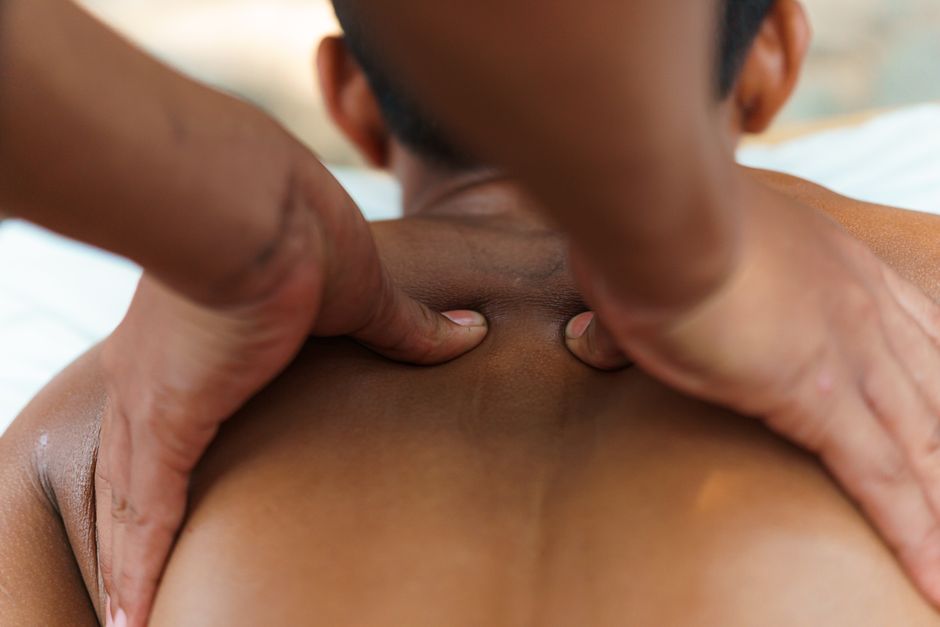
Warmth helps a muscle relax. A warm shower, a heating pad, or warm water on the area can ease lingering tightness after the spasm passes. Gentle massage of the surrounding muscle can help too, though the evidence for massage specifically stopping a spasm is limited.
What does not reliably work: ignoring it and hoping it stops, or tensing harder against the contraction. Fighting a spasm usually makes it last longer.
There is an important exception. If a spasm comes with weakness, numbness, loss of bladder or bowel control, or follows a back injury, treat it as a medical issue and seek care rather than stretching through it. Those signs point to nerve involvement, not a simple cramp.
Why Do Muscle Spasms Happen?
Most everyday spasms come from a short list of triggers. Muscle fatigue is the most common. A muscle that has been worked hard, held in one position, or used repetitively is more likely to cramp. Dehydration and low electrolyte levels are also common contributors, especially with heavy sweating.
Electrolytes are minerals your muscles and nerves rely on to fire and relax correctly. Sodium, potassium, calcium, and magnesium all play roles in muscle function. When you sweat heavily and replace fluid with plain water only, you can dilute these minerals, which some people find makes cramps more likely.
Other established triggers include:
- Holding a muscle in a shortened position for a long time, such as pointing the toes during sleep
- Sudden increases in exercise intensity or duration
- Cold exposure, which can make muscles tighten
- Certain medications, including some diuretics and statins, which can be associated with muscle symptoms
- Pregnancy, where leg cramps are common, especially later in pregnancy
- Medical conditions such as thyroid problems, kidney disease, and nerve disorders
Age matters too. Older adults tend to lose muscle mass and may drink less fluid, both of which can raise the odds of cramps. None of these is a diagnosis. They are reasons a doctor may want to look closer if cramps are frequent.




Do Electrolytes and Supplements Actually Help?
The evidence is mixed, and it depends heavily on which supplement and which situation. This is where marketing runs well ahead of the science.
For exercise-associated cramps, the picture is genuinely debated. Some research suggests that cramps during or after exercise are driven more by muscle fatigue and nerve overactivity than by electrolyte loss alone. That would explain why drinking a sports drink mid-cramp often does not stop it as fast as stretching does. Stretching targets the nerve-muscle loop directly.
Magnesium is widely marketed for cramps. The evidence is not strong for general muscle cramps in healthy adults. Some studies suggest benefit in specific groups, such as pregnant women, but results vary and the quality of evidence is limited. It is not a reliable fast fix.
Potassium from food sources is generally reasonable for most people. Potassium supplements are a different matter and can be risky for people with kidney problems or those taking certain blood pressure medications. Do not start potassium supplements without medical advice.
For people who sweat heavily or exercise for long periods, replacing both fluid and electrolytes is sensible. That is a general hydration principle, not a proven cramp cure. The honest position: electrolytes may help prevent cramps in some situations, but the evidence that they rapidly stop an active cramp is weak.
How Can You Prevent Muscle Spasms?
Prevention rests on reducing the triggers. Stay hydrated, especially around exercise and in heat. Eat a diet that includes potassium-rich foods like bananas, potatoes, and beans, and magnesium-containing foods like nuts, seeds, and leafy greens. Food sources are generally safer than supplements for most people.
Warm up before exercise and cool down after. Build intensity gradually rather than jumping into hard efforts. If a particular muscle cramps repeatedly during a specific activity, gentle stretching of that muscle before and after can help.
If night cramps are the problem, stretching the calves before bed is one of the better-supported simple measures. Some clinicians also suggest keeping the feet warm and avoiding sleeping with the toes pointed. The evidence for these steps is not airtight, but they are low-risk and commonly recommended.
Regular physical activity matters more than most people expect. Muscles that are conditioned and used regularly tend to cramp less than muscles that sit unused and then get pushed hard. That is a general principle of muscle health rather than a proven anti-cramp therapy.
Review medications with a doctor if cramps started or worsened after a new prescription. Do not stop a medication on your own.
When Should You See a Doctor About Muscle Spasms?
Occasional cramps are common and usually harmless. Frequent or severe spasms deserve a medical look. So do spasms that come with other symptoms, because those can point to an underlying cause rather than a simple cramp.
See a doctor if cramps are very frequent, last a long time, cause significant pain, or interfere with sleep or daily life. Also seek care if a spasm is accompanied by muscle weakness, numbness, tingling, swelling, or changes in skin color in the affected area.
Get urgent care if a spasm follows a back or neck injury and comes with loss of bladder or bowel control, or if you have sudden severe muscle pain with dark urine after intense exercise. Those are red flags that need prompt evaluation, not home stretching.
For most people, the pattern is reassuring: a cramp here and there that resolves with stretching and better hydration. Frequent, worsening, or unusual spasms are the signal to get it checked.
Frequently Asked Questions
How do you stop a muscle spasm immediately?
Stop the activity and gently stretch the cramped muscle, holding until the contraction eases. For a calf cramp, straighten the leg and pull the toes toward you.
What is the fastest way to get rid of a leg cramp at night?
Stretch the calf by straightening the leg and flexing the foot toward you, and apply warmth to help the muscle relax. Stretching the calves before bed may reduce how often night cramps happen.
Are muscle spasms a sign of low magnesium?
Sometimes, but not usually in healthy adults, and the evidence linking magnesium to common cramps is limited. Food sources of magnesium are generally safer than supplements for most people.
When should I worry about muscle spasms?
See a doctor if spasms are frequent, severe, or come with weakness, numbness, or loss of bladder or bowel control. Those signs point to a nerve or medical issue rather than a simple cramp.
