
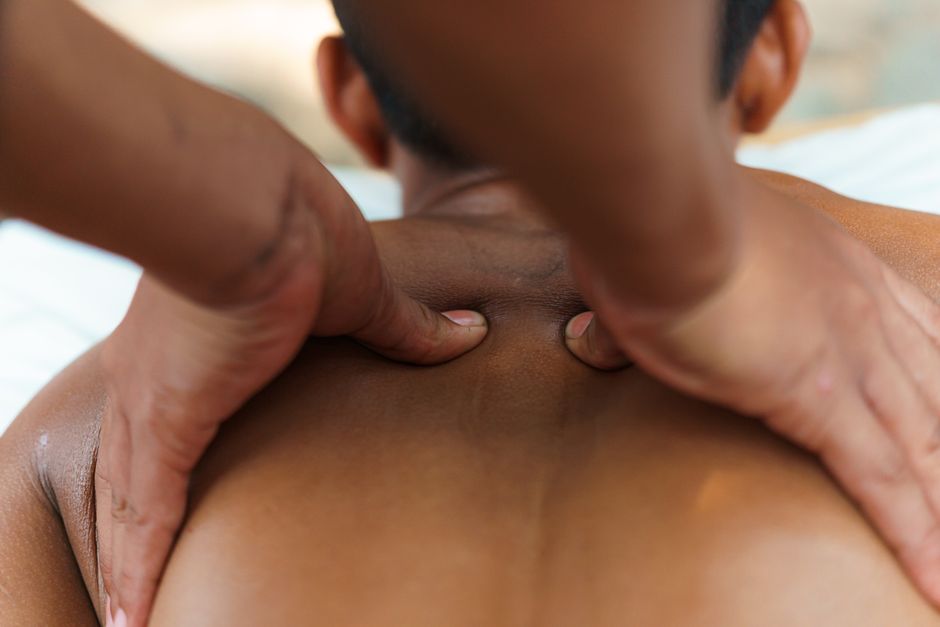
Muscle aches are the most common reason people stop taking statins. Yet the biology behind that ache is more complicated than most people assume. For years, the standard explanation was that statins damage muscle tissue directly. That explanation does not hold up well under close study. The real answer involves how these drugs work inside muscle cells, how the body handles them differently from person to person, and how the brain and immune system can shape what a person feels.
Why Do Statins Cause Muscle Pain?
Statins lower cholesterol by blocking an enzyme called HMG-CoA reductase. That enzyme sits near the start of a long production line that makes cholesterol — but cholesterol is not the only thing that line produces. It also produces coenzyme Q10, dolichols, and other molecules that muscle cells need for normal energy use and repair. When statins slow that production line, they can, in some people, affect muscle cell function.
This is the leading biological explanation, but it is not the whole story. Muscle pain from statins is not simply a matter of dose or cholesterol level. Two people can take the same drug at the same dose and have completely different experiences. That variability is a clue that several factors are involved.
Some of the most important factors include:
- Genetics that affect how quickly the liver clears a statin from the body
- Interactions with other drugs that use the same liver enzymes
- Age and body composition
- Underlying thyroid, kidney, or liver conditions
- How the nervous system and immune system interpret muscle signals
It is worth separating two very different problems that both get called “statin muscle pain.” One is a rare, measurable muscle injury that shows up on blood tests. The other is common muscle aching with normal blood tests. They likely have different causes, and they carry very different risks.
What Is the Difference Between Statin Muscle Aches and Rhabdomyolysis?
Statin-related muscle symptoms exist on a spectrum, and the two ends of that spectrum are not close to each other.
At one end is myalgia — muscle aches, soreness, or weakness without evidence of muscle breakdown. This is the most common muscle complaint reported by statin users. Blood levels of creatine kinase, a marker of muscle damage, are typically normal or only mildly elevated.
At the other end is rhabdomyolysis, a rare but serious condition in which muscle fibers break down rapidly and release their contents into the bloodstream. This can lead to kidney damage and, in severe cases, death. Rhabdomyolysis from statin use alone is uncommon. It becomes more likely when a statin is combined with certain other medications, at very high doses, or in people with kidney disease, hypothyroidism, or other conditions that make muscle more vulnerable.
Most people who experience muscle symptoms from a statin are nowhere near the rhabdomyolysis end of the spectrum. That distinction matters because it shapes what symptoms should prompt urgent care and which ones can be discussed at a routine visit.
Warning signs that warrant prompt medical attention include severe muscle pain, muscle weakness that makes it hard to walk or lift your arms, dark or cola-colored urine, and swelling with pain. These are not typical statin aches. They suggest significant muscle breakdown and need to be evaluated quickly.
Does Coenzyme Q10 Depletion Explain Statin Muscle Pain?
This is one of the most discussed theories, and it is also one of the most misunderstood.
Statins do reduce coenzyme Q10 levels in the blood. This is well documented. Coenzyme Q10 is involved in energy production in mitochondria, the power plants of cells. Muscle cells are packed with mitochondria because they use a lot of energy. So the logic seems clean: statins lower CoQ10, mitochondria suffer, muscles ache.
The problem is that biological plausibility is not proof. When researchers have measured CoQ10 levels in muscle tissue directly, the results have not consistently shown a clear link between low CoQ10 and muscle symptoms. Some studies have found reduced muscle CoQ10 with statin use. Others have not found a meaningful connection to symptoms.
Clinical trials of CoQ10 supplements for statin muscle pain have produced mixed results. Some show modest benefit. Others show none. The evidence is not strong enough to say that CoQ10 deficiency is the main cause, and it is not strong enough to say that CoQ10 supplements reliably fix the problem.
That does not mean the theory is wrong. It means the picture is incomplete. CoQ10 may matter for some people and not others, and it may interact with other factors in ways that current studies have not fully untangled. If you are considering a CoQ10 supplement, that is a conversation to have with your clinician rather than a decision to make on your own.




Why Do Some People Get Muscle Pain From Statins and Others Do Not?
Individual variation in statin muscle symptoms is large. Some of that variation is genetic. Some is related to other health conditions. Some appears to involve how the brain processes pain signals.
Genetics play a real role. Certain variations in genes that control drug metabolism can cause a statin to stay in the bloodstream longer or reach higher concentrations than expected. People with these variations may be more likely to develop muscle symptoms at standard doses.
Drug interactions matter too. Some medications compete for the same liver enzymes that clear statins from the body. When that happens, statin levels can rise. This is one reason clinicians review the full medication list before and after starting a statin.
Other health conditions can also raise risk. An underactive thyroid, kidney disease, and liver disease can all make muscle more vulnerable to statin effects. So can heavy alcohol use and extreme physical exertion.
There is also a less obvious factor: expectation. In blinded trials where neither participants nor researchers know who is getting the statin and who is getting a placebo, muscle symptom rates are often similar between the two groups. In open-label studies where people know they are taking a statin, symptom rates are much higher. This does not mean the pain is imagined. It means that the brain, the immune system, and the drug itself can all contribute, and separating them is genuinely difficult.
How Are Statin Muscle Symptoms Diagnosed?
There is no single test that confirms statin-related muscle pain. Diagnosis is a process of ruling out other causes and observing what happens when the drug is stopped and restarted.
A clinician will typically start with a blood test for creatine kinase. This measures muscle breakdown. In most people with statin myalgia, this level is normal. A normal result does not rule out statin-related symptoms. It does help rule out rhabdomyolysis.
Other tests may include thyroid function, kidney function, liver function, and vitamin D. These help identify conditions that can cause muscle symptoms on their own or make statin effects worse.
The most informative step is often a structured trial: stop the statin, wait, and see whether symptoms improve. If they do, the statin may be restarted — sometimes at a lower dose, sometimes with a different statin — to see whether symptoms return. This is not a perfect test, but it is often the clearest signal available.
What Are the Options If a Statin Causes Muscle Pain?
Stopping a statin without a plan is not ideal. Statins reduce the risk of heart attack and stroke in people who need them, and that benefit does not disappear because of muscle aches. The goal is usually to find a way to keep the benefit while reducing the side effect.
Several strategies are commonly used. These include:
- Lowering the dose of the same statin
- Switching to a different statin
- Taking the statin every other day instead of daily
- Adding or adjusting other medications that may be interacting
- Considering non-statin cholesterol-lowering drugs
Some clinicians also recommend CoQ10 supplements, though as noted, the evidence for this is mixed. Others recommend vitamin D if levels are low. These are reasonable conversations to have, but they are not guaranteed fixes.
Non-statin options include ezetimibe, PCSK9 inhibitors, and bempedoic acid. These work through different mechanisms and may be better tolerated by some people. Whether they are appropriate depends on the person’s overall cardiovascular risk and medical history.
The key point is that muscle pain from a statin is not a dead end. It is a signal to adjust the plan, not necessarily to abandon treatment.
Do Statins Cause Muscle Pain in Everyone Who Takes Them?
No. Most people who take statins do not experience muscle pain. In large clinical trials, muscle symptoms are reported by a minority of participants, and the difference between statin and placebo groups is often smaller than expected.
That said, the people who do experience symptoms are not imagining them. The experience is real, and it deserves to be taken seriously. The challenge is that the cause is not always the statin itself. Sometimes it is. Sometimes it is a combination of factors. Sometimes it is something else entirely that happens to overlap with statin use.
This is why the process of diagnosis and adjustment matters. A careful, structured approach usually finds a path forward.
Frequently Asked Questions
Do statins cause muscle pain in everyone?
No. Most people who take statins do not develop muscle pain. When symptoms do occur, they are usually mild and reversible after stopping the drug.
How long after starting a statin can muscle pain begin?
Muscle symptoms can appear within weeks of starting a statin or after a dose increase. Some people notice symptoms sooner, and some notice them later. There is no fixed timeline that applies to everyone.
Is statin muscle pain dangerous?
Typical statin muscle aches are not dangerous. Rhabdomyolysis, a rare form of severe muscle breakdown, is dangerous and requires urgent care. Dark urine, severe weakness, or swelling with pain are warning signs.
Can I just stop taking my statin if my muscles hurt?
Do not stop a statin without talking to your clinician first. Stopping suddenly removes the heart-protective benefit, and there are usually safer ways to manage muscle symptoms, such as adjusting the dose or switching drugs.
