
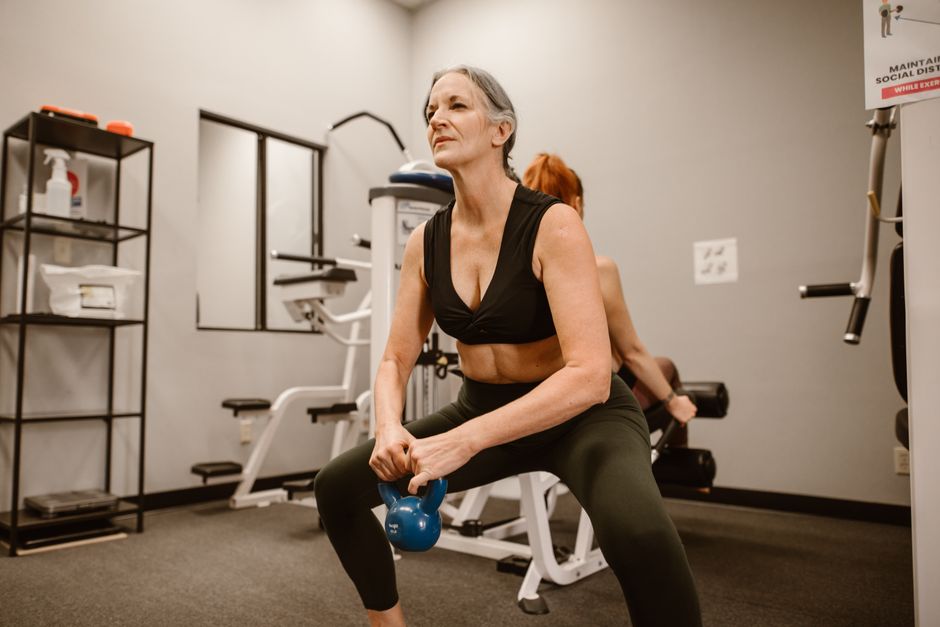
You sit in a chair all day. Your hips feel tight. Your knees crack when you try to lower down. The idea of squatting low and staying there sounds impossible. But it is not. You can learn to squat sit comfortably even as a beginner by changing your stance, using support, and moving within your actual range of motion — not the range you think you should have. This is not about flexibility tricks or stretching routines. It is about positioning your body so the squat works with your structure, not against it.
What Is the Safest Way to Start Squat Sitting as a Beginner?
The safest starting point is a supported squat. Find a sturdy surface behind you. A couch, a low bench, or even a wall works. Place your feet wider than shoulder-width apart. Turn your toes out slightly — about 30 degrees. This opens your hip sockets and gives your torso room to lower between your legs.
Lower yourself while holding onto something in front of you. A doorframe, a heavy table, or a squat rack if you have one. Keep your weight in your heels. If your heels lift off the ground, your ankles are tight. Place a small rolled towel or a thin book under each heel. This simple change can make squatting feel instantly easier.
Do not go all the way down on day one. Lower just a few inches. Hold for five seconds. Come back up. That is one rep. Do five reps. Rest. Repeat once. That is your entire workout for the day. The goal is not depth. The goal is comfort in the range you have right now.
Why Is Squat Sitting So Uncomfortable for Most Beginners?
Two main reasons. First, modern sitting shortens your hip flexors and tightens your hamstrings. You spend hours with your hips bent at 90 degrees. Your body adapts to that position. Asking it to bend past 90 degrees feels like forcing a door that has not been opened in years.
Second, your ankle mobility is probably limited. Shoes with raised heels and stiff soles have kept your ankles in a narrow range for decades. A deep squat requires your ankles to bend forward about 35 to 45 degrees. The average adult has less than 20 degrees of ankle dorsiflexion available. That is a real mechanical limit, not a flexibility problem you can stretch away in a week.
Research published in the Journal of Orthopaedic and Sports Physical Therapy found that limited ankle dorsiflexion is one of the strongest predictors of poor squat depth. The fix is not aggressive stretching. It is changing your foot position and using heel support so your ankles do not need to bend as far.
What Does Research on Squat Sitting Show?
Studies on squatting come from two main places: sports science and anthropology. Sports science research shows that a deep squat activates the glutes, quadriceps, and core more than a partial squat. But that does not mean a deep squat is necessary for health or strength. Partial squats build muscle too.
Anthropological research is more interesting. Populations that squat daily — like many people in parts of Asia, Africa, and Eastern Europe — have different hip and ankle ranges than populations that sit in chairs. A 2019 study in the Journal of Anatomy looked at hip joint morphology across different cultures. People who squat from childhood develop deeper hip sockets and greater femoral head coverage. Their bodies are literally shaped differently.
What does this mean for you? If you did not squat as a child, your hip joints may not have the same structural range. That is not a problem to fix. It is a reality to work with. You can still squat comfortably. You just need a wider stance and more support than someone who has squatted their whole life.





How To Squat Sit Comfortably Even As a Beginner: Step-by-Step
Here is the exact method. Follow these steps in order.
- Set your stance. Stand with feet slightly wider than hip-width. Turn toes out about 30 degrees. Your knees should track in the same direction as your toes when you lower down.
- Find your heel support. If your heels lift when you squat, place a 1-inch thick book or rolled towel under each heel. This is not cheating. It is modifying the movement to match your ankle range.
- Hold something in front. Grab a doorframe, a heavy chair back, or a squat rack. Keep your arms straight. Use them to control your descent, not to pull yourself down.
- Lower slowly. Push your hips back as if sitting into a chair that is behind you. Keep your chest up. Do not let your lower back round. Lower only as far as you can without pain.
- Pause briefly. Hold the bottom position for 2 to 5 seconds. Breathe. If you feel sharp pain in your knees or lower back, stop and come up.
- Stand up using your legs. Drive through your heels. Push the floor away. Do not yank on your support object to stand.
Do this for 3 to 5 reps per session. Two sessions per week. Increase depth only when you can hold the current depth for 10 seconds without discomfort.
What Are Common Mistakes That Make Squat Sitting Harder?
The most common mistake is narrowing your stance. Beginners often stand with feet close together because it feels more stable. But a narrow stance forces your hips into more flexion and your ankles into more dorsiflexion. Both are harder. A wider stance reduces the demand on both joints.
Another mistake is rounding your lower back at the bottom of the squat. This is called butt wink. It happens when your hamstrings hit their length limit and your pelvis tucks under. Butt wink is not dangerous by itself, but it can cause lower back discomfort in beginners. The fix is simple: do not squat as deep. Stop before your lower back starts to round.
A third mistake is holding your breath at the bottom. People instinctively hold their breath when they feel unstable. This raises blood pressure and makes the position feel harder. Exhale as you lower. Inhale as you stand. Keep breathing steady.
How Long Does It Take to Squat Comfortably?
Most beginners see noticeable improvement within 4 to 6 weeks of consistent practice. Improvement means less discomfort, greater depth, or longer hold times. Full comfort — the ability to sit in a deep squat for 60 seconds without support — typically takes 8 to 12 weeks for people who practice twice weekly.
Some people improve faster. People with good ankle mobility and open hips may feel comfortable within two weeks. Others take longer. People with a history of knee surgery or hip impingement may need 12 to 16 weeks. There is no normal pace. Progress is individual.
What matters more than speed is consistency. One session per week will not create lasting change. Two sessions per week is the minimum. Three is better. Each session should take less than five minutes. The time commitment is small. The payoff is real.
Comparison: Supported Squat vs. Unsupported Squat for Beginners
| Factor | Supported Squat | Unsupported Squat |
|---|---|---|
| Safety for beginners | High | Moderate |
| Ankle mobility required | Low to moderate | Moderate to high |
| Hip mobility required | Low to moderate | Moderate to high |
| Core strength needed | Low | Moderate |
| Progress speed | Faster initial gains | Slower initial gains |
| Long-term carryover | Good | Excellent |
Start with supported squats. Once you can hold a supported squat for 30 seconds with good form, try an unsupported squat with your hands free. Keep your arms out in front for balance. Do not rush this transition. Many people benefit from staying with supported squats for months.
What to Avoid When Learning to Squat Sit
Avoid forcing depth. Pushing past your natural range under load is how people get hurt. Pain in the front of the knee often means your quadriceps are doing too much work because your hips and glutes are not engaged. Pain in the back of the knee usually means your hamstrings are overstretched. Both are signs to back off.
Avoid squatting on hard floors without cushioning. Concrete and tile do not absorb any impact. If you squat on hard surfaces, your feet will fatigue faster and your ankles will feel stiffer. Use a yoga mat, a carpeted area, or a thin exercise mat.
Avoid comparing yourself to videos of people squatting with perfect form. Those people have often been squatting for years. Some have anatomical differences that make squatting easier. Your squat will look different. That is fine. The goal is comfort, not aesthetics.
Avoid squatting immediately after sitting for long periods. Your tissues are stiff and less responsive. Walk around for a few minutes first. Do a few gentle hip circles. Let your joints warm up before you ask them to move through a deep range.
Frequently Asked Questions
Can I learn to squat sit if I have bad knees?
Yes, but start with a supported squat and stop at the first sign of knee pain. If pain persists, check with a physical therapist before continuing.
Do I need to stretch before squatting?
No. Light movement like walking or hip circles is enough. Static stretching before squatting can actually reduce strength and stability.
How low should a beginner squat?
Only as low as you can go without pain or lower back rounding. Even a few inches below parallel counts as progress.
Is squatting every day safe for a beginner?
Not recommended. Two to three times per week gives your tissues time to adapt. Daily squatting increases injury risk without speeding up progress.
