
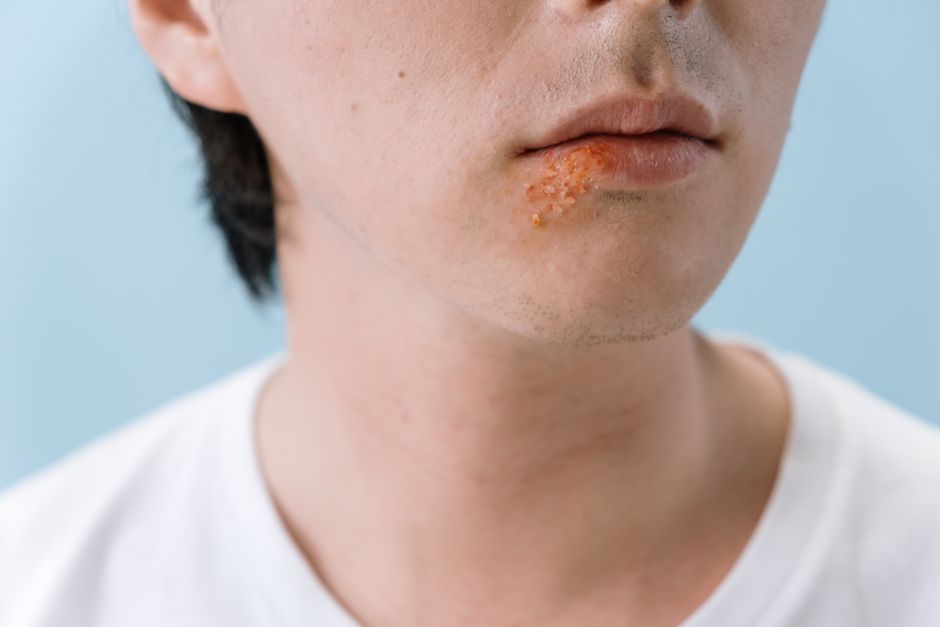
Herpes sores follow a predictable pattern, but they are often mistaken for other skin conditions. The clearest sign is a cluster of small, fluid-filled blisters that eventually burst and crust over. These blisters appear on the mouth or genitals, and the first outbreak is usually the most severe. If you see a cluster of tiny blisters on a red base, especially with a tingling or burning feeling beforehand, herpes is the most likely explanation.
What Are the First Signs of a Herpes Outbreak?
Most people feel something before the blisters actually appear. This is called the prodrome phase. It usually starts with a tingling, itching, or burning sensation in the exact spot where the sores will form. This feeling can begin hours or even a day or two before any visible bump appears.
Some people also experience flu-like symptoms during a first outbreak. This can include fever, swollen lymph nodes in the groin or neck, and general body aches. These whole-body symptoms are much more common with the first infection than with repeat outbreaks. If you have had herpes for a while, later outbreaks typically start with just the local tingling and skip the flu-like symptoms.
The prodrome phase matters for treatment. Antiviral medications work best when started during this window, before blisters fully form. If you recognize the tingling sensation and start treatment right away, you may shorten the outbreak or stop it entirely.
What Do the Stages of a Herpes Sore Look Like?
Herpes sores develop in a predictable sequence. Knowing these stages helps you tell herpes apart from pimples, ingrown hairs, or other skin issues. The entire process usually takes one to two weeks from start to finish.
Stage 1: The prodrome. Tingling, burning, or itching begins in the area. No visible sore yet.
Stage 2: Redness and swelling. The skin in the area becomes red and slightly raised. This lasts only a few hours to a day.
Stage 3: Blisters form. Small, fluid-filled blisters appear. They often cluster together in a group. The blisters are usually less than a quarter inch across and sit on a red base. This is the classic look of herpes.
Stage 4: Blisters burst. The blisters open and release clear or slightly yellow fluid. This stage is painful and the area is highly contagious. Open sores are the most likely time for transmission to a partner.
Stage 5: Crusting. The open sores dry out and form a soft crust or scab. This stage is also contagious, though slightly less so than the open sore stage. The scab may crack and bleed, especially on the lips.
Stage 6: Healing. The scab falls off and new skin forms underneath. The area may look slightly pink for a few days but is no longer contagious once the scab is gone and skin is intact.
The first outbreak tends to last longer than repeat outbreaks. A first episode can take two to four weeks to fully heal. Repeat outbreaks usually heal within one week because your immune system already knows how to fight the virus.
How To Spot Herpes Signs Stages And Look Alikes
Herpes is frequently confused with other conditions. The most common look-alikes are pimples, ingrown hairs, canker sores, and contact dermatitis. Each has distinct features that help you tell them apart.
Pimples. A single pimple has one white head and no cluster pattern. Herpes blisters are multiple and grouped. A pimple is usually firmer and does not have a preceding tingling sensation. Pimples also do not burst into open weeping sores the way herpes does.
Ingrown hairs. An ingrown hair looks like a single red bump with a hair visible at the center. You may see the hair trapped under the skin. Herpes has no visible hair in the sore. Ingrown hairs also do not form clusters or progress through the blister-to-crust cycle.
Canker sores. These are shallow ulcers inside the mouth, on the tongue, or on the inside of the cheeks. They are gray or yellow with a red border. Canker sores are not caused by herpes and are not contagious. Herpes sores on the mouth typically appear on the lips or the edge of the lip, not deep inside the cheek.
Contact dermatitis. An allergic reaction to a new soap, detergent, or fabric can cause red, itchy skin. It may even blister. But contact dermatitis usually covers a larger area and does not follow the same blister-then-crust cycle. It also responds to stopping the irritant, while herpes runs its course regardless.
Syphilis. A syphilis chancre is usually a single, painless ulcer with a firm edge. It does not cluster and does not crust over. Herpes sores are painful and multiple. If you see a single painless sore on the genitals, syphilis testing is important because it requires different treatment.
If you are not certain what you are looking at, a healthcare provider can test the fluid from a fresh blister. This is called a viral culture or PCR test. Blood tests for antibodies can also tell you if you have been exposed to the virus, but they do not tell you when the infection happened.




How Do Oral Herpes and Genital Herpes Differ?
The virus that causes most oral herpes is HSV-1. The virus that causes most genital herpes is HSV-2. But this distinction is not absolute. HSV-1 can cause genital herpes through oral-genital contact, and HSV-2 can rarely cause oral herpes.
The appearance of the sores is nearly identical regardless of location. The stages are the same. The main difference is where the sores appear and how often they recur.
HSV-1 oral herpes tends to recur on the lips, often triggered by stress, illness, sun exposure, or hormonal changes. Cold sores are the common name for these outbreaks. HSV-2 genital herpes tends to recur in the genital or anal area. Some people have frequent recurrences while others have only one outbreak and never another.
People often confuse cold sores with chapped lips or angular cheilitis. Chapped lips are dry and cracked across the whole lip surface. Angular cheilitis causes cracks at the corners of the mouth. Cold sores are localized blisters, usually on one spot of the lip, not the entire lip surface.
When Is Herpes Contagious and How Is It Spread?
Herpes spreads through direct skin-to-skin contact with an infected area. The virus can be present in saliva, genital fluids, or on the skin around the sores. You can catch herpes from kissing, oral sex, or genital contact.
The highest risk of transmission is during the blister and open sore stages. That is when the virus is actively shedding from the skin. But transmission is also possible when there are no visible sores. This is called asymptomatic shedding. The virus can be present on the skin without causing any symptoms.
Condoms reduce the risk of genital herpes transmission but do not eliminate it. The virus can be present on skin not covered by the condom, such as the base of the penis, the scrotum, or the labia. Antiviral medication taken daily can also reduce transmission risk, but it does not reduce it to zero.
You cannot catch herpes from toilet seats, towels, or swimming pools. The virus does not survive long outside the body. It needs warm, moist skin to survive and spread.
How Is Herpes Diagnosed and Treated?
Doctors can often diagnose herpes just by looking at the sores. The clustered blister pattern is distinctive. But if the diagnosis is unclear, a swab test can confirm it. The swab collects fluid from an unbroken blister or a fresh open sore. PCR testing on this swab is the most sensitive method.
Blood tests can detect herpes antibodies. These tests are useful when no sores are present but you suspect exposure. A positive blood test means you have been infected at some point in your life. It does not tell you when the infection happened or how often you will have outbreaks.
There is no cure for herpes. The virus stays in your body for life, hiding in nerve cells near the spinal cord. Antiviral medications like acyclovir, valacyclovir, and famciclovir can shorten outbreaks and reduce their frequency. These medications are safe for most people and are well tolerated.
For a first outbreak, doctors often prescribe a longer course of antiviral medication, typically 7 to 10 days. For repeat outbreaks, a shorter course of 1 to 5 days may be enough. Some people take antiviral medication daily to suppress outbreaks and reduce transmission risk. This is called suppressive therapy.
Over-the-counter creams and ointments for cold sores are available. They can slightly shorten healing time if applied early. Prescription oral medications work better and are generally preferred for genital herpes.
What Triggers Herpes Outbreaks?
Once you have herpes, the virus stays dormant in your nerve cells. Certain triggers can reactivate it and cause a new outbreak. Common triggers include stress, illness, fatigue, and hormonal changes. Sun exposure can trigger oral herpes in some people. Friction from sex can trigger genital herpes.
Not everyone has identifiable triggers. Some people get outbreaks with no obvious cause. Over time, many people notice that outbreaks become less frequent. The immune system gets better at keeping the virus in check.
There is no evidence that specific foods reliably trigger outbreaks. Some people report that foods high in arginine, like nuts and chocolate, seem to cause outbreaks for them. This is anecdotal. No large clinical trials have confirmed a consistent link between diet and herpes outbreaks.
Frequently Asked Questions
Can herpes look like a pimple?
Yes, a single herpes sore can look like a pimple in the early stages. But herpes usually forms a cluster of small blisters that burst and crust over, while a pimple stays as a single raised bump with a white head.
How long does a herpes outbreak last?
A first outbreak typically lasts two to four weeks. Repeat outbreaks usually heal within one week because the immune system responds faster.
Can you have herpes and never have an outbreak?
Yes, many people who test positive for herpes antibodies have never had a noticeable outbreak. The virus can be present without causing symptoms.
Is herpes contagious before blisters appear?
Yes, the virus can be present on the skin during the tingling phase before blisters form. This is called asymptomatic shedding and can transmit the virus.
