
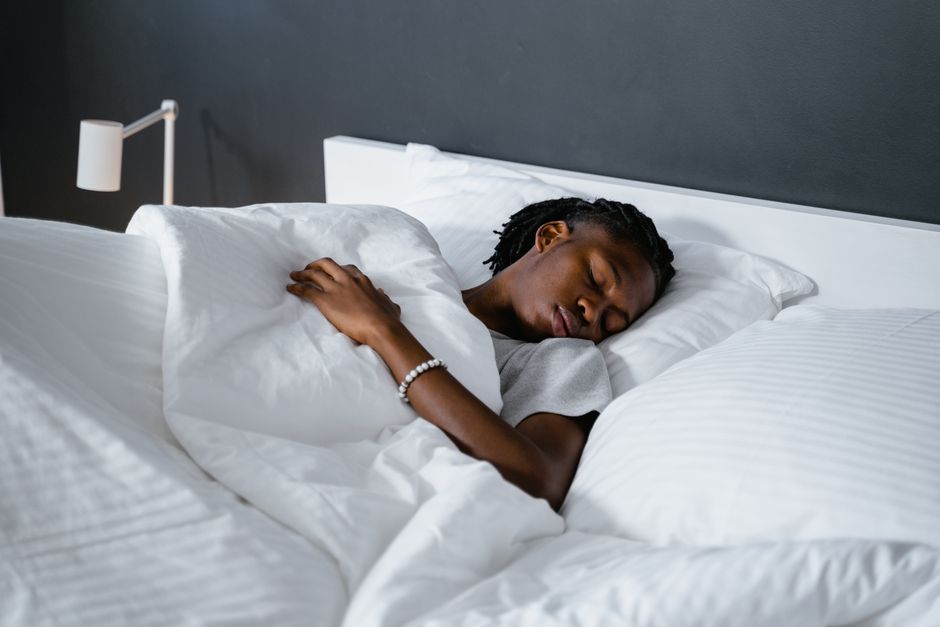
Text neck happens when you spend hours looking down at a phone or laptop. That forward head position strains the muscles and joints in your neck. When you finally lie down, the wrong pillow or sleeping position can keep that strain going all night. The short answer: sleep on your back or side with a pillow that keeps your neck in a neutral, supported alignment — roughly in line with the rest of your spine, not bent forward or tilted back.
For back sleepers, a contoured pillow with a slight dip for the head and a raised edge to support the neck curve works well. For side sleepers, the pillow needs to fill the gap between your shoulder and your ear so your neck stays straight. Stomach sleeping is the hardest position for a neck that is already irritated, because it forces your head to rotate and tilt for hours.
What Is Text Neck And Why Does It Affect Sleep?
Text neck is not a formal medical diagnosis. It is a common term for neck pain and stiffness linked to prolonged forward head posture, usually from looking down at screens. The average adult head weighs roughly 10 to 12 pounds. When you tilt your head forward, the force your neck muscles must support increases well beyond that. Hold that position for hours a day and the muscles at the back of your neck and between your shoulder blades can become fatigued, tight, and sore.
The problem does not stop when you put the phone down. Muscles that have been working hard all day can stay guarded and tense into the evening. Then you lie down on a pillow that either pushes your head forward or lets it drop back. Your neck spends the night in the same strained position it was in all day.
Sleep itself matters here. During sleep, tissue repair and muscle recovery happen. If your neck is held in a poor position for seven or eight hours, that recovery window is working against you instead of for you.
What Is The Best Sleeping Position For Text Neck?
Back sleeping is generally the most neck-friendly position. When you lie on your back, your head, neck, and spine can rest in a relatively neutral line. Your body weight is distributed evenly, and there is no rotational force on your neck. The catch is that a flat pillow on your back can let your head tilt too far back or drop to one side. You need a pillow that supports the natural curve of your neck — the slight inward curve called cervical lordosis.
Side sleeping is the next best option and is the position most people naturally fall into. The key is keeping your head level with your spine. If your pillow is too thin, your head drops down toward the mattress. If it is too thick, your head gets pushed up and away from your shoulder. Both positions bend the neck sideways for hours.
Stomach sleeping is the position to avoid if your neck is already irritated. To breathe face-down, you have to turn your head to one side and hold it there. That means hours of rotation and extension on one side of your neck. Some people cannot comfortably sleep any other way, but if you have text neck, it is worth trying to shift to your back or side.
How Should You Choose A Pillow For Text Neck?
The right pillow keeps your neck in neutral alignment. That means your head is not tilted up, down, or twisted to one side. The pillow should fill the space under your neck without forcing your head into an unnatural angle. There is no single best pillow for everyone, because body size, shoulder width, and sleeping position all change what you need.
Here is how the main pillow types compare for neck support:
| Pillow Type | Best For | What To Know |
|---|---|---|
| Contoured cervical pillow | Back sleepers | Has a dip for the head and a raised edge for neck support |
| Firm side-sleeper pillow | Side sleepers | Must be thick enough to fill the shoulder-to-ear gap |
| Adjustable or shredded fill | All positions | Lets you add or remove fill to match your shape |
| Flat or thin pillow | Back sleepers (some) | Can let the head drop back too far for some people |
| Very thick pillow | Rarely ideal | Pushes the head forward, the opposite of what you want |
A few practical points:
- Your pillow should support the curve of your neck, not just your head.
- Side sleepers often need a thicker pillow than back sleepers.
- If you wake with a stiff neck most mornings, your pillow height is a likely culprit.
- Pillows lose their shape over time. A pillow that worked a year ago may not support you now.
There is no clinical guideline that names one specific pillow as the correct choice for text neck. What matters is fit — whether the pillow keeps your neck aligned for your body and your sleeping position.





Does A Cervical Pillow Actually Help?
Some research suggests that specially shaped cervical pillows can reduce neck pain and improve sleep quality for people with chronic neck pain. The evidence is not overwhelming, and studies tend to be small. But the reasoning is sound: a pillow designed to support the neck curve is more likely to keep your neck neutral than a flat pillow that does not.
What the evidence does not support is the idea that any single pillow is a cure. A pillow is a support tool. It can help you avoid making your neck worse at night. It will not undo hours of daily forward head posture on its own.
If you try a cervical pillow and your neck pain gets worse, stop using it. A pillow that forces your neck into a position it does not like is not helping, no matter what the label says.
What Else Helps Text Neck Besides Sleep Position?
Sleep is one part of the picture. What you do during the day matters just as much. The strain that builds up from looking down at screens does not disappear just because you sleep well. If you want your neck to feel better, you have to reduce the daily load too.
Here are steps that are widely recommended by clinicians:
- Raise your phone or screen closer to eye level so you are not looking down as much.
- Take frequent breaks from looking down. Even short breaks help.
- Set up your workstation so the top of the screen is roughly at eye level.
- Do gentle neck and shoulder stretches to relieve muscle tension.
- Stay active. Regular movement helps keep neck and shoulder muscles from getting stiff.
Some clinicians also recommend strengthening the muscles that support good posture, particularly the upper back and shoulder blade muscles. The idea is that stronger supporting muscles make it easier to hold your head in a better position. This is common clinical practice, though the research on how much it specifically helps text neck is limited.
If your neck pain is severe, lasts for weeks, or comes with numbness, tingling, or weakness in your arms, see a doctor. Those symptoms can point to a nerve issue that needs proper evaluation.
How Long Does It Take For Text Neck To Improve?
There is no fixed timeline. Some people notice less morning stiffness within days of changing their pillow and sleep position. For others, it takes weeks of consistent changes — both at night and during the day — before the neck feels noticeably better. It depends on how long the problem has been building, how much daily strain continues, and how your body responds.
What is clear is that one change alone rarely fixes it. Better sleep position helps. Better daytime habits help. Together they give your neck the best chance to recover.
Frequently Asked Questions
What is the best sleeping position for text neck?
Back sleeping with a contoured pillow that supports your neck curve is generally best, followed by side sleeping with a pillow thick enough to keep your head level. Stomach sleeping is the hardest on an irritated neck because it forces your head to stay turned for hours.
Should I use a cervical pillow for text neck?
A cervical pillow can help keep your neck in a neutral position, and some studies suggest it may reduce neck pain and improve sleep. The evidence is not strong enough to call any single pillow a proven fix, so choose based on how well it supports your neck.
Can text neck go away on its own?
Mild text neck often improves when you reduce daily screen-related strain and sleep in a supported position. If pain is severe, lasts for weeks, or comes with arm numbness or weakness, see a doctor.
How do I know if my pillow is too high or too low?
If you wake with a stiff or sore neck most mornings, your pillow height is likely off. Your head should rest level with your spine, not tilted up, down, or to one side.
