
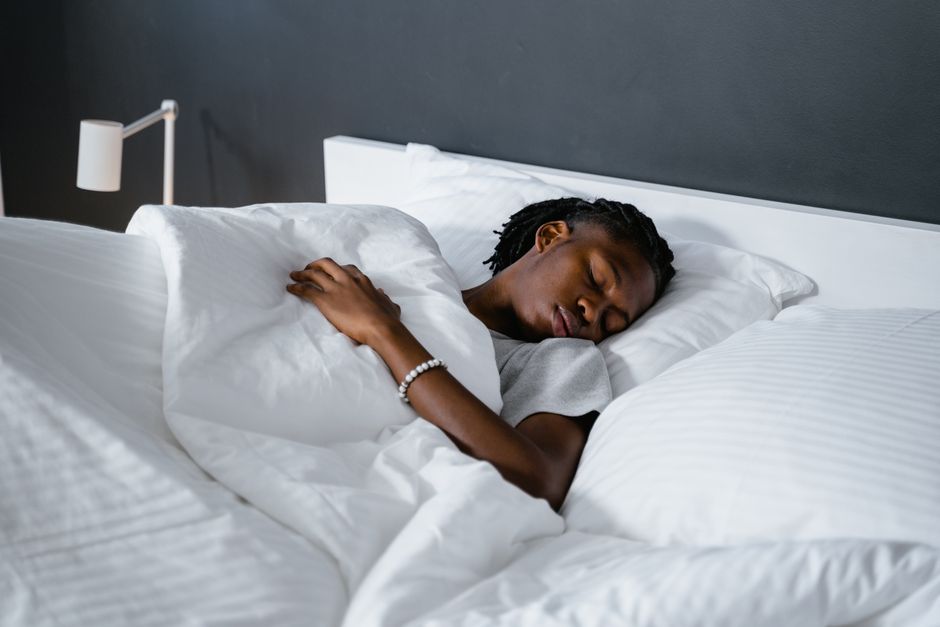
You might need nine hours of sleep to feel rested because your body has a higher sleep need than average. The standard recommendation of seven to nine hours is a range for a reason. Some people genuinely need the upper end of that range to function well. Genetics, age, health conditions, and sleep quality all play a role in determining your personal sleep requirement. Needing nine hours does not automatically mean something is wrong with you.
What Determines How Much Sleep You Personally Need?
Your individual sleep need is largely set by your genes. Research has identified specific gene variants that influence how long you naturally sleep. People with certain variants of the DEC2 gene, for example, can function well on six hours. Others have variants that push their natural sleep need closer to nine hours.
Age is another major factor. Teenagers and young adults often need more sleep, around nine to ten hours. As you get older, your sleep patterns change, but your total sleep need does not dramatically decrease. Many older adults still need eight to nine hours but struggle to get it due to lighter, more fragmented sleep.
Your overall health matters too. If you have a chronic illness, an autoimmune condition, or are recovering from an infection, your body requires more sleep for repair and immune function. Mental health conditions like depression and anxiety can also increase sleep need. The body uses sleep to regulate mood and process emotional experiences.
How Is Sleep Quality Different From Sleep Quantity?
You can be in bed for nine hours but only get six hours of quality sleep. Sleep quality refers to how much time you spend in the deeper, restorative stages of sleep. These stages are slow-wave sleep and REM sleep. If your sleep is frequently interrupted, you may not get enough of these stages even if your total time in bed is long.
Common quality killers include sleep apnea, restless leg syndrome, and chronic pain. Even something as simple as a noisy bedroom or an uncomfortable mattress can fragment your sleep. You might not remember every brief awakening, but your brain does. Each interruption resets your sleep cycle slightly, robbing you of deep sleep.
The CDC reports that about one in three US adults does not get enough sleep. But many of those who think they sleep enough actually have poor quality sleep. They wake up tired despite spending adequate hours in bed. Improving sleep quality can sometimes reduce the total hours you need to feel rested.
Why Do I Need 9 Hours Of Sleep To Feel Rested When Others Need Less?
The simple answer is that your biology is different from theirs. Sleep need is not a choice or a habit. It is a biological requirement set by your genetics and physiology. Comparing your sleep need to someone else’s is like comparing your height or your resting heart rate. It just is what it is.
Some people are what researchers call “long sleepers.” They naturally need nine to ten hours to feel their best. This is not a disorder. It is a normal variation in human biology. Long sleepers are not lazy or unhealthy. Their bodies simply take longer to complete the necessary maintenance that happens during sleep.
There is also a difference between needing nine hours and wanting nine hours. If you consistently sleep nine hours and wake up feeling refreshed and alert all day, that is your natural need. If you sleep nine hours and still feel tired, that points to a sleep quality issue or an underlying health problem, not a need for more sleep.





What Does Research on Long Sleep Requirements Show?
Studies published in journals like Sleep and Nature Genetics have confirmed that sleep duration is heritable. Twin studies show that genetics account for about 40 to 50 percent of the variation in sleep duration between people. This is strong evidence that your sleep need is not something you can simply train yourself to change.
Research from the National Sleep Foundation has established the recommended sleep ranges for different age groups. For adults aged 18 to 64, seven to nine hours is the recommended range. For adults over 65, the range shifts slightly to seven to eight hours. But these are population-level recommendations. They do not override your individual biology.
Some studies suggest that consistently sleeping more than nine hours may be linked to certain health risks, including heart disease and stroke. However, these are correlation studies. They do not prove that long sleep causes these problems. People who sleep long hours may have underlying health conditions that cause both the long sleep and the health risks. The cause and effect is not clear.
How Can You Tell If Your Sleep Need Is Healthy Or A Problem?
The best test is how you feel during the day. If you consistently sleep nine hours and wake up feeling rested, have steady energy through the day, and do not need caffeine to function, your sleep need is likely healthy for you. If you sleep nine hours and still feel groggy, irritable, or have trouble concentrating, something else is going on.
Keep a sleep log for two weeks. Write down your bedtime, wake time, how many times you woke up, and how you felt in the morning. Note your energy levels at different times of day. This data can help you and your doctor see patterns. A sleep tracker can help, but it is not as accurate as a log for catching how you actually feel.
If you suspect a problem, see a sleep specialist. They can order a sleep study to check for disorders like sleep apnea or narcolepsy. These conditions can make you feel like you need more sleep than you actually do. Treating the underlying disorder often reduces the amount of sleep you need to feel rested.
| Symptom | Likely Healthy Long Sleeper | Possible Underlying Issue |
|---|---|---|
| Morning alertness | Wakes up naturally, feels refreshed | Wakes up groggy, needs alarm clock |
| Daytime energy | Steady energy, no crashes | Afternoon fatigue, needs naps |
| Caffeine use | None or only for enjoyment | Needs caffeine to function |
| Snoring or breathing | Quiet breathing, no pauses | Loud snoring, gasping, pauses |
| Mood | Stable mood through the day | Irritable, anxious, or depressed |
What Practical Steps Can Improve Your Sleep Quality?
Focus on consistency first. Go to bed and wake up at the same time every day, including weekends. This stabilizes your internal clock and can improve sleep quality. If your sleep quality improves, you might find you need slightly less total sleep time.
Your sleep environment matters more than most people realize. Keep your bedroom cool, around 65 to 68 degrees Fahrenheit. Make it completely dark. Use blackout curtains or an eye mask. Eliminate noise with earplugs or a white noise machine. Your brain associates a dark, quiet, cool room with sleep.
Limit blue light exposure in the hour before bed. Blue light from phones, tablets, and computers suppresses melatonin production. Melatonin is the hormone that signals your body it is time to sleep. Reading a physical book or listening to an audiobook are better pre-sleep activities than scrolling social media.
- Avoid caffeine after 2 PM. Caffeine has a half-life of about five hours, meaning half of it is still in your system at 7 PM if you have it at 2 PM.
- Limit alcohol before bed. Alcohol fragments sleep in the second half of the night even if it helps you fall asleep faster.
- Exercise during the day, but not within two hours of bedtime. Regular exercise improves sleep quality for most people.
- Do not lie in bed awake for more than 20 minutes. Get up and do something boring in dim light until you feel sleepy again.
Common Misconceptions About Long Sleep
A widespread myth is that sleeping more than eight hours is always unhealthy. This comes from misinterpreted studies that found correlations between long sleep and health problems. But correlation is not causation. Many people who sleep long hours have untreated sleep apnea, depression, or other conditions that cause both the long sleep and the health issues.
Another myth is that you can train yourself to need less sleep. You cannot change your genetic sleep need. You can adapt to functioning on less sleep, but that does not mean you are healthy. Chronic sleep restriction increases your risk of obesity, diabetes, heart disease, and cognitive decline. You are not training your body to need less sleep. You are training it to tolerate being tired.
Some people believe that napping can make up for short nighttime sleep. Napping can help with alertness, but it does not provide the same restorative benefits as consolidated nighttime sleep. Long naps can also interfere with your ability to fall asleep at night, creating a cycle of poor sleep. If you need a nap, keep it under 30 minutes and take it before 3 PM.
Frequently Asked Questions
Is it normal to need 9 hours of sleep?
Yes, it is normal for a significant portion of the population. Genetics play a large role in determining your natural sleep need.
Can needing 9 hours of sleep be a sign of a health problem?
It can be if you still feel tired after nine hours or have other symptoms like snoring or daytime fatigue. A sleep study can help rule out disorders.
Does sleeping more than 9 hours increase your risk of death?
Some studies show a correlation, but they do not prove long sleep causes death. Underlying health conditions likely explain the link.
How do I know if I am a long sleeper or just sleep poorly?
If you wake up feeling refreshed and have good daytime energy, you are likely a natural long sleeper. If you feel tired, your sleep quality may be poor.
