
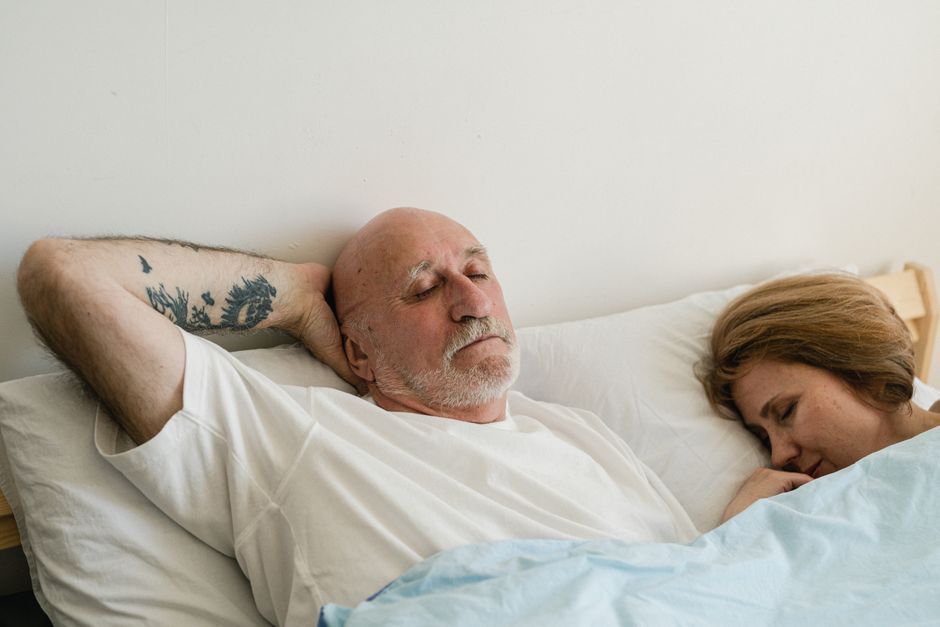
Sleeping with an ambulatory EEG at home is usually easier than people expect, mostly because you are in your own bed instead of a hospital room. The electrodes are glued to your scalp with a paste or collodion, wrapped with gauze or a soft cap, and connected to a small recording device you carry in a pouch or backpack. You sleep in your normal position, on your normal schedule, while the device records brain activity all night. The main adjustments are protecting the wires, keeping the device close to your body, and accepting that your usual hair and pillow routine will change for a day or two.
How To Sleep With An Ambulatory EEG At Home
The setup is designed to let you sleep normally. That is the whole point of ambulatory monitoring: capturing your brain activity during real sleep, in your real bed, without the strange environment of a sleep lab changing how you sleep.
Most people manage fine after the first night. The first night is often the roughest because you are still aware of the electrodes and worried about pulling something loose. By night two, many people sleep close to their usual pattern.
What the setup actually looks like at bedtime
The electrodes on your scalp are covered and secured. Depending on the lab, you may have a wrap, a net, or a soft cap holding everything in place. The wires bundle together and run down to a small recorder. That recorder either clips to your clothing, sits in a pouch, or goes into a small backpack.
Most people put the recorder on a chair or nightstand within reach, or keep it in the pouch against their body. The wires have some slack, but not much. That slack is what determines how much you can turn your head before you feel a tug.
Position and pillow adjustments that help
- Sleep on your back or your side. Both are usually fine. Stomach sleeping is the position most likely to press electrodes into your face or pull wires.
- If you normally sleep on your stomach, try a body pillow along your side to keep you from rolling fully onto your front.
- A softer pillow can reduce pressure on the electrodes behind your ear and at the back of your head.
- Some people place a rolled towel or small pillow under the neck to keep the head slightly forward and off the wires.
You do not need to sleep perfectly still. Movement is expected, and the recording equipment is built to tolerate it. What you want to avoid is a hard yank on a wire or rolling directly onto the recorder.
Clothing and bedding
Wear a button-down shirt or something that opens in front. Pulling a t-shirt over your head after the electrodes are attached can dislodge them. Loose, soft clothing is easier to manage than anything tight.
Bedding does not usually need to change. If you have silk or satin sheets, the wires may slide more than usual. Cotton is generally easier to manage.
What If You Roll Onto The Wires During Sleep?
Rolling onto a wire is common and usually harmless. The wires are lightweight, and the connections are secured with tape or collodion specifically because movement happens.
What matters is whether a lead actually comes loose. If an electrode detaches, you may see a gap in the recording, and the lab may ask you to note it. Most labs give you a diary to record events, sleep times, and anything unusual, including possible disconnections.
You generally cannot fix a detached electrode yourself. Do not try to re-glue it. Note the time in your diary and call the monitoring lab if the instructions say to. A single loose lead does not usually ruin the study, but the lab needs to know about it.
Can You Take Sleep Medication During An Ambulatory EEG?
This is a question for your neurologist or the monitoring lab, not something to decide on your own. Sleep medications can change the electrical activity of the brain, which is exactly what the EEG is measuring.
Some clinicians ask patients to continue their normal medications so the recording reflects a typical night. Others may ask you to hold certain sedating drugs, or may prescribe something to help you sleep during the study. The right answer depends on what the study is looking for.
Do not start a new sleep aid, including over-the-counter options like diphenhydramine or melatonin, without asking first. Even common sleep aids can affect the EEG tracing.





Why Sleep Matters For An Ambulatory EEG
Sleep is not just a convenience during the study. It is often the reason the study is being done.
Certain seizure types and abnormal brain rhythms appear mainly during sleep or when you are drifting off. Some epileptic discharges are far more likely to show up in drowsiness and light sleep than when you are wide awake. If you sleep poorly or not at all, the recording may miss the very activity it was ordered to find.
Sleep deprivation is sometimes used deliberately before an EEG to increase the chance of capturing abnormal activity. If your clinician has asked you to sleep less the night before, that instruction is intentional, not a mistake.
This is also why the at-home setting can be an advantage. People often sleep better at home than in a lab, and better sleep means a more useful recording.
Practical Tips For A Better Night
Keep the routine you already have. A consistent bedtime, dim lights in the evening, and no screens right before bed all support the sleep you need for a good recording.
Avoid alcohol in the evening. It can disrupt sleep architecture and may affect the EEG. Caffeine late in the day can keep you awake when the study needs you asleep.
Set up your sleep space before the electrodes go on. Have your charger nearby, your diary and pen within reach, and a plan for how you will get up in the night if you need to. Getting out of bed with wires attached takes a moment of care, so turn your whole body rather than twisting your head.
If you share a bed, tell your partner about the equipment. A stray arm across the wires is one of the more common ways a lead gets pulled.
When To Call The Monitoring Lab
Call if an electrode comes off, if the device beeps or shows a warning, if the battery dies, or if the wires become tangled in a way you cannot safely undo. These are routine problems and the lab handles them regularly.
Seek emergency care for a seizure that lasts longer than usual for you, a seizure with trouble breathing or recovery, or any new severe symptom. Do not wait on the recording to sort it out.
The recording itself is not painful. The main discomfort is skin irritation from the adhesive, which usually fades after removal. Some people find the paste or collodion leaves residue in the hair, and the lab will tell you how to remove it safely.
Frequently Asked Questions
Can I sleep in my own bed during an ambulatory EEG?
Yes. Sleeping in your own bed is the normal setup for ambulatory EEG monitoring, and it is one reason the test is used. The equipment is designed to record while you move and sleep at home.
What if I roll onto the wires while sleeping?
Rolling onto the wires is common and usually does not cause a problem. If an electrode comes loose, note the time in your diary and contact the monitoring lab rather than trying to reattach it yourself.
Can I take my usual sleep medication during the study?
Ask your neurologist or the monitoring lab before the study begins. Sleep medications can change brain activity on the EEG, so the decision depends on what the test is looking for.
What position should I sleep in with an ambulatory EEG?
Back or side sleeping is usually easiest. Stomach sleeping is more likely to press electrodes into your face or pull the wires, so a body pillow can help if that is your normal position.
