
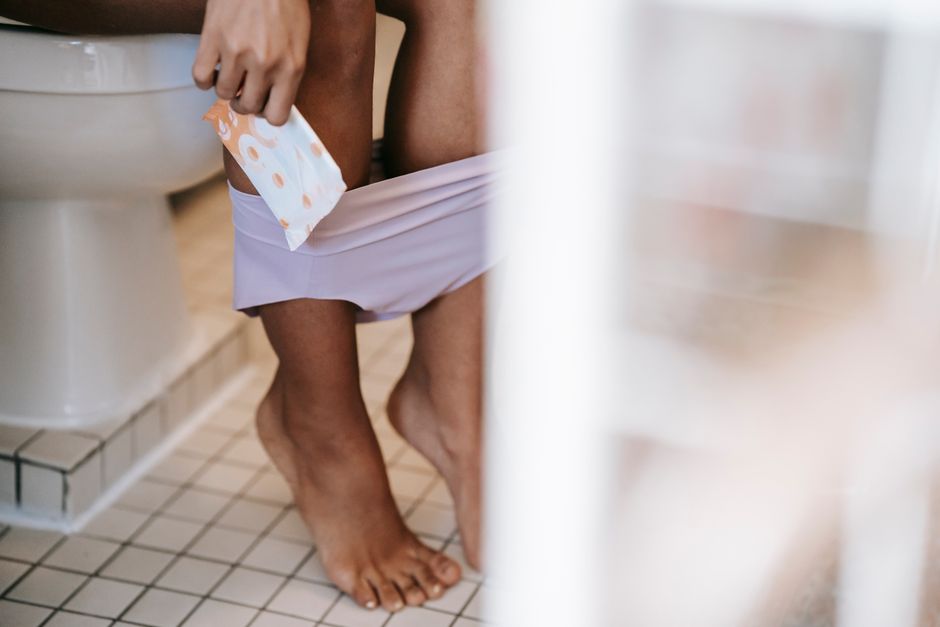
Constipation affects how you sit, and how you sit affects constipation. The most effective toilet posture is simple: sit with your knees higher than your hips, lean slightly forward, and keep your spine straight. This position relaxes the puborectalis muscle, a sling-like muscle that wraps around the rectum and keeps it closed when you stand or sit normally. When that muscle relaxes, the rectum straightens and stool can pass more easily. Good posture on the toilet won’t fix every cause of constipation, but for many people it makes a real difference in how much straining is needed.
Why Does Toilet Posture Matter When You’re Constipated?
Your body has a built-in mechanism for holding stool in place until the right moment. It’s called the puborectalis muscle, and it loops around the lower rectum like a sling. When you stand or sit on a standard toilet with your hips at a 90-degree angle, this muscle stays partly contracted. That pulls the rectum into a bend. Stool has to navigate that bend to exit.
When you squat, the angle between your torso and your thighs closes. The puborectalis relaxes. The rectum straightens. This is the position humans evolved to use for elimination. Modern toilets changed the mechanics, not the anatomy.
Straining against a partially closed rectum creates pressure. That pressure can contribute to hemorrhoids and anal fissures over time. It also makes the process take longer and feel incomplete. Changing your posture on the toilet reduces the angle that keeps the rectum bent, which means less force is needed to pass stool.
This is established anatomy and physiology. What’s less established is how much posture alone can resolve chronic constipation. For some people, it helps significantly. For others, the underlying cause — slow transit, medication side effects, pelvic floor dysfunction — requires separate treatment.
What Is the Best Position To Sit on the Toilet for Constipation?
The best position puts your knees above your hips. On a standard toilet, this means using a footstool. A stool about 6 to 9 inches high works for most adults, though the right height depends on your body. Your goal is to raise your knees so your hip angle closes and your torso can lean slightly forward.
Here’s how to set up:
- Place a footstool in front of the toilet. Your feet rest flat on it, not dangling.
- Sit down and let your knees rise above hip level. If they don’t, the stool is too short.
- Lean your torso forward about 30 to 45 degrees. Rest your forearms on your thighs.
- Keep your back straight, not rounded. A rounded lower back increases pressure on the abdomen.
- Relax your belly. Don’t suck it in or brace it.
- Breathe normally. Holding your breath while bearing down increases strain on the pelvic floor.
The footstool doesn’t need to be fancy. A small step stool, a stack of books, or a purpose-built toilet stool all achieve the same thing. The key is the knee-to-hip angle, not the brand.
One practical note: if you have knee or hip problems, raising your knees may be uncomfortable or unsafe. Talk to your doctor or a physical therapist about modifications. The goal is to approximate the squat position as closely as your body allows.
Does Leaning Forward Help You Poop?
Yes, for most people. Leaning forward while sitting on the toilet increases intra-abdominal pressure in a way that helps move stool toward the exit. It also straightens the anorectal angle further. The combination of raised knees and a forward lean mimics the mechanics of a deep squat without requiring you to actually squat.
The lean should come from your hips, not your lower back. Think about hinging at the hip joint while keeping your spine relatively neutral. Resting your elbows on your knees gives you a stable position and takes tension off your back.
Some people find that a slight lean is enough. Others need a more pronounced forward angle. Pay attention to what feels like it reduces effort rather than increases it. If leaning forward causes pain or makes it harder to relax, adjust.





How Long Should You Sit on the Toilet?
If nothing is happening within a few minutes, get up. Sitting on the toilet for long periods — reading, scrolling, waiting — puts prolonged pressure on the rectal veins and pelvic floor. That pressure can contribute to hemorrhoids and may make pelvic floor muscles tighten rather than relax.
A reasonable approach is to sit for a few minutes, and if you haven’t had a bowel movement, stand up and try again later. The urge to go often comes in waves. Forcing it when the wave has passed rarely works and adds strain.
This is a behavioral point, not a rigid rule. Some people need more time. But if you regularly spend long stretches on the toilet without results, that pattern itself may be working against you.
What If Posture Changes Aren’t Enough?
Posture is one lever. It’s not the only one. If you’ve adjusted your position and still struggle with constipation, other factors are likely involved.
Common contributors include:
- Low fiber intake. Most adults need roughly 25 to 30 grams of fiber per day. Many get far less.
- Dehydration. Fiber without enough water can make stool harder, not softer.
- Medications. Opioids, some antidepressants, calcium channel blockers, and iron supplements are common culprits.
- Pelvic floor dysfunction. This is a condition where the muscles that should relax during a bowel movement instead tighten. It requires evaluation by a specialist.
- Slow transit constipation. The colon moves stool more slowly than normal. This is a motility issue, not a posture issue.
- Medical conditions. Hypothyroidism, irritable bowel syndrome, and diabetes can all affect bowel function.
If constipation is new, persistent, or accompanied by pain, bloating, blood in stool, or unexplained weight loss, see a doctor. These symptoms need evaluation. Posture tips are for mechanical difficulty, not for diagnosing or treating underlying disease.
Some clinicians recommend pelvic floor physical therapy for people whose constipation doesn’t respond to diet and posture changes. This is a specialized area. Research on biofeedback and pelvic floor therapy for constipation shows benefit in some patients, particularly those with dyssynergic defecation — a condition where the pelvic floor muscles contract instead of relax during attempted bowel movements. But access to these specialists varies, and results depend on correct diagnosis.
Do Squatty Potty and Similar Products Actually Work?
They work by the same principle described above: raising the knees above the hips. A footstool of the right height does the same thing. You don’t need a specific product to change your toilet posture.
That said, a purpose-built stool is shaped to fit around the base of a toilet, which makes it easier to position your feet. A generic step stool works too, as long as it’s stable and the right height. The product itself isn’t magic. The angle is what matters.
No large clinical trials have compared one brand of toilet stool to another. The evidence for posture change in general comes from studies on anorectal angle and defecation mechanics, not from product-specific research. If a footstool helps you get into a better position, it’s doing its job. If it doesn’t change your angle, it won’t help.
Can Bad Toilet Posture Make Constipation Worse?
Yes, in a roundabout way. Sitting with your hips at 90 degrees keeps the puborectalis engaged and the rectum bent. If you strain in that position, you’re pushing against resistance. Over time, that strain can weaken pelvic floor muscles, contribute to hemorrhoids, and create a cycle where bowel movements become more difficult and more painful.
This doesn’t mean a standard toilet position causes constipation. Constipation has many causes. But poor posture during defecation can make the experience harder than it needs to be, and repeated straining can create problems that outlast the original constipation.
The fix is straightforward for most people. Raise your feet. Lean forward. Keep your back straight. Relax your belly. Give it a few minutes, and if nothing happens, try again later. These changes won’t solve every case of constipation, but they remove one mechanical obstacle that many people don’t realize they’re fighting against.
Frequently Asked Questions
What is the best position to sit on the toilet when constipated?
Sit with your knees higher than your hips, lean your torso forward about 30 to 45 degrees, and keep your back straight. This relaxes the puborectalis muscle and straightens the rectum, making stool easier to pass.
Do you need a footstool to poop better?
A footstool helps most people because it raises the knees above hip level, which is hard to achieve on a standard toilet. Any stable stool of the right height works — you don’t need a specific product.
How long should you wait on the toilet before giving up?
A few minutes is reasonable. If nothing happens, get up and try again later when the urge returns. Sitting for long periods puts extra pressure on rectal veins and pelvic floor muscles.
Can constipation be caused by something other than posture?
Yes. Low fiber intake, dehydration, medications, pelvic floor dysfunction, and slow transit constipation are all common causes. Posture changes help with mechanical difficulty but won’t resolve underlying conditions.
