
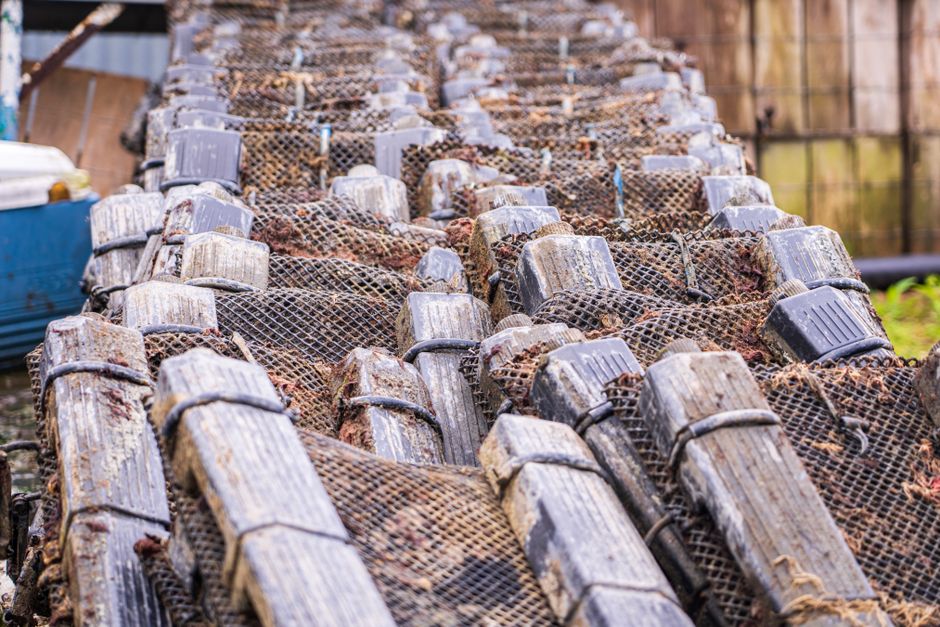
Setting a minnow trap comes down to three things: put it where minnows actually travel, bait it with something that releases scent into the water, and leave it long enough for fish to find their way in. A small stream or pond minnow trap usually fishes best when it sits on the bottom near cover, with the funnel openings aligned to the current, and soaks for anywhere from a few hours to overnight. The details matter more than most people expect, so here is how each piece works.
How Does a Minnow Trap Actually Work?
A minnow trap is a passive fishing device. You do not chase fish with it. You place it and let fish swim in on their own.
Most traps are two funnel-shaped halves that clip together. The funnels point inward. Minnows swim through the wide outer opening and into the body of the trap. The narrow inner opening makes it hard for them to find their way back out. That is the whole mechanism.
Because the trap depends on fish entering voluntarily, location and scent do most of the work. A trap in the wrong spot catches nothing no matter how good the bait is. A trap in a good spot with no bait still catches some fish, but bait speeds up the process considerably.
Commercial traps vary in mesh size, funnel diameter, and overall volume. Smaller mesh holds smaller minnows but also traps more debris and tiny non-target fish. Larger mesh lets small fish escape and clogs less. Match the trap to the size of the minnows you are targeting, not the size of the biggest fish you hope to catch.
Where Should You Place a Minnow Trap?
Place the trap where minnows already are, not where you hope they are. Minnows concentrate around structure, current breaks, and food sources.
Good placement spots include:
- Along the edges of weed beds where small fish shelter from predators
- Behind rocks, logs, or bridge pilings that break the current
- In eddies and pools just downstream of riffles
- Near dock posts, submerged brush, or undercut banks
- At the mouth of a small creek entering a larger body of water
Minnows are prey fish. They stay close to cover because open water is dangerous. A trap sitting in the middle of a featureless sandy flat will usually underperform a trap tucked against weeds or structure ten feet away.
Depth matters less than proximity to cover, but shallow water warms faster and often holds more small fish in spring and early summer. In summer heat, minnows may move to slightly deeper, cooler water during the day and shallower water at dawn and dusk.
Current direction is the detail people miss most. Minnows generally face into the current because that is how they feed — food drifts toward them. Set the trap so the funnel openings face into the flow. If the current is strong, tuck the trap just out of the main flow in a soft seam where fish can hold position without fighting the water.
What Is the Best Bait for a Minnow Trap?
Scent is what draws minnows to a trap. Minnows are visual and chemical feeders, and in murky or moving water, smell travels farther than sight.
Bait options that work well:
- Bread or crackers — cheap, widely available, breaks down into a cloud of particles
- Dog or cat food — dry kibble softens and releases odor over hours
- Canned fish — strong scent, but messy and can attract crayfish and turtles
- Commercial fish bait — formulated to disperse scent steadily
The key is slow release. A bait that dissolves in ten minutes is gone before fish find the trap. A bait that releases scent for hours keeps working while you wait.
Put the bait in a small mesh bag, a piece of pantyhose, or a bait container if your trap has one. This keeps the bait from floating out through the funnels and forces scent to disperse gradually. Loose bait scattered inside the trap also works, but it runs out faster.
Do not overload the trap. Too much bait can make fish feed around the outside of the trap instead of entering it. A modest amount that keeps releasing scent is better than a fistful dumped in.




How Should You Set the Trap for Best Results?
Set the trap so it sits naturally and stays put. A trap that rolls, floats, or tangles in weeds catches poorly.
Most minnow traps are designed to rest on the bottom. If yours has a flat base, lay it flat. If it is cylindrical, orient it so the funnels face the direction fish are likely to approach from — usually into the current or along a weed edge.
Secure the trap with a line tied to a bank stake, dock, or tree. This does two things. It lets you retrieve the trap without wading in and disturbing the spot, and it prevents the trap from drifting or being dragged off. In flowing water, a trap with no line can move downstream and end up somewhere useless.
Do not bury the trap in mud or push it deep into weeds. The funnel openings need to stay clear. If debris blocks a funnel, fish cannot enter. Check the openings after you set the trap and clear anything blocking them.
If you are fishing a new spot, set two or three traps in different micro-locations — one against cover, one in a current seam, one in open water nearby. This tells you where the fish actually are instead of guessing.
How Long Should You Leave a Minnow Trap in the Water?
Leave the trap in place for at least a few hours, and overnight if local rules allow it. Minnows need time to find the scent trail and work their way in.
Short soaks of 20 or 30 minutes sometimes produce fish in a dense spot, but they usually underperform. The scent plume takes time to spread. Fish that were not near the trap when you set it need time to arrive.
Overnight sets are common because they cover the low-light periods when many minnows feed more actively. Dawn and dusk tend to be productive windows, so a trap that sits through both has more chances to work.
Check local fishing regulations before you leave a trap unattended. Many states limit how long a trap can remain in the water, require the trap to be checked at certain intervals, and require your name and contact information on the trap. Rules vary widely by state, so verify the specifics for your area rather than assuming.
If a trap has been sitting for hours with nothing in it, the problem is almost always location, not time. Move it before you extend the soak.
What Time of Day and Year Works Best?
Early morning and late evening are the most productive times to set a minnow trap. Minnows feed more actively in low light when predators have a harder time seeing them.
Season matters too. In spring and early summer, minnows move shallow to spawn and feed, and traps set near shallow cover tend to do well. In the heat of summer, fish may push to deeper or shaded water during the day and move shallow again at dawn and dusk.
In cold water, minnow metabolism slows and they feed less. Winter sets are usually slower, though fish still move and traps can produce in the right spot. Water temperature drives activity more than the calendar does.
Weather shifts the pattern as well. A falling barometer ahead of a storm often triggers a feeding burst. A cold front that drops water temperature can shut fish down for a day or two. These are tendencies, not rules, and local conditions vary.
What Mistakes Reduce Minnow Trap Success?
Most failed sets come down to a handful of fixable errors.
- Placing the trap in open water with no cover or current break nearby
- Using bait that dissolves too fast to build a scent trail
- Blocking the funnels with weeds, mud, or too much bait
- Not securing the trap, so it drifts or is lost
- Pulling the trap too soon before fish have time to find it
- Ignoring local rules on trap use, soak time, and marking
One mistake worth calling out specifically: setting the trap and then standing nearby or wading around it. Minnows are skittish. Activity near the trap, especially in shallow clear water, can keep fish away. Set it, secure it, and leave the area.
Catching minnows is not complicated, but it rewards attention to detail. Fish where the fish are, give them a reason to enter, and give them time to do it.
Frequently Asked Questions
What is the best bait to put in a minnow trap?
Bread, dry pet food, and canned fish all work because they release scent that draws minnows in. The best bait is one that keeps releasing scent for hours rather than dissolving right away.
How long should I leave a minnow trap in the water?
A few hours is the minimum, and overnight sets are common because they cover the active dawn and dusk feeding windows. Check your state’s rules, since many limit how long a trap can stay in the water.
Where do you place a minnow trap in a stream?
Set it near cover such as weed edges, rocks, or logs, and position the funnel openings to face into the current. Minnows hold in current seams and eddies rather than in the fastest flow.
Why is my minnow trap not catching anything?
The most common cause is location — a trap in open water with no cover nearby rarely produces. Move it against structure or a current break, use slow-release bait, and give it more time before checking again.
