
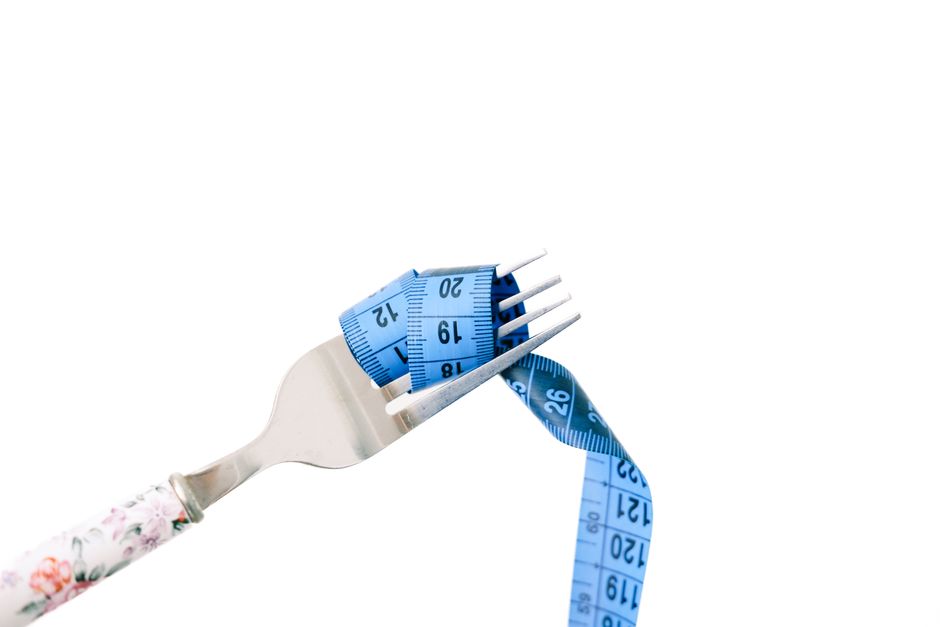
Setting a calorie goal comes down to one simple equation: the calories you eat versus the calories your body burns. To lose weight, you eat fewer calories than you burn. To gain weight, you eat more. To maintain, you match the two numbers. The tricky part is figuring out your personal numbers, because they depend on your age, sex, body size, and activity level. This guide walks you through the process step by step so you can set a realistic calorie target that fits your goal.
What Is Your Total Daily Energy Expenditure?
Your Total Daily Energy Expenditure (TDEE) is the total number of calories your body burns in a day. This number includes the energy you use at rest, the energy you use digesting food, and the energy you use during physical activity. Your TDEE is the baseline for every calorie goal.
You cannot set an accurate calorie goal without knowing your TDEE first. Your maintenance calories equal your TDEE. If you eat exactly that amount, your weight stays the same. If you eat less, you lose. If you eat more, you gain.
TDEE is not a fixed number. It shifts as you lose or gain weight, as you age, and as your activity level changes. This means your calorie goal is not permanent. You should recalculate it every few months or whenever your weight plateaus for more than a few weeks.
How To Estimate Your Maintenance Calories
The most accurate way to measure your maintenance calories is in a laboratory using a technique called indirect calorimetry. That is rarely practical for everyday use. Most people rely on equations that estimate energy needs based on age, sex, height, weight, and activity level.
The Mifflin-St Jeor equation is the most commonly used formula in clinical settings. It calculates your Basal Metabolic Rate (BMR), which is the number of calories your body burns at complete rest. From there, you multiply by an activity factor to estimate your TDEE.
For men, the equation is: 10 × weight in kilograms + 6.25 × height in centimeters − 5 × age in years + 5. For women, it is: 10 × weight in kilograms + 6.25 × height in centimeters − 5 × age in years − 161.
After calculating your BMR, multiply it by an activity factor. Sedentary people multiply by 1.2. Lightly active people multiply by 1.375. Moderately active people multiply by 1.55. Very active people multiply by 1.725. Extremely active people multiply by 1.9.
These equations are estimates, not exact measurements. They can be off by several hundred calories for some individuals. Treat the number you get as a starting point, not a final answer. Track your weight for two weeks eating what you think is your maintenance level, then adjust based on the scale.
How To Set A Calorie Goal Loss Gain Or Maintenance?
Once you have your estimated TDEE, the math is straightforward. For maintenance, set your calorie goal equal to your TDEE. For weight loss, create a calorie deficit. For weight gain, create a calorie surplus.
A pound of body fat represents roughly 3,500 calories. This is an estimate, and weight loss is not perfectly linear, but it is a useful planning number. A daily deficit of 500 calories should produce about one pound of weight loss per week. A daily surplus of 500 calories should produce about one pound of weight gain per week.
Most health organizations recommend a moderate approach. For weight loss, a deficit of 300 to 500 calories per day is considered sustainable for most people. Larger deficits of 1,000 or more calories per day may lead to faster initial results but are harder to maintain and can increase muscle loss.
For weight gain, a surplus of 300 to 500 calories per day is typical. People who want to build muscle should pair this surplus with resistance training. Without exercise, a calorie surplus mostly leads to fat gain.





Why Your Calorie Goal Needs To Be Adjusted Over Time
Your body adapts as you lose or gain weight. A smaller body burns fewer calories than a larger one. This is why weight loss often slows down after several months even when you keep eating the same number of calories.
If you lose 20 pounds, your TDEE drops because you are moving a smaller body. Your calorie goal from three months ago is no longer accurate. Recalculate your TDEE using your new weight and adjust your intake accordingly.
Activity levels also change. If you start a new exercise routine, your TDEE goes up. If you get injured and stop exercising, it goes down. Your calorie goal should reflect your current reality, not the one you had when you started.
Hormonal changes, sleep quality, and stress can also influence energy expenditure. These factors make day-to-day weight fluctuations normal. Do not overreact to a single weigh-in. Look at weekly averages and trend direction over several weeks.
Tracking Calories Accurately
Setting a calorie goal is only half the work. You also need to know how many calories you actually consume. Most people underestimate their intake by a significant margin. Studies consistently show that people report eating fewer calories than they really do.
Using a food scale is the most accurate way to track intake. Measuring cups and spoons are less precise, especially for foods like rice, pasta, nut butters, and cooking oils. These are easy foods to underestimate because their calorie density is high.
Calorie tracking apps can help, but their databases contain errors. When possible, check the nutrition label on packaged foods and weigh whole foods yourself. Restaurant meals are notoriously difficult to estimate. If you eat out often, expect your tracking to be less accurate.
You do not need to track every single day forever. Many people track for a few weeks to learn portion sizes, then switch to a more intuitive approach. The key is knowing your numbers well enough to make informed choices.
Protein Needs And Calorie Quality
Calories matter for weight change, but the type of calories matters for body composition. Two people can eat the same number of calories and end up with very different results based on what they eat.
Protein is the most important macronutrient when you are in a calorie deficit or surplus. During weight loss, adequate protein helps preserve muscle mass. During weight gain, protein provides the building blocks for muscle growth. A common recommendation is 0.7 to 1 gram of protein per pound of body weight for active people.
Fiber also plays a role. High-fiber foods like vegetables, fruits, beans, and whole grains increase fullness. This makes it easier to stick to a calorie deficit without feeling constantly hungry. Processed foods tend to be low in fiber and high in calories, making them easy to overeat.
A calorie deficit of 500 calories from vegetables and lean protein feels very different from the same deficit achieved by cutting out whole food groups. Prioritize nutrient-dense foods, especially when your calorie allowance is low.
Common Mistakes When Setting Calorie Goals
The most common mistake is setting a goal that is too aggressive. Very low-calorie diets are hard to sustain and often lead to binge eating or giving up entirely. A slower approach with a moderate deficit is more likely to produce lasting results.
Another mistake is using a fixed goal without ever adjusting it. As discussed, your TDEE changes with your weight and activity. A goal that worked in January may be wrong by April. Recalculate regularly.
Many people also confuse scale weight with fat loss. The scale measures everything: water, food in your digestive tract, and muscle. A sudden weight jump after a salty meal does not mean you gained fat. Look at trends over weeks, not daily fluctuations.
Finally, do not ignore hunger. If you are constantly starving on your calorie goal, it is probably too low for your lifestyle. Hunger is a signal that something needs to change. Consider increasing your calories slightly or adjusting the types of food you eat.
Special Considerations For Different Goals
Weight maintenance sounds simple, but it requires the same tracking discipline as weight loss. Many people who reach their goal weight struggle because they return to old eating habits. Maintenance is an active process, not a passive one.
For older adults, calorie needs decrease with age due to changes in muscle mass and metabolism. However, protein needs may actually increase to preserve muscle. Older adults should focus on nutrient density and adequate protein rather than simply cutting calories.
People with medical conditions such as diabetes, thyroid disorders, or kidney disease should consult a healthcare provider before making significant changes to their calorie intake. Certain conditions affect metabolism, and some require specific macronutrient ratios that go beyond simple calorie math.
Athletes and very active people have higher calorie needs and may need more carbohydrates to fuel performance. Their calorie goals should be based on training load, which varies from day to day. Flexible goals that adjust with activity level may work better than fixed daily targets.
Frequently Asked Questions
How many calories should I cut to lose one pound per week?
A daily deficit of about 500 calories typically produces roughly one pound of weight loss per week. This is an estimate, and individual results vary based on body composition and activity level.
Should I eat back calories burned during exercise?
Most people do not need to eat back exercise calories because fitness trackers tend to overestimate energy expenditure. If you are losing weight too quickly or feeling exhausted, adding 100 to 200 calories on training days is reasonable.
How often should I recalculate my calorie goal?
Recalculate every 10 to 15 pounds of weight change or whenever your weight plateaus for more than three weeks. Your calorie needs decrease as you lose weight and increase as you gain.
Can I set the same calorie goal every day of the week?
Yes, a consistent daily target works well for most people. Some prefer different goals on training days versus rest days, but this adds complexity without clear benefit for the average person.
