
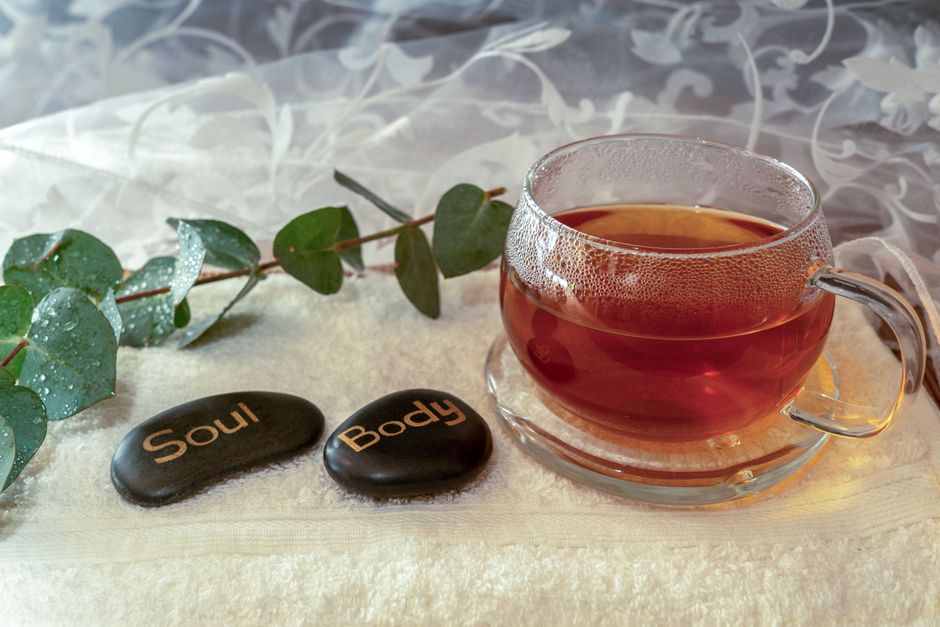
Rooibos is pronounced “ROY-boss.” The “rooi” sounds like the English word “roy,” and the “bos” rhymes with “boss.” It is an Afrikaans word that means “red bush,” and getting the pronunciation right matters more than you might think, especially if you are buying it in person or ordering it at a tea shop.
How To Say Rooibos Correctly
The correct pronunciation is ROY-boss. The first syllable gets the stress. The second syllable is short and flat.
Many English speakers say “roo-ee-bos” or “roo-bee-oss.” Those are understandable, but they are not how the word is said in South Africa, where the plant grows. The Afrikaans pronunciation uses a rolled “r” that most English speakers cannot easily copy. The practical version is simply ROY-boss.
If you break it down, “rooi” is the Afrikaans word for red. It is pronounced like the name Roy. “Bos” means bush. It is pronounced like the word boss. Put them together and you get ROY-boss.
Why Pronunciation Matters
Rooibos is a real plant with a real history. It grows only in the Cederberg region of South Africa. The name is not a brand or a marketing invention. It is the actual word that Afrikaans-speaking farmers have used for generations.
Pronouncing it correctly shows respect for that origin. It also avoids confusion. If you say “roo-ee-bos” in a tea shop, the person behind the counter will likely understand you, but they may not be sure which product you mean. Saying ROY-boss removes any doubt.
There is also a practical reason to get it right. Rooibos is sometimes confused with honeybush, another South African herbal tea. The two plants are related, but they taste different. Clear pronunciation helps you get the tea you actually want.
Common Mispronunciations To Avoid
Several versions of this word circulate in English-speaking countries. Some are simple accent differences. Others are genuine errors.
- ROY-boss — correct, the standard Afrikaans pronunciation
- ROO-ee-bos — common error, adds an extra syllable
- ROO-bee-oss — common error, changes both syllables
- ROY-bus — close, but the second vowel is wrong
- roo-ib-oss — reads the spelling literally, which does not work
The spelling is the main trap. English speakers naturally try to sound out each letter. Rooibos does not follow English spelling rules because it is not an English word. It follows Afrikaans rules, where “ooi” makes a sound like the English “oy.”





What Is Rooibos And Why Do People Drink It
Rooibos is an herbal tea made from the leaves of the Aspalathus linearis plant. It is not a true tea. True teas come from the Camellia sinensis plant. Rooibos comes from a shrub that grows only in South Africa.
It is naturally caffeine-free. That is the main reason many people choose it. Black tea, green tea, and coffee all contain caffeine. Rooibos does not, which makes it a popular evening drink.
The tea has a mild, sweet, slightly nutty flavor. It does not have the bitterness that black tea can have. It also does not become astringent when steeped for a long time. Many people drink it plain, without milk or sugar.
There are two main types. Red rooibos is the traditional version, with a reddish-brown color. Green rooibos is unfermented and has a lighter color and a more grassy flavor. Both come from the same plant.
Health Benefits: What The Evidence Shows
Rooibos contains antioxidants, including a compound called aspalathin that is found in very few other foods. Antioxidants are substances that can neutralize free radicals, which are unstable molecules that can damage cells.
Some research suggests that rooibos may have anti-inflammatory properties. Studies have been done in both animals and humans, but the human studies are small and short-term. The evidence is promising but not conclusive.
One area of interest is heart health. Some studies indicate that drinking rooibos may help lower blood pressure and improve cholesterol levels. However, the effects are modest, and the research is not strong enough to recommend rooibos as a treatment for any condition.
There is no evidence that rooibos can cure or prevent any disease. The marketing language around “detox” and “superfood” is not supported by clinical research. What rooibos does offer is a caffeine-free, low-calorie drink with a pleasant flavor and some antioxidant content.
One clarification worth making: the antioxidant content in the brewed tea is lower than in the raw leaves. The brewing process extracts some compounds but not all. Drinking rooibos is not the same as taking a concentrated extract.
How To Brew Rooibos Properly
Rooibos is forgiving to brew. Unlike green tea, it does not become bitter when steeped too long. That makes it a good choice for people who are new to loose-leaf tea.
Use one teaspoon of loose rooibos per cup of water. If you are using a tea bag, one bag per cup is standard. Bring water to a full boil. Pour the water over the leaves and let it steep for five to seven minutes.
Longer steeping produces a stronger, darker cup. It will not become bitter. The flavor gets deeper and more full-bodied the longer it sits. Some people steep it for ten minutes or more.
Rooibos can be served hot or cold. For iced tea, brew it double-strength and pour it over ice. It also works well with a slice of lemon or a small amount of honey.
Where To Find Rooibos
Rooibos is widely available in the United States. Most grocery stores carry it in the tea aisle. It is sold as loose leaf, in tea bags, and in blends with other flavors like vanilla, chai, or citrus.
Specialty tea shops carry a wider selection, including green rooibos and higher-grade red rooibos. Online retailers offer the broadest range, including rooibos sourced directly from South African farms.
When buying rooibos, check the ingredient list. Some commercial blends contain only a small amount of rooibos mixed with other herbs, flavorings, or even black tea. If you want pure rooibos, look for a product that lists Aspalathus linearis or simply “rooibos” as the only ingredient.
Quality matters. Lower-grade rooibos can taste flat or dusty. Higher-grade rooibos has a cleaner, sweeter flavor. If you try one brand and do not like it, try another before giving up on the tea.
Is Rooibos Safe For Everyone
Rooibos is generally recognized as safe for most adults. It is caffeine-free, so it does not have the stimulant effects of coffee or black tea. It is also low in tannins, which can interfere with iron absorption in some people.
Pregnant women can drink rooibos, but the evidence is limited. No clinical guidelines currently exist for rooibos consumption during pregnancy. The tea has been drunk in South Africa for generations, and no harmful effects have been documented, but formal safety studies in pregnant women have not been done.
People with kidney issues should be cautious. Rooibos contains oxalates, which can contribute to kidney stone formation in susceptible individuals. This is not a reason to avoid the tea entirely, but it is worth knowing if you have a history of kidney stones.
No large human trials have confirmed any serious side effects from drinking rooibos. The tea has a long history of safe use. The main caution is the same as with any herbal product: the evidence base is thinner than it is for conventional foods and medications.
Rooibos Versus Other Herbal Teas
Rooibos is often compared to other caffeine-free herbal teas. Each has a different flavor and a different evidence profile.
Honeybush is the closest relative. It comes from a different plant in the same family and also grows in South Africa. It has a sweeter, more honey-like flavor. Both are caffeine-free and contain antioxidants.
Chamomile is another popular caffeine-free option. It has a floral flavor and is often used for sleep support. Some evidence supports its mild sedative effect, but the research is not strong.
Peppermint tea is caffeine-free and has a strong, refreshing flavor. It is sometimes used for digestive complaints. The evidence for digestive benefits is mixed.
Rooibos stands out for its naturally sweet flavor and its lack of bitterness. It is also one of the few herbal teas that can be steeped for a long time without becoming unpleasant.
The Bottom Line On Rooibos
Rooibos is a flavorful, caffeine-free herbal tea from South Africa. Say it ROY-boss. It is safe for most people, has a mild antioxidant content, and makes a good alternative to coffee or black tea in the evening.
The health claims around rooibos are often exaggerated. It is not a cure for anything. It is a pleasant, low-risk drink with a long history of traditional use. That is enough to recommend it.
Frequently Asked Questions
How do you pronounce rooibos in Afrikaans?
It is pronounced ROY-boss. The “r” is rolled slightly, but English speakers can say ROY-boss and be understood.
Is rooibos a type of tea?
No, rooibos is an herbal infusion made from the Aspalathus linearis plant, not from the Camellia sinensis tea plant.
Does rooibos have caffeine?
No, rooibos is naturally caffeine-free, which makes it a popular evening drink.
Can you drink rooibos every day?
Yes, rooibos is safe for daily consumption for most healthy adults, though people with a history of kidney stones should be mindful of its oxalate content.
