
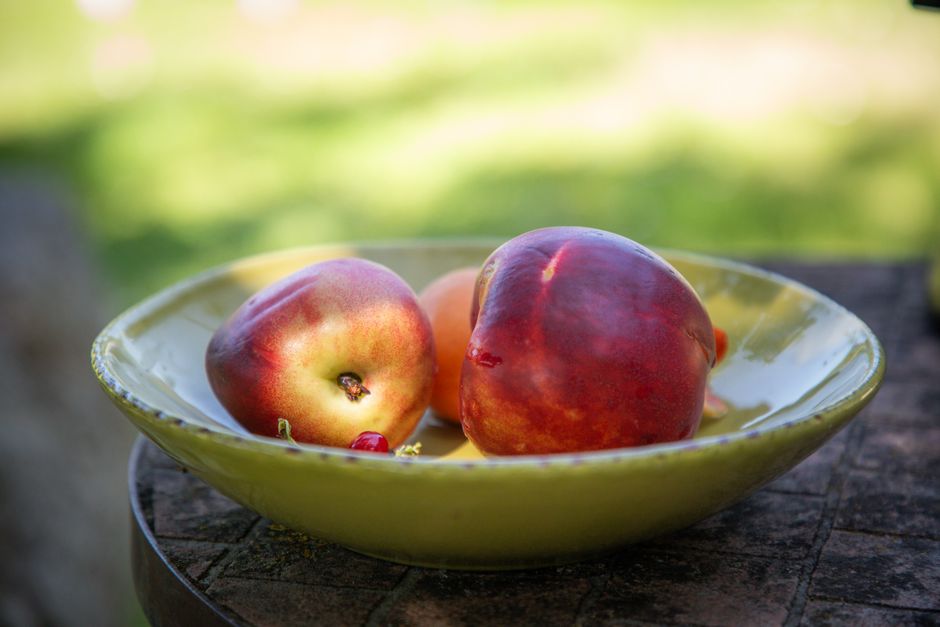
To ripen a nectarine, place it in a paper bag at room temperature for one to two days, ideally with an apple or banana to speed things up. You know it is ready when it gives slightly to gentle pressure near the stem, smells sweet and fruity, and has a creamy yellow or orange background color rather than green. Once ripe, move it to the refrigerator to stop the process and enjoy it within a few days.
Why Do Nectarines Arrive Hard and Unripe?
Most nectarines you find at the grocery store are picked before they are fully ripe. That is intentional. Stone fruits like nectarines bruise easily and spoil quickly once they reach peak ripeness. Picking them firm allows them to survive shipping and sit on store shelves without turning to mush.
Here is the key fact: nectarines do continue to ripen after they are picked. They are what produce the plant hormone ethylene, which triggers the breakdown of starches into sugars and softens the flesh. This is different from fruits like grapes or citrus, which stop ripening the moment they leave the tree. A nectarine picked too early will never be as sweet as one left on the tree, but a slightly early nectarine can still become perfectly good to eat.
So if you come home with rock-hard fruit, you are not stuck. You just need to give it time and the right conditions.
How To Ripen A Nectarine Fast
The fastest reliable method is the paper bag trick. Place the nectarines in a brown paper bag, fold the top closed, and leave them on your counter at room temperature. The bag traps the ethylene gas the fruit naturally releases, concentrating it around the fruit and speeding up ripening.
To go even faster, add a ripe apple or banana to the bag. These fruits produce high amounts of ethylene. One banana can noticeably speed up a batch of hard nectarines, often cutting the time down to about a day.
Do not use a plastic bag. Plastic traps moisture and leads to mold and rot. Paper lets the fruit breathe while still holding in the ethylene. Check the bag daily. Nectarines can go from underripe to overripe quickly, especially in warm weather.
Do not put unripe nectarines in the refrigerator. Cold temperatures halt the ripening process. If you refrigerate a hard nectarine, it will stay hard. It will not get better.
How To Tell When A Nectarine Is Ready
You cannot rely on color alone. Some nectarine varieties are naturally red all over, even when they are not ripe. The red blush is not a reliable indicator. Instead, look at the background color, which is the skin tone between the red patches.
An unripe nectarine has a green or pale yellow background. A ripe nectarine has a deep yellow or creamy orange background. The greener the base color, the less ripe the fruit.
Use your hands next. Hold the nectarine in your palm and press gently near the stem with your thumb. A ripe nectarine gives slightly under pressure but does not feel mushy. It should feel like a firm handshake, not a limp one. If it feels like a baseball, it is not ready. If it feels like a water balloon, it is past its prime.
Smell the stem end. A ripe nectarine has a distinct sweet, floral aroma. If you smell nothing, it is likely not ready. The fragrance is one of the most reliable signs because it only develops as the fruit produces its volatile aroma compounds during ripening.





What Happens If You Eat An Unripe Nectarine
An unripe nectarine is not dangerous to eat, but it is not pleasant. The flesh is hard, crunchy, and noticeably tart. It lacks the sweetness and juiciness of a ripe fruit. Some people describe the taste as astringent because unripe fruit contains more tannins and less sugar.
For most people, eating an unripe nectarine causes no harm. It just is not a good experience. There is no need to worry about toxicity. The bigger issue is that you are missing out on the fruit at its best.
That said, some people with sensitive stomachs report discomfort after eating very unripe fruit. This is not well studied, and it is not a reason to panic. If you find unripe nectarines upset your stomach, wait until they soften before eating them.
How To Store Ripe Nectarines
Once your nectarines reach the ripeness you want, stop the process. Put them in the refrigerator. The cold air slows down the ethylene response and keeps the fruit at its peak for several days.
Ripe nectarines stored in the fridge will typically last three to five days. They will not improve in the fridge, but they will not get worse quickly either. Take them out about 30 minutes before eating if you want the best flavor. Cold temperatures dull the perception of sweetness and aroma.
If you have more ripe nectarines than you can eat, you can freeze them. Wash, slice, and remove the pit. Lay the slices on a baking sheet lined with parchment paper and freeze until solid. Then transfer to a freezer bag. Frozen nectarines are best used for smoothies, baking, or sauces because freezing changes the texture and makes the flesh soft.
How To Fix Nectarines That Are Overripe
Overripe nectarines are not a lost cause. The flesh becomes mealy and the flavor turns fermented or sour. If the fruit has soft spots, mold, or an off smell, throw it out. Do not eat moldy fruit. Cut away any moldy sections generously.
If the fruit is just very soft but smells fine, use it quickly. Overripe nectarines work well in baked goods like crisps, cobblers, and muffins. You can also blend them into smoothies or make a quick jam by cooking them down with a little sugar and lemon juice.
The key is to catch them before they go bad. Check your ripening nectarines daily, especially in warm weather. A fruit that is perfect in the morning can be overripe by evening in a hot kitchen.
Does The Stem Trick Work?
There is a popular trick that says if the stem comes off easily, the nectarine is ripe. This is not reliable. The ease of stem removal depends on the variety of the fruit and how it was harvested, not just its ripeness.
Some nectarines drop their stems while still underripe. Others hold onto the stem even when fully ripe. This trick is not worth relying on. The pressure test, background color, and smell are far more dependable.
Frequently Asked Questions
Can you ripen nectarines in the microwave?
No. Microwaving a nectarine heats the flesh but does not ripen it. It will soften the fruit, but the starches will not convert to sugars the way they do with natural ethylene ripening.
How long does it take for nectarines to ripen on the counter?
At room temperature, most nectarines ripen in one to three days. The exact time depends on how hard they were when you bought them and the temperature of your kitchen.
Should you wash nectarines before ripening them?
No. Wash nectarines right before you eat them. Washing them early adds moisture that can encourage mold growth during the ripening process.
Can you eat a nectarine that is still hard?
Yes, it is safe to eat, but it will be tart and crunchy. If you prefer that texture, go ahead. If you want the sweet, juicy flavor, wait until the fruit softens.
