
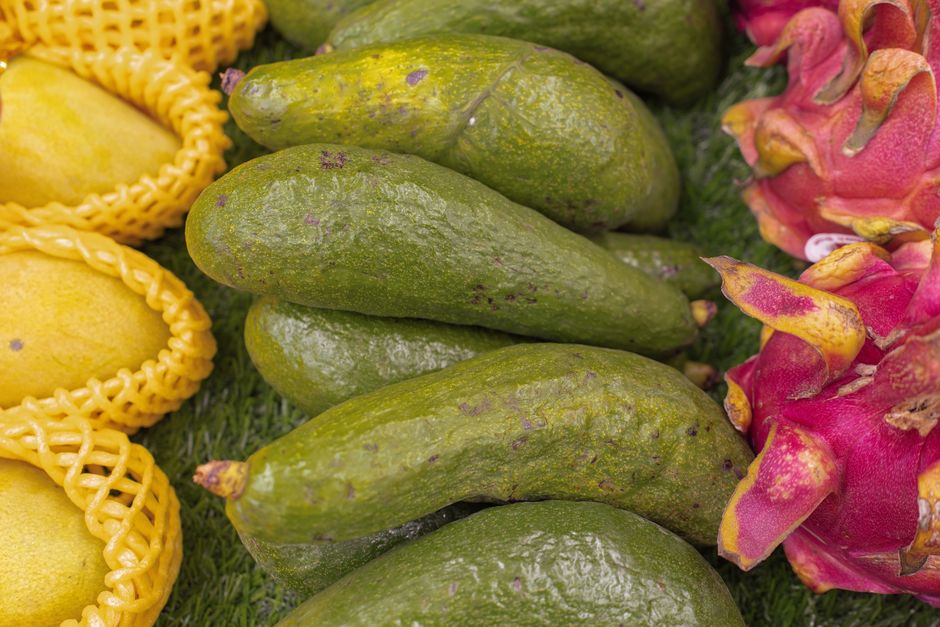
You can tell a tropical avocado is ripe by feel, not by color. A ripe tropical avocado yields slightly when pressed near the stem end, feels heavy for its size, and has skin that gives just a little under firm thumb pressure. Color varies too much by variety to be reliable on its own. The squeeze test is the most dependable method.
Tropical avocados are different from the Hass avocados most Americans know. They tend to be larger, smoother-skinned, and lighter in color. Some stay green even when fully ripe. That is why the color rule people learned from Hass avocados does not carry over cleanly. If you are waiting for a tropical avocado to turn dark before eating it, you may wait until it rots.
Why Color Is the Least Reliable Sign
Skin color is a poor ripeness signal for most tropical avocado varieties. Varieties like Semil, Simmonds, and many Caribbean and Florida-grown types remain light green or yellow-green from the moment they are picked until they are fully ripe. Some develop a slight yellow tint. Some do not change at all.
Ripening in avocados is driven by ethylene gas, a plant hormone that triggers softening, starch conversion to sugar, and oil development. Color change is a separate process that varies by genetics. A variety that does not produce anthocyanins or other dark pigments will not darken no matter how ripe it gets.
This is the key difference from Hass. Hass avocados reliably shift from green to dark purple-black as they ripen. That makes color a useful shortcut for Hass. It is not a shortcut for tropical varieties. Treat color as a hint at best, and never as your main test.
How To Tell If A Tropical Avocado Is Ripe Using the Squeeze Test
The squeeze test is the standard method used by growers, produce buyers, and chefs. It works on every avocado variety. Place the avocado in the palm of your hand and press gently with your thumb or fingers near the stem end, where the fruit softens first.
Here is what you are feeling for:
- Hard as a rock: Not ripe. It will not ripen overnight.
- Slight give, springs back: Nearly ripe. Good for slicing in a day or two.
- Yields to gentle pressure, feels like a ripe peach: Ripe now. Best for eating fresh.
- Soft and mushy, dents stay: Overripe. Fine for guacamole or smoothies, not for slices.
- Hollow feeling or rattling seed: Past its prime. The flesh has broken down.
Use your whole palm, not just fingertips. Pressing with fingertips concentrates force and can bruise the flesh underneath the skin. Bruises show up as gray or brown streaks a day later. Once bruised, that part of the avocado will not ripen properly.
What Does a Ripe Tropical Avocado Feel Like at the Stem?
The stem end is the most accurate place to test. That is where ripening begins and where the fruit softens first. Press just below the small cap or nub at the top of the fruit. If it gives slightly, the avocado is on its way.
You can also check under the stem cap. Gently flick or pry off the small button at the top. On a ripe avocado, you will see green flesh underneath. If it is brown or dark, the avocado is overripe. If it is pale and hard, it is not ready.
Do not remove the stem cap unless you plan to eat the avocado soon. Once the cap is off, that spot becomes an entry point for air and bacteria, and it will brown faster. Use this test sparingly.




Do Tropical Avocados Ripen After Picking?
Yes. Avocados are climacteric fruits, which means they continue to ripen after harvest. They do not ripen on the tree the way peaches or bananas do. In fact, an avocado left on the tree past maturity will eventually drop, but it will not soften much while attached.
That is why the avocados you buy are almost always firm. They were picked mature but unripe, and they will finish ripening on your counter. Maturity and ripeness are two different things. A mature avocado has enough oil content to ripen well. An immature one will soften but taste watery and never develop good flavor.
Tropical avocados tend to be larger than Hass, sometimes weighing one to two pounds or more. Their size means they can take longer to ripen evenly. A large fruit might be soft at the stem end while still firm at the bottom. Check both ends before you cut.
How Long Does It Take To Ripen on the Counter?
Ripening time depends on how mature the fruit was at harvest and the temperature of your kitchen. A firm tropical avocado typically takes several days to a week or more to soften at room temperature. A hard, immature one may take longer or never ripen properly.
Warmer temperatures speed ripening. Cooler temperatures slow it down. Refrigeration essentially pauses ripening. This is why you should leave a firm avocado on the counter and only move it to the fridge once it is ripe.
To speed things up, place the avocado in a paper bag. Adding a ripe banana or apple to the bag increases ethylene gas and can shorten ripening time. This is a well-established effect, not folklore. Do not seal it in plastic. Plastic traps moisture and can encourage mold.
Once ripe, a tropical avocado will hold in the refrigerator for a few days. After that, quality drops quickly.
Common Mistakes That Lead To Bad Avocados
Most disappointing avocados come down to a few predictable errors.
- Judging by color alone. As covered above, this fails on most tropical varieties.
- Squeezing too hard. Bruising the fruit ruins the texture even if the timing was right.
- Refrigerating too early. Cold stops ripening. A hard avocado in the fridge may stay hard for a week.
- Cutting too soon. If it is firm, wait. There is no way to ripen an avocado after you cut it open.
- Buying rock-hard fruit with no plan. If you need it today, buy one that already gives slightly.
One more note: a tropical avocado that feels soft but tastes bland and watery was likely picked immature. No amount of waiting fixes that. Flavor comes from oil content, and oil develops on the tree, not on your counter.
Quick Comparison: Signs of Ripeness
| Sign | Underripe | Ripe | Overripe |
|---|---|---|---|
| Feel near stem | Hard | Slight give | Mushy |
| Skin color | Varies | Varies | Varies |
| Flesh under stem cap | Pale, hard | Green | Brown |
| Weight | Light | Heavy for size | Heavy |
| Best use | Wait | Slicing, eating fresh | Guacamole, blending |
Notice that skin color stays in the “varies” column for every stage. That is the whole point. Feel and the stem cap tell you far more than color ever will.
Storing a Ripe Tropical Avocado
Once your avocado is ripe, use it within a day or two for best quality. If you need to hold it longer, refrigerate it whole. Cold slows the ripening enzymes and buys you a few extra days.
If you have already cut it, press plastic wrap directly onto the exposed flesh and refrigerate. The goal is to limit contact with air, which causes browning. A cut avocado will still brown over time even with good wrapping. Lemon or lime juice on the surface slows browning but does not stop it.
Freezing is possible but changes texture. Frozen avocado thawed later works in smoothies or blended dishes. It will not hold up as slices.
Frequently Asked Questions
Can you ripen a tropical avocado faster?
Yes. Place it in a paper bag at room temperature, ideally with a ripe banana or apple, which release ethylene gas. This can shorten ripening time by a day or more.
Should I refrigerate an avocado to make it ripen?
No. Cold slows or stops ripening. Leave firm avocados at room temperature and refrigerate only after they are ripe.
How do I know if a tropical avocado is overripe?
It feels mushy, dents stay after you press, and the flesh under the stem cap looks brown or dark. Overripe avocados are still usable for guacamole or blending.
Does a ripe tropical avocado always turn dark?
No. Many tropical varieties stay green or yellow-green even when fully ripe. Color is not a reliable sign for these types.
