
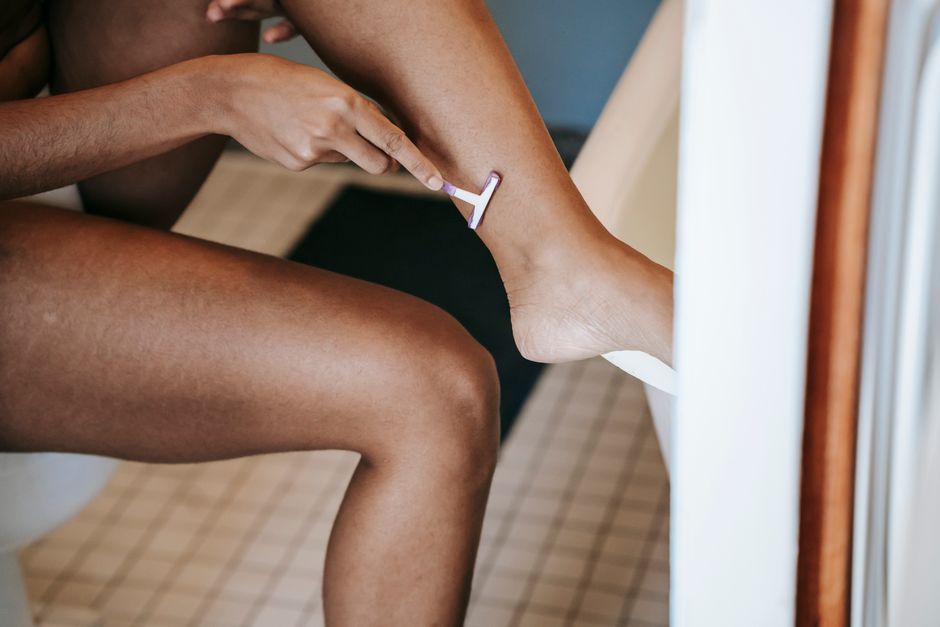
Shaving bumps happen when hair gets trapped under the skin after shaving. You can get rid of them by stopping shaving for a few days, using warm compresses, and gently exfoliating. For stubborn bumps, apply a product with salicylic acid or benzoyl peroxide, and always shave with the grain using a sharp razor.
What Causes Shaving Bumps?
Shaving bumps are not the same as razor burn. Razor burn is surface irritation. Shaving bumps are ingrown hairs. The medical name is pseudofolliculitis barbae.
When you cut a hair at a sharp angle, the tip becomes pointy. As the hair grows back, it can curl into the skin instead of growing straight out. The skin treats it like a foreign object and becomes inflamed. This creates a red bump, sometimes with pus.
People with curly or coarse hair get them more often. That is because curly hair naturally tends to curve back toward the skin. Men commonly get them on the neck and jawline. Women commonly get them on the legs, bikini line, and underarms.
Step 1: Stop Shaving and Let the Skin Heal
The first step is the hardest one. Stop shaving the affected area for at least 3 to 5 days. This gives the trapped hair time to grow out of the skin on its own.
Shaving over active bumps makes them worse. It cuts the top off the bump and can push the hair deeper. It also increases the risk of infection and scarring.
If you absolutely must remove hair during this time, use a trimmer with a guard instead of a razor. Trimming leaves a small amount of hair above the skin. This prevents the sharp tip from forming and gives the ingrown hair room to escape.
Step 2: Use Warm Compresses to Bring the Hair to the Surface
A warm compress is one of the most effective home treatments. The heat softens the skin and the hair shaft. It also increases blood flow to the area, which helps reduce inflammation.
Soak a clean washcloth in warm water. Wring it out and hold it against the bumps for 5 to 10 minutes. Do this 2 to 3 times a day. Do not use hot water. Hot water can burn the skin and make inflammation worse.
After the compress, the hair tip may become visible. If you can see the loop of hair just under the skin, you can gently lift it out. Use a sterile needle or tweezers cleaned with rubbing alcohol. Do not dig for the hair. Do not pull it out. Just lift the tip so it can grow above the skin surface.





Step 3: Exfoliate Gently to Release Trapped Hairs
Exfoliation removes the layer of dead skin cells that can trap hairs underneath. When you exfoliate, you give the hair an easier path to the surface.
Use a soft washcloth, a gentle scrub, or a chemical exfoliant. Chemical exfoliants with salicylic acid or glycolic acid work well because they dissolve the bonds between dead skin cells. Salicylic acid is oil-soluble, meaning it can penetrate into the hair follicle.
Exfoliate once a day while you are treating the bumps. Do not scrub hard. Aggressive scrubbing irritates the skin and can make the bumps worse. If the area is painful or open, skip exfoliation until it heals.
Step 4: Apply Targeted Treatments for Stubborn Bumps
If warm compresses and exfoliation are not enough, over-the-counter treatments can help. Look for products containing salicylic acid, glycolic acid, or benzoyl peroxide.
Salicylic acid helps exfoliate inside the follicle. Glycolic acid helps smooth the skin surface. Benzoyl peroxide reduces the bacteria that can cause infection in the bump. Some products combine these ingredients.
Apply the treatment once daily to the affected area. Start with the lowest concentration available. If your skin becomes dry, red, or flaky, reduce how often you use it. These products work but they can irritate sensitive skin.
Some dermatologists recommend topical retinoids for chronic shaving bumps. Retinoids speed up skin cell turnover, which helps prevent hairs from getting trapped. These are prescription-strength and require a doctor’s guidance.
Step 5: Use a Steroid Cream for Severe Inflammation
For bumps that are very red, swollen, or painful, a short course of hydrocortisone cream can help. Hydrocortisone reduces inflammation quickly. It is not a treatment for the ingrown hair itself, but it calms the skin so the hair can work its way out.
Use over-the-counter hydrocortisone cream (0.5% to 1%) for no more than 3 to 5 days. Do not apply it to broken skin or open sores. If the bumps do not improve in a week, see a dermatologist.
Long-term use of steroid creams thins the skin. That makes future ingrown hairs more likely and can cause permanent skin damage. Use them sparingly and only for short periods.
Step 6: Change Your Shaving Routine to Prevent New Bumps
Once the current bumps clear up, prevention is about how you shave. Small changes in technique make a big difference.
First, prepare the skin properly. Shave after a warm shower or hold a warm wet towel on the area for 2 to 3 minutes. This softens the hair and opens the pores.
Second, use a sharp razor. A dull blade pulls and tugs at the hair, which increases the chance of a sharp tip forming. Replace your razor blade after 5 to 7 shaves. Single-blade razors cause fewer ingrown hairs than multi-blade razors because they cut the hair closer to the skin surface.
Third, shave with the grain. Shaving against the grain gives a closer shave but leaves a sharper hair tip. Shaving with the grain leaves the hair slightly longer and less likely to curl back in.
Fourth, do not stretch the skin tight while shaving. Stretching makes the hair spring back below the skin surface when you release. Let the skin lie naturally.
Fifth, rinse with cool water after shaving and apply a moisturizer. Moisturizing keeps the skin supple so hairs can grow out straight.
When to See a Dermatologist
Most shaving bumps resolve on their own within a week or two. But some cases need professional treatment.
See a dermatologist if the bumps are painful, spreading, or filled with pus. This can be a sign of a bacterial infection called folliculitis. Folliculitis requires antibiotic treatment and will not improve with home care alone.
Also see a doctor if you get shaving bumps every time you shave, despite following the prevention steps above. Some people have a severe form of pseudofolliculitis barbae that responds best to prescription treatments.
Options a dermatologist might offer include prescription-strength retinoids, antibiotics, or laser hair removal. Laser hair removal is the most effective long-term treatment for chronic shaving bumps. It destroys the hair follicle so the hair cannot grow back and get trapped. It is not a cure for existing bumps, but it prevents new ones from forming.
What Not to Do When You Have Shaving Bumps
Do not pop or squeeze the bumps. This pushes bacteria deeper into the skin and increases the risk of scarring and infection. The bump will resolve faster if you leave it alone.
Do not use harsh scrubs or alcohol-based toners on active bumps. These strip the skin of its natural oils and worsen inflammation.
Do not shave with an electric razor on the lowest setting if you have active bumps. The close cut can slice the top off a bump and cause more irritation.
Do not use depilatory creams on active bumps. These chemical hair removers can burn already irritated skin.
How Long Does It Take for Shaving Bumps to Go Away?
With proper care, most shaving bumps clear up within 5 to 7 days. The timeline depends on how deep the hair is trapped and how inflamed the skin has become.
If you stop shaving and use warm compresses daily, you should see improvement within a few days. Bumps that are infected or very deep may take 2 weeks or longer. If you keep shaving over the area, they will not heal.
Scarring and dark spots from shaving bumps can take months to fade. The medical term for these dark spots is post-inflammatory hyperpigmentation. They are not permanent, but they require consistent sun protection and time to resolve.
Frequently Asked Questions
Does toothpaste get rid of shaving bumps?
No. There is no evidence that toothpaste treats shaving bumps, and it can irritate the skin. Use a warm compress and salicylic acid instead.
Should I pop a shaving bump?
No. Popping a shaving bump pushes bacteria deeper and increases the risk of infection and scarring. Let it heal on its own or gently lift the hair tip with sterile tweezers.
Can shaving with an electric razor prevent shaving bumps?
Electric razors can help because they do not cut the hair as close as manual razors. A closer cut leaves a sharper tip that is more likely to curl back into the skin.
Is shaving bumps the same as razor burn?
No. Razor burn is surface irritation from friction and appears as redness or a rash. Shaving bumps are ingrown hairs that form when the hair grows back into the skin.
